

Maddy summaryHR 794, the Lunar New Year Day Act, would designate the Lunar New Year as a federal holiday by adding it to the list of official federal holidays under Title 5 of the U.S. Code. This change would directly affect federal government operations and employees, who would observe the holiday on the date of the Lunar New Year each year. The bill’s sole mechanism is amending the existing holiday schedule to include "Lunar New Year Day" following the Birthday of Martin Luther King, Jr. It does not create new programs, allocate funding, or impact non-federal entities.
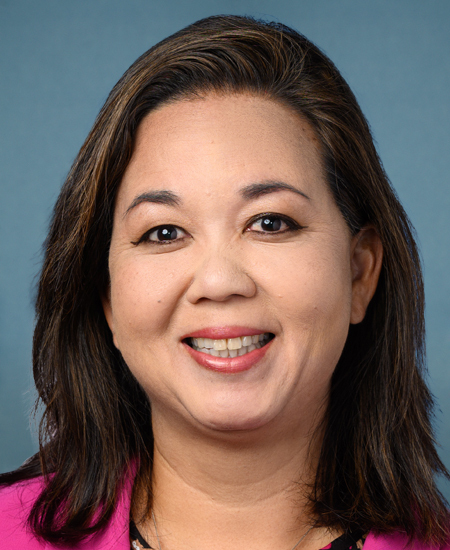
Rep. Jill N. Tokuda
Sponsored bills
Maddy summaryThis bill authorizes a posthumous Congressional Gold Medal for Fred Korematsu, a Japanese American civil rights advocate who challenged the World War II internment of Japanese Americans. It recognizes his legal fight against Executive Order 9066, which led to the unjust incarceration of over 120,000 people, and his lifelong advocacy against racial discrimination. The medal, designed by the Treasury Secretary, will be displayed at the Smithsonian Institution. The bill is purely commemorative and does not create new legal rights or funding requirements.
Maddy summaryThis bill amends Medicare rules to clarify when rural hospitals can apply for specific payment rates. It changes Section 1820 of the Social Security Act to allow hospitals to submit applications for redesignation (reapplying for payment rates) before the bill's enactment date, with those applications still valid after the law takes effect. The change directly affects rural hospitals seeking to qualify for enhanced Medicare reimbursement under existing programs. It does not create new funding or services but streamlines administrative timing for hospitals already pursuing these designations.
Maddy summaryHRES 66 is a non-binding resolution affirming the U.S. government's leadership in global education. It calls on the State Department and USAID to prioritize quality, inclusive public education for girls, children with disabilities, and children in crisis settings, while integrating education into humanitarian responses. The resolution urges these agencies to meet existing commitments to international education programs and advance learning outcomes for marginalized youth worldwide. It does not create new laws or funding but emphasizes coordination across U.S. government agencies to support global education efforts.
Maddy summaryHRES 67 is a symbolic House resolution recognizing Certified Registered Nurse Anesthetists (CRNAs) for their 150+ years of service in providing anesthesia care across the U.S. health system. It highlights CRNAs' critical role in administering over 58 million anesthetics annually, enabling rural healthcare access, supporting military and VA facilities, and responding to public health emergencies. The resolution specifically encourages the public, healthcare providers, and policymakers to fully utilize CRNAs' expertise during National CRNA Week (January 19-25, 2025). As a non-binding acknowledgment, it directly honors the 65,000+ CRNAs and student anesthetists without creating new policy or funding.
Maddy summaryHRES 68 is a non-binding House resolution expressing strong disapproval of the President’s announcement to withdraw the U.S. from the Paris Agreement. It commends states, businesses, and citizens supporting the Agreement, urges the President to reverse the withdrawal decision, and calls for Congress to prioritize U.S. climate leadership. The resolution does not create new laws or affect specific groups but formally states the House’s position against withdrawing from the international climate accord. It was introduced by 115 co-sponsors and reflects broad congressional concern about reversing U.S. climate commitments.
Maddy summaryThis bill continues federal efforts to combat Rapid Ohia Death, a fungal disease threatening Hawaii's native ohia trees (Metrosideros polymorpha). It mandates ongoing research on disease transmission, management of invasive animals (like goats) that spread the disease, and funding for forest restoration through collaboration between federal agencies (Interior, Agriculture), Hawaii state, and local stakeholders. The key provisions require the U.S. Geological Survey and Forest Service to sustain research, partner on land management, and provide financial assistance to prevent disease spread and restore native forests. The bill directly affects Hawaii's ecosystems, particularly the culturally significant ohia tree species and the state's native forest habitats.
Maddy summaryHR 646, the Build Housing with Care Act of 2025, establishes a HUD grant program to fund the co-location of affordable housing developments with child care facilities. It directly affects housing developers, child care providers, and residents of affordable housing by requiring grants to support projects in "child care deserts" (areas with severe child care shortages), prioritizing low-income, rural, or Head Start-serving providers. Key provisions mandate that projects must not evict residents, include resident engagement plans, and ensure child care providers serve low-income families or dual-language learners. The bill authorizes $100 million annually (2025-2030) and requires annual reports tracking child care slots created, resident usage, and demographic data.
Maddy summaryHR 612, the Health Care Providers Safety Act of 2025, provides federal funding to help health care facilities improve safety. It authorizes the Secretary to award grants to hospitals, clinics, and other health care providers to cover costs for physical security (like structural improvements) and cyber security (such as data privacy tools and video surveillance systems). These grants directly help health care providers protect their facilities, staff, and patients from security threats. The bill creates a new funding mechanism under the Public Health Service Act, making specific security upgrades eligible for federal support.
Neighbors Not Enemies Act This bill repeals provisions authorizing the President to apprehend and remove from the United States the citizens of a particular nation, if the United States has declared war against that nation or that nation has threatened an invasion against the United States.