

Maddy summaryHR 909, the Crime Victims Fund Stabilization Act of 2025, modifies how funds from the False Claims Act are deposited into the Crime Victims Fund. It specifies that from 2025 through 2029, certain False Claims Act proceeds (specifically those for qui tam plaintiff payments and government damage reimbursements) cannot be deposited into the fund. This change directly affects the composition of the Crime Victims Fund by excluding these specific revenue streams during the specified period. The bill does not create new benefits or alter victim services; it only adjusts fund allocation rules for existing False Claims Act revenues.
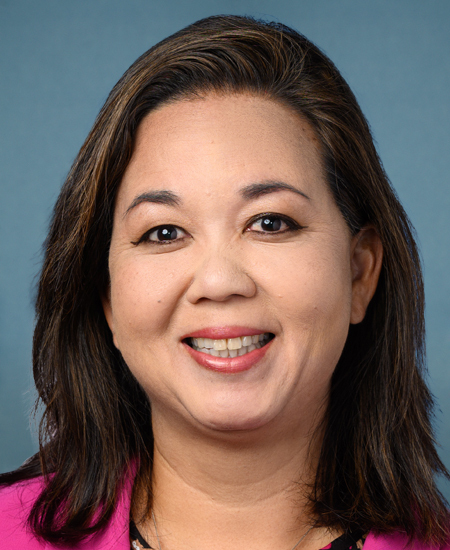
Rep. Jill N. Tokuda
Sponsored bills
Maddy summaryHR 7016, the "No Funds for NATO Invasion Act," blocks federal funding for any U.S. military invasion of a North Atlantic Treaty Organization (NATO) member country or territory covered by NATO's Article 5 mutual defense clause. The bill prohibits using any federal funds for such invasions and bans U.S. officials from executing these actions. It directly affects U.S. military operations and funding decisions involving NATO members. The law applies to all federal spending, preventing the use of existing budgets for this specific purpose.
Maddy summaryHR 7004 prohibits federal elected officials, congressional staff, political appointees, and executive branch employees from trading prediction market contracts using material nonpublic information about government policy, actions, or political outcomes. It bans any purchase, sale, or exchange of these contracts when the individual possesses or could reasonably obtain such nonpublic information - defined as important investment details not available to the public. The bill directly affects government insiders who might otherwise trade on inside knowledge of upcoming decisions or election results through prediction markets. Key provisions clarify that covered transactions include any financial instrument tied to future government events, listed on platforms operating across state lines. This creates a specific insider trading rule for prediction markets, distinct from general securities laws.
Maddy summary# Summary of Reserve Component Duty Consolidation Legislation This legislation is a comprehensive revision of military reserve component terminology and definitions throughout the U.S. Code. The primary purpose is to replace the outdated term "inactive duty training" with the more accurate and consistent term "reserve component duty" across all relevant sections of federal law. ## Key Provisions: 1. **Terminology Change**: - Replaces "inactive duty training" with "reserve component duty" in over 50 sections of the U.S. Code (primarily Titles 10, 32, and 37) - Also replaces related terms like "inactive duty" and "inactive duty for training" with "reserve component duty" 2. **Repeals**: - Repeals Chapter 13 of Title 10 - Repeals Sections 10147, 10148, 12406, 12503, 12552 of Title 10 - Repeals Sections 114, 115, and 328 of Title 32 3. **Definition Updates**: - Creates new definitions for "reserve component duty" and "remote assignment" in Title 10 - Defines "Active Guard and Reserve functions" more precisely - Clarifies that reserve component duty includes: * Training as described in sections 552(a) and 553(a) of Title 32 * Support activities authorized for members of the reserve components * Duty prescribed under sections 543 of Title 32 4. **Transition Provisions**: - Establishes a 10-year transition period from the date of enactment - Allows for earlier implementation if all relevant departments (Defense, Homeland Security, Veterans Affairs) certify readiness - Provides for early TRICARE eligibility for members ordered to active duty or full-time National Guard duty 5. **Conforming Amendments**: - Makes numerous technical changes to ensure consistent terminology throughout the U.S. Code - Updates references to training requirements, pay, and benefits to reflect the new terminology This legislation represents a significant effort to modernize military reserve component terminology, eliminate confusing and outdated references, and create a more consistent framework for understanding and managing reserve component service obligations and benefits.
Maddy summaryThis concurrent resolution (HCONRES 69) commemorates the 15th anniversary of the January 8, 2011, Tucson shooting that killed six people and injured 13, including former Congresswoman Gabby Giffords. It honors the victims, survivors, and Giffords - now a prominent advocate for gun violence prevention - and recognizes her leadership in promoting civility and reducing gun violence. The resolution also commends Tucson residents and first responders for their resilience and reaffirms Congress’s commitment to respectful dialogue and opposing political violence. As a ceremonial resolution, it does not create new laws or policies.
Maddy summaryHR 6980, the NOVA Act of 2026, prohibits the use of federal funds to support U.S. possession, control, or sovereignty over Venezuela's territory or resources, including military deployments there. It allows limited exceptions: the President may acquire Venezuelan property for diplomatic use (with local government approval) or use existing U.S. properties in Venezuela for embassies. The bill does not apply to properties owned by the U.S. before January 1, 2026, and explicitly states it won't affect funding for emergency humanitarian aid. This bill directly affects U.S. government agencies and programs seeking to fund activities related to Venezuela's governance or military presence.
Maddy summaryHR 4611 (EACH Act of 2025) requires all federally funded health programs - including Medicaid, Medicare, military health plans, and the Indian Health Service - to cover abortion services without restrictions, repealing the Hyde Amendment's long-standing ban on federal funding for most abortions. This directly affects millions of people enrolled in these programs, particularly low-income women, women of color (including 25% of Black women and 22% of Hispanic women on Medicaid), and young people. The bill mandates coverage in all federally administered health plans and prohibits state or private insurers from restricting abortion coverage in health insurance. It aims to eliminate current federal and state barriers that deny abortion access to people who rely on government health programs.
Maddy summaryThis bill prohibits landlords from charging application fees, tenant screening fees, and excessive late fees on "covered" rental properties - those with federally backed mortgages (like FHA, VA, or USDA loans) or HUD assistance. It caps late fees at 3% of monthly rent after a 15-day grace period and requires landlords to disclose total monthly costs, past tenant litigation, maintenance issues, and rent history for the past decade before signing leases. The law directs regulators like HUD to define "junk fees" and ban reporting unpaid fees to credit agencies. It directly affects renters in federally supported housing by limiting unexpected costs and increasing transparency.
Maddy summaryHR 6901 establishes two key programs for civilian workers involved in U.S. nuclear weapons programs. It creates a commemorative medal for current or former civilian employees or contractors who directly participated in atomic weapon detonations, cleanup of radioactive material from detonations or accidents, or were exposed to radiation during WWII. The bill also creates a $75,000 compensation program for eligible individuals diagnosed with specific radiation-linked cancers (like leukemia, thyroid cancer, or lung cancer) who participated in cleanup efforts, requiring documentation and offsetting any existing payments under the Radiation Exposure Compensation Act. This bill directly affects civilian workers and contractors with documented exposure or participation in nuclear program cleanup activities.
Maddy summaryThe "Peace Through Strength Against Russia Act of 2025" proposes to significantly expand and strengthen U.S. sanctions against the Russian Federation and its supporters. The bill mandates blocking property and restricting visas for Russian government officials, state-owned financial institutions, and entities supporting Russia's defense industrial base or war efforts in Ukraine, including those involved in kidnapping Ukrainian children. Key provisions prohibit U.S