

Maddy summaryThe Sailor Standard of Care Act of 2023 requires the Navy to improve mental health support for service members designated for "limited duty" (temporarily restricted from full duties due to medical needs). It mandates quarterly mental health screenings for these members, additional medical staff in units with over 15 such personnel, and a framework for centralized care coordination during their limited duty period. The bill also directs the Navy to study multiple suicides within units, report on TRICARE mental health provider credentialing timelines and reimbursement rates, and establish a dashboard tracking quality-of-life program usage. These provisions directly affect active-duty Navy members in limited duty status and aim to address systemic gaps in mental health care access and response.
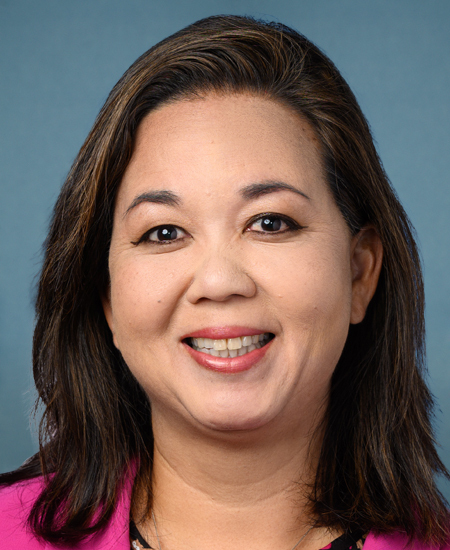
Rep. Jill N. Tokuda
Sponsored bills
Maddy summaryHR 3610, the Neighbors Not Enemies Act, repeals specific sections (4067-4070) of the Alien Enemies Act of 1798 from U.S. law. This bill removes the legal authority allowing the president to detain or deport non-citizens during wartime based on that historical statute. The repeal directly affects the federal legal framework governing emergency powers over non-citizens, eliminating a provision dating to the Quasi-War with France. The bill makes no new policy changes but formally removes this outdated legal mechanism from the U.S. Code.
Maddy summaryThis bill prohibits corporal punishment (such as spanking or paddling) in all schools receiving federal funding, directly affecting students, school personnel, and school administrators. It requires schools to notify parents within 24 hours if corporal punishment occurs and establishes enforcement through civil lawsuits by students/parents, Attorney General actions, and Office for Civil Rights oversight. The bill mandates states to submit school climate reports and develop training programs on positive behavioral interventions to reduce exclusionary discipline practices that disproportionately affect students of color, students with disabilities, and other marginalized groups. It creates a grant program to help schools implement these approaches, with priority given to schools with high suspension rates and disciplinary actions. The bill does not apply to private schools or home schools that don't receive federal funding.
Maddy summaryThe AIR PUMP Act requires airlines to provide nursing crew members (like flight attendants and pilots) with reasonable break time to express breast milk for up to one year after their child's birth, as well as a private, non-bathroom space for this purpose. It specifically excludes breaks during critical flight phases and ensures accommodations won't compromise safety, security, or require significant costs (e.g., aircraft modifications). The bill includes anti-retaliation protections for employees who request accommodations or file complaints, and enforces these requirements through the Department of Labor using existing Fair Labor Standards Act mechanisms. This directly affects airline employees who are nursing parents and their employers, aligning airline workplace policies with federal breastfeeding protections.
Maddy summaryHCONRES 47 is a non-binding resolution urging the U.S. Senate to provide "advice and consent" for ratifying the UN Convention on Biological Diversity (CBD), which the U.S. signed in 1993 but has never ratified. Currently, the U.S. participates only as an observer in CBD negotiations without voting rights, limiting its influence on global biodiversity policies that affect national security and economic interests. The resolution notes the U.S. is already legally compliant with the CBD’s obligations under existing law and is a top international conservation funder. It argues that ratification would restore U.S. voting power and alignment with global efforts to address biodiversity loss, which impacts all Americans.
This resolution encourages the U.S. Holocaust Memorial Museum to continue its work in educating the public about the dangers of antisemitism and the origins of the Holocaust, congratulates those responsible for the creation of the museum, condemns antisemitism, supports educational and community-based programs that counter antisemitism and hate, and supports the designation of a U.S. Holocaust Memorial Museum Day.
Simplify Automatic Filing Extensions Act or the SAFE Act This bill eliminates the penalty for failure to pay income tax for individual taxpayers who timely pay 125% of their income tax liability for the immediately preceding taxable year.
Maddy summaryThis bill would designate approximately 1.7 million acres of public land in Utah's Colorado Plateau and Great Basin regions as wilderness areas, protecting them from development while preserving traditional uses by Indigenous communities. It establishes specific wilderness areas across Utah's red rock canyons, including the Great Basin Wilderness Areas, Grand Staircase-Escalante Wilderness Areas, and others, with detailed acreage for each designated zone. The bill includes administrative provisions for managing these areas, such as maintaining existing livestock grazing rights, setting road setbacks to protect wilderness character, and reserving water rights for the wilderness areas. This legislation directly affects how the Bureau of Land Management administers public lands in Utah and defines the boundaries for public use of these designated wilderness areas.
Maddy summaryHR 3502, the Responsible Firearms Marketing Act, directs the Federal Trade Commission (FTC) to study and regulate deceptive advertising practices related to firearms. The FTC must study marketing that targets minors, implies illegal use, or promotes semiautomatic assault weapons, then report findings to Congress within two years. If the FTC identifies unfair practices, it must issue enforceable regulations within 18 months of the report to prohibit such marketing by firearm manufacturers, dealers, and importers. The law aims to stop deceptive advertising through FTC enforcement under existing consumer protection rules, directly affecting the firearms industry.
Maddy summaryThis bill requires sponsors of NIH-funded or NIH-approved clinical trials (for drugs, devices, biological products, or behavioral interventions) to set specific, measurable goals for recruiting participants reflecting race, ethnicity, age, and sex - either based on disease prevalence or the U.S. population. Key mechanisms include mandating detailed plans for achieving these goals, annual reporting of demographic data (without personally identifiable information), and strategies to reduce participation barriers like virtual visits or flexible scheduling. It also requires training for researchers on diversity and health inequities, and establishes a remediation process if goals aren’t met. The law aims to improve representation in clinical trials to ensure medical research better serves all patient groups.