

Maddy summaryHR 5618, the Clean Energy Victory Bond Act of 2023, authorizes the U.S. Treasury to issue savings bonds (starting at $25) to fund clean energy projects. Proceeds would create a dedicated trust fund to finance federal, state, and local initiatives like solar/wind infrastructure, energy-efficient buildings, grid upgrades, and zero-emission vehicle networks. The bill requires at least 40% of annual funding to target disadvantaged communities facing disproportionate climate or pollution impacts. Bonds are voluntary, backed by U.S. Treasury full faith and credit, and earn interest tied to energy savings and loan returns. This mechanism aims to leverage public investment without direct federal budget spending.
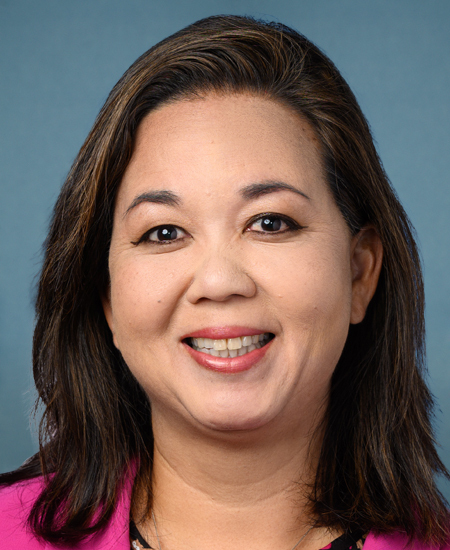
Rep. Jill N. Tokuda
Sponsored bills
Maddy summaryThe REDUCE Act of 2023 imposes an excise tax on virgin plastic resin and certain single-use plastic products, starting at 10 cents per pound in 2024 and increasing to 20 cents per pound by 2026 (with annual inflation adjustments). The tax applies to manufacturers, producers, and importers of plastic products, with exemptions for small businesses producing less than 10 tons annually. Revenue from the tax will fund the Plastic Waste Reduction Fund, which will support recycling infrastructure, reuse systems, and marine debris cleanup efforts. The bill specifically excludes medical products, certain packaging, and hygiene items from the tax requirements.
Maddy summaryThis bill strengthens SNAP employment and training programs by expanding eligibility to include more job training options, such as vocational rehabilitation and refugee employment programs. It extends the maximum participation period from 90 to 180 days and increases funding authorization from $103.9 million to $119.9 million for state employment programs. States can now cover costs to help participants overcome barriers like transportation or childcare to stay in training. The changes directly affect SNAP recipients enrolled in state-administered job training programs and the state agencies that run them.
Maddy summaryThe RNGR Support Act of 2023 provides federal funding and technical assistance to support tree nurseries and seed orchards focused on reforestation, restoration, and conservation. It authorizes $25 million annually (2024-2028) for grants to state forestry agencies, tribal nations, and qualified private nurseries to expand infrastructure, improve seedling production, develop workforce skills, and manage genetic resources. The bill requires the Forest Service to partner with agencies and tribes to share technical knowledge, address reforestation challenges, and promote climate-informed practices. This directly affects nurseries, seed orchards, and tribal entities working on reforestation projects across the U.S. and internationally.
Maddy summaryHR 5569, the Child Care Nutrition Enhancement Act of 2023, increases funding for child care nutrition programs. It adds a 10-cent per meal reimbursement for providers participating in the Child and Adult Care Food Program (CACFP), applying to all meals and supplements served. This change directly affects child care centers, family day care homes, and group day care homes that receive CACFP funding. The additional reimbursement is calculated alongside existing payment rates and applies to all meals served after the bill's enactment. The bill modifies specific sections of the Richard B. Russell National School Lunch Act to implement this funding increase.
Maddy summaryThe Part-Time Worker Bill of Rights Act would expand benefits for part-time workers by reducing the eligibility requirement for family and medical leave from 12 months to 90 days, applying to federal, state, and congressional employees. It prohibits employers from discriminating against part-time workers based on hours worked, requiring equal treatment in compensation, benefits, and promotion opportunities. The bill mandates employers to obtain written statements from employees about desired work hours and prioritize scheduling existing employees before hiring new staff or using contractors. It applies to employers with more than 15 employees across various sectors and establishes enforcement through the Department of Labor with civil penalties for violations. The bill would take effect one year after enactment, with regulations to be issued within 180 days of passage.
Maddy summaryThis bill would establish the Civilian Climate Corps, a national workforce program that would employ and train 50,000 to 400,000 young adults annually through 2028 to work on climate-related projects. The program would provide participants with a minimum living allowance of $17 per hour, health care benefits, and $25,000 in educational benefits per term of service. It would require 50% of projects to be located in under-resourced communities (with 10% specifically in Indian country) and ensure at least 50% of participants come from these communities. The Corps would focus on climate resilience, clean energy infrastructure, environmental remediation, and creating career pathways in the growing clean economy sector.
Maddy summaryThe Reuniting Families Act reduces family-based visa backlogs by reclassifying spouses, permanent partners, and minor children of legal permanent residents as immediate relatives, allowing them to be processed more quickly. The bill recaptures unused visa numbers from previous years, increasing the total number of available family-based visas without changing the overall annual caps. It expands rights for permanent partners (not just married spouses) and provides relief for orphans, widows, and widowers with pending applications. The legislation also prohibits removal of aliens with pending applications and prioritizes family reunification in refugee resettlement processes.
Maddy summaryThe Schedules That Work Act (HR 5563) requires employers in retail, food service, cleaning, hospitality, and warehouse sectors to provide workers with at least 14 days' advance notice of their work schedules and to pay predictability pay for last-minute schedule changes. It allows employees to request schedule modifications for caregiving, health conditions, education, or second jobs, with employers required to grant such requests unless they have a bona fide business reason for denial. The bill also prohibits scheduling shifts less than 11 hours apart without employee consent and mandates employers to provide estimates of monthly work hours for the following year. These provisions aim to address the widespread problem of unpredictable schedules that disproportionately impact low-wage workers, particularly women and workers of color, who often lack control over their work hours.
Maddy summaryThe Better CARE for Animals Act of 2023 amends the Animal Welfare Act to strengthen enforcement of animal welfare standards. It gives the Attorney General authority to bring civil cases for violations, including seeking penalties up to $10,000 per day per violation and injunctions to remove or relocate animals. The bill also requires the Secretary of Agriculture and Attorney General to coordinate through a new Memorandum of Understanding, focusing on repeat violators. These changes directly affect dealers, exhibitors, and enforcement agencies by expanding civil enforcement tools and clarifying jurisdiction over rule violations.