

Maddy summaryHR 3601, the Student Veteran Work Study Modernization Act, expands eligibility for a Veterans Affairs work-study allowance to veterans enrolled at least half-time in rehabilitation, education, or training programs - lowering the previous requirement from three-quarter-time. The bill establishes a five-year pilot program to test this change, requiring the VA to apply the same allowance rules to these veterans as to other participants, except for the enrollment threshold. It also mandates annual reports to Congress tracking participation numbers, four-year degree completion rates, and full-time VA employment outcomes for participants. The policy directly affects veterans seeking education benefits while balancing academic and personal responsibilities.
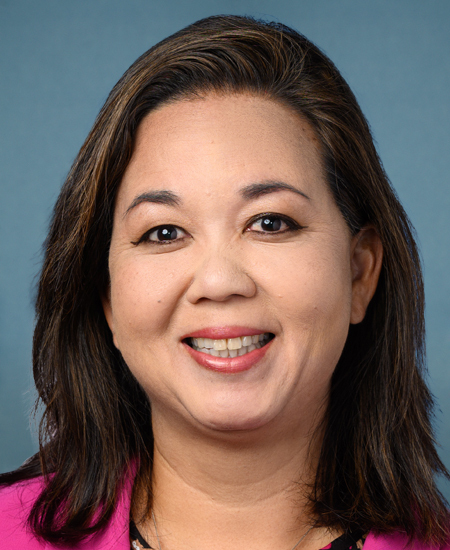
Rep. Jill N. Tokuda
Sponsored bills
Maddy summaryThis bill requires the Department of Energy to develop a national roadmap for bidirectional EV charging within 12 months, outlining strategies, costs, and obstacles for expanding this technology. It mandates that all new electric vehicles (including cars and school buses) manufactured starting in 2027 must support bidirectional charging - allowing EVs to both receive power from chargers and supply power back to the grid or other devices. Manufacturers failing to comply face civil penalties of up to $21,000 per vehicle, with penalties adjusted based on factors like violation scale and business size. Additionally, the bill directs FEMA to require state and local disaster recovery plans to incorporate bidirectional charging capabilities for emergency power resilience.
Maddy summaryThis resolution designates the week beginning November 13, 2023, as "National Apprenticeship Week" through symbolic congressional support. It does not create new laws or programs but formally recognizes the value of registered apprenticeships in providing paid on-the-job training, industry credentials, and career pathways. The resolution highlights apprenticeships' role in developing skilled workers, supporting high-wage sectors like healthcare and green energy, and promoting diversity in training opportunities. It aims to increase public awareness of apprenticeships as an effective "earn-and-learn" model for workers and employers.
Maddy summaryThe TREES Act of 2023 establishes a federal grant program to fund tree planting projects that reduce residential energy use. It provides 90% federal funding (up to $50 million annually) for projects in neighborhoods with high energy burdens, low tree canopy, or vulnerable populations like seniors and low-income households. Eligible applicants - including state/local governments, tribes, nonprofits, and power companies - must demonstrate how planting specific tree species will cut cooling and heating costs through shade and wind protection. The program aims to plant at least 300,000 trees yearly, prioritizing projects that maximize energy savings for households spending a high percentage of income on energy bills.
Maddy summaryThis bill establishes a federal working group under the Department of Health and Human Services to standardize how loneliness and isolation are measured across government agencies and research. The Working Group, composed of HHS agencies, state representatives, and experts, will develop consistent definitions and measurement tools to improve data collection for public health research and healthcare planning. It aims to create reliable methods for tracking these issues across populations and fields, with a report due to Congress within one year of enactment. The effort expires in 2026, focusing solely on measurement standards rather than direct services or funding.
Maddy summaryHR 6251, the HERO Act, provides $1 billion in federal grants to K-12 schools (both public and private) to purchase opioid overdose reversal drugs and develop staff training programs. Schools receiving funds must create emergency response plans for staff and implement educational resources on overdose prevention, CPR, and emergency response. Priority is given to schools in areas with high opioid overdose rates. Grantees must report drug usage and training outcomes to national health databases like NEMSIS and ODMAP.
Maddy summaryThis bill requires military commanders to approve leave for active-duty service members and their dependents seeking abortion care without needing to disclose the specific procedure. It mandates reimbursement for travel costs to clinics providing abortion services when local access is unavailable and protects the privacy of those using this leave. The bill explicitly prohibits any negative consequences for service members who request or take such leave. It directly affects military personnel and their families by ensuring timely, private, and accessible abortion care without command interference.
Maddy summaryHR 6327, the Youth Financial Learning Act, provides federal grants to state education agencies to integrate financial literacy education into public elementary and secondary schools. States use these funds to develop curricula covering topics like budgeting, credit, and student loans, and to award subgrants to local schools, prioritizing high-need areas. States must contribute 25% of the grant amount from non-federal sources and ensure programs sustain beyond the grant period. The bill directly affects public K-12 schools, requiring them to embed financial literacy into classroom learning and partner with community organizations for after-school programs. It authorizes funding for fiscal years 2024 through 2027.
Maddy summaryHR 6121, the Filipino Veterans Fairness Act of 2023, expands U.S. veterans benefits for individuals who served in the Philippine Army, Philippine Scouts, or recognized guerrilla forces during World War II. It directly affects Filipino veterans who previously faced challenges proving service due to limited documentation. The bill allows the Secretary of Veterans Affairs to consider alternative records beyond the National Personnel Records Center rosters when determining eligibility, requires annual reports to Congress on applications and approvals, and clarifies that the Filipino Veterans Equity Compensation Fund does not apply to these veterans. These changes aim to streamline access to benefits for this specific group of veterans.
Maddy summaryHR 4566, the PRESUME Act, changes how veterans exposed to radiation during military service qualify for medical benefits. It prohibits the Department of Veterans Affairs from requiring veterans to provide evidence of a specific radiation dose to be classified as "radiation-exposed." This directly affects veterans who served in roles involving radiation exposure, such as those participating in atomic testing or working with nuclear materials. The bill streamlines eligibility by removing a key barrier to accessing medical benefits they are already entitled to under existing law.