CONtinuity in Necessary Evaluative Crisis Treatment Act of 2024 or the CONNECT Act of 2024 This bill requires the Substance Abuse and Mental Health Services Administration to award grants to certain crisis centers for providing follow-up care to individuals who receive suicide prevention and crisis intervention services.
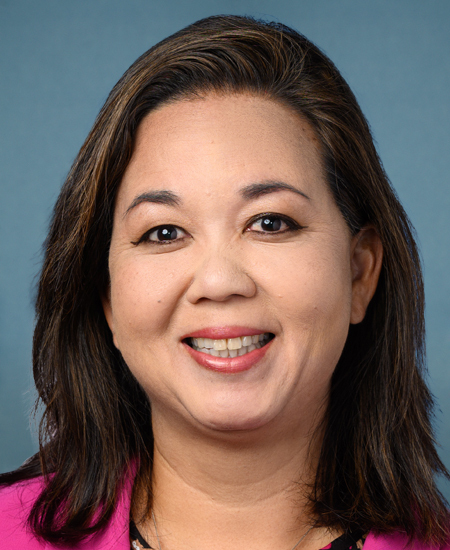
Rep. Jill N. Tokuda
Sponsored bills
This resolution supports the designation of National Teach Ag Day and recognizes the important role of agricultural education and the National FFA Organization in developing the next generation of agricultural leaders.
Maddy summaryThe NO TIME TO Waste Act establishes an Office of Food Loss and Waste within the Department of Agriculture to coordinate national efforts to reduce food loss and waste. It creates a grant program for states, local governments, and tribal entities to collect data on food waste reduction policies and develop model policies, while requiring federal contractors to report on their food waste reduction efforts. The bill sets a goal to reduce food loss and waste by 50% by 2030 compared to 2016 levels, with annual reports tracking progress to Congress. It also establishes regional coordinators to facilitate food recovery and partnerships between government, food businesses, and nonprofits, and mandates a national education campaign to teach consumers about food preservation, safety, and composting. Funding is authorized for fiscal years 2024-2028 to support these initiatives.
Maddy summaryThis bill increases loan limits for farmers under the Farm Service Agency. It raises the maximum farm ownership loan amount from $600,000 to $850,000 (and guaranteed loans from $1.75 million to $3.5 million), and operating loans from $400,000 to $750,000 (guaranteed from $1.75 million to $3 million). It also doubles the microloan cap from $50,000 to $100,000. Additionally, the bill creates a new process allowing distressed guaranteed loans to be refinanced into direct loans if borrowers can't resolve issues with lenders and the farm operation can become financially viable. These changes directly affect farmers and ranchers seeking credit through the Farm Service Agency.
Maddy summaryThis bill creates a new USDA program to directly connect fresh produce producers with community food programs serving low-income individuals. It requires the Secretary of Agriculture to contract with eligible entities (like farms, distributors, and nonprofits) to buy U.S.-grown fresh produce - ensuring at least seven varieties per delivery, locally sourced when possible, and aligned with dietary guidelines - and distribute it to qualifying organizations (such as food banks, schools, and tribal programs) facing food insecurity. The program prioritizes contracts with beginning farmers, socially disadvantaged farmers, veteran farmers, and small/mid-sized family farms, while mandating 30% upfront payment and requiring annual reports on distribution metrics and program effectiveness to Congress. It aims to strengthen local food supply chains, reduce farm waste, and improve access to fresh produce for vulnerable communities.

Maddy summaryHRES 955 is a resolution commending Taiwan for its democratic election history and supporting Taiwan's democratic institutions. It recognizes Taiwan's transition to democracy since the late 1980s, including 7 presidential and 9 legislative elections held since then, all deemed free and fair. The resolution specifically expresses support for Taiwan's upcoming January 13, 2024, elections and condemns interference by the Chinese Communist Party. It affirms U.S. commitment to a strong partnership with Taiwan across multiple domains and supports Taiwan's self-defense and liberty. As a procedural resolution, it does not create new law but formally expresses congressional support for Taiwan's democratic development.
Maddy summaryThe Affordable Connectivity Program Extension Act of 2024 allocates $7 billion in funding for the Affordable Connectivity Program (ACP) during fiscal year 2024. The ACP provides subsidies to low-income households to help cover the cost of internet service and connected devices like laptops or tablets. This funding ensures the program can continue supporting eligible households throughout the year, with the money remaining available until fully spent. The bill extends existing program funding without changing eligibility criteria or service requirements.
Maddy summaryHR 6888, the Clean Energy Workforce Act, provides $100 million in federal grants to develop clean energy job training programs. It directly affects local schools, career technical education centers, colleges, and industry partners by funding: (1) new or expanded training programs in clean energy fields (like renewable energy and climate adaptation), designed to be shared with other schools and accessible to diverse students; and (2) upgrades to school facilities to use renewable energy and improve energy efficiency. Grants require partnerships between educational institutions, industry representatives, and community groups to create replicable training that prepares students for jobs in growing clean energy sectors. The bill focuses on concrete workforce development, not environmental outcomes.
Maddy summaryHR 1147, the Whole Milk for Healthy Kids Act of 2023, allows schools participating in the National School Lunch Program to offer whole milk as an option during lunch. It amends the school lunch law to explicitly permit schools to serve flavored and unflavored whole milk alongside reduced-fat, low-fat, and fat-free milk choices for students. The bill also requires the Secretary of Agriculture to adjust meal regulations to account for saturated fat from whole milk, ensuring it doesn't count against meal fat limits. This change directly affects participating schools and the students who receive school lunches, expanding their milk beverage options.
Maddy summaryHR 6746, the Iron Deficiency Education and Awareness Act, creates a national public health campaign to increase screening and awareness of iron deficiency among women and children under two. The bill directs the Secretary of Health and Human Services to fund a $7 million annual campaign (2024-2028) using evidence-based media, culturally tailored resources, and partnerships with health providers and community organizations. It specifically targets high-risk groups including menstruating women, pregnant/breastfeeding individuals, women with gastrointestinal conditions, Black and Hispanic women, and parents of children under two. The campaign will disseminate information on symptoms, screening recommendations, and prevention strategies through social media, health facilities, schools, and community outreach.