

Maddy summaryHRES 1003 is a symbolic resolution recognizing the contributions of Vietnamese Americans. It acknowledges that approximately 800,000 Vietnamese refugees resettled in the U.S. after the Vietnam War and that over 1.7 million Vietnamese Americans now live in the U.S., forming the fourth largest Asian American group. The resolution highlights their achievements in fields like business, education, the military, and public service, as well as their support for democracy and cultural diversity. As a non-binding resolution, it has no legal effect or direct impact on policy or individuals.
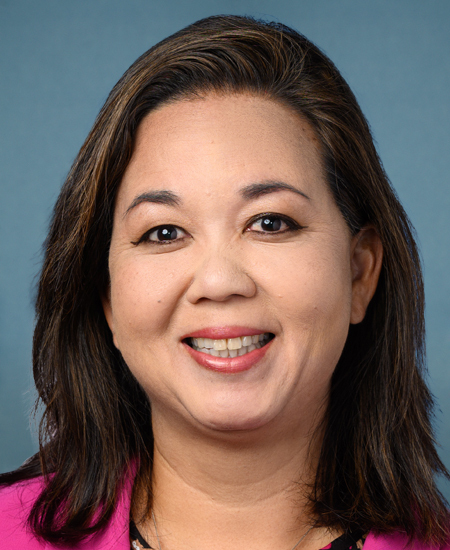
Rep. Jill N. Tokuda
Sponsored bills
Maddy summaryHRES 1002 is a symbolic House resolution recognizing the cultural and historical significance of Lunar New Year (celebrated as the Year of the Dragon in 2024). It acknowledges the holiday's 4,000-year history in China, its celebration across Asia (including Seollal and Tết), and its significance to Asian Americans and others in the U.S. The resolution expresses respect for those observing the holiday and wishes them a happy new year, but it does not create new laws, policies, or funding. As a ceremonial resolution, it has no direct effect on legislation or constituents.
Maddy summaryThis bill authorizes $1.5 billion annually from 2024 to 2028 for the HOME Investment Partnership Program, which funds affordable housing initiatives by state and local governments. It also allocates an additional $500 million annually for the same period specifically to build or rehabilitate childcare facilities within housing projects supported by the program. The funding directly supports local housing authorities in developing and maintaining affordable housing with integrated childcare services.
Maddy summaryHR 7272, the Shining a Spotlight on Safer Communities Act, requires the Attorney General to submit annual reports to Congress starting in 2024, detailing how the Bipartisan Safer Communities Act's provisions (specifically sections 932 and 933 of title 18) are being implemented. These reports must include data on investigations, prosecutions, demographic information of defendants, and seized firearms or assets related to gun trafficking and straw purchasing. The bill mandates these reports for fiscal years 2024 through 2027, with a funding limit of $2 million annually for this reporting. It is a procedural bill focused solely on transparency and accountability for existing gun safety measures, not creating new policies.
This resolution honors the life and legacy of Rosa Parks by nationally recognizing Transit Equity Day. The resolution also encourages the use of public transportation and the continued work to make public transit accessible for all.
Maddy summaryHR 7250, the Strengthening Educator Workforce Data Act, requires the U.S. Department of Education to collect and publish detailed data about public school teachers and principals. It mandates school districts to report specific metrics, including years of teaching/principal experience (broken into categories like "less than 1 year" or "15+ years"), certification status, subject-area expertise (e.g., math, special education), and demographic breakdowns by race, ethnicity, and gender. The data must be published in an accessible report with visualizations like graphs and made publicly available online. This law applies to all public elementary and secondary schools and aims to provide transparency on educator workforce composition without changing existing certification requirements.
Maddy summaryThis symbolic resolution designates February 5-9, 2024, as "National School Counseling Week" to recognize school counselors' roles in supporting students' academic, social-emotional, and career development. It highlights counselors' contributions to student success - such as addressing mental health, bullying, and college/career readiness - while noting current challenges like the national average student-to-counselor ratio of 408:1 (exceeding recommended standards). The resolution encourages public awareness activities but does not create new laws, funding, or obligations.
Maddy summaryHR 7210, the Help America Run Act, allows campaign funds to cover essential personal expenses like child care, elder care, and health insurance premiums for candidates running for office. This amendment to the Federal Election Campaign Act (Section 313) treats these payments as authorized campaign expenses if necessary for campaign activities, while limiting total payments to the same cap as candidate salary. The bill directly affects working parents, caregivers, and lower-income candidates who might otherwise be unable to run due to unaffordable basic living costs. It aims to remove financial barriers that currently prevent many everyday Americans from seeking office, particularly impacting working mothers and caregivers. The policy change does not alter overall campaign finance limits but expands permissible uses of campaign funds for critical personal needs.
Maddy summaryHRES 990 is a non-binding resolution expressing the House of Representatives' support for fair treatment of paraprofessionals (like instructional assistants) and education support staff (such as clerical, custodial, and food service workers) in schools. It states these over 3 million frontline workers deserve livable wages, affordable health care, job security, paid leave, professional development, and safe working conditions. The resolution lists specific recommendations, including eligibility for family medical leave and protections against retaliation for reporting workplace issues. It does not create new laws but formally recognizes these staff as essential to school success and calls for policies addressing their current challenges.
Maddy summaryHR 7127, the FAIR Act, establishes pay adjustments for federal employees in 2025. It increases base pay by 4% for most federal workers under statutory pay systems and for "prevailing rate" employees (like those in specific geographic areas), while raising locality pay rates by 3.4%. The bill directly affects all federal employees receiving pay under these systems, as it modifies their 2025 salary calculations. These changes are based on statutory formulas under Title 5 of the U.S. Code, with no new policy mechanisms beyond the specified percentage increases. The adjustments apply to pay rates in effect as of the end of fiscal year 2024.