

Maddy summaryThe Uyghur Policy Act of 2023 establishes a U.S. Special Coordinator for Uyghur Issues within the State Department to coordinate policy and advocate for the protection of Uyghur cultural, religious, and linguistic identity in Xinjiang. It authorizes $250,000 annually for Uyghur human rights advocates to speak at public diplomacy events in Muslim-majority countries and mandates Uyghur language training for U.S. diplomats. The bill also directs the U.S. government to support United Nations monitoring of Xinjiang human rights issues and oppose efforts to block discussions of Xinjiang at the UN. These provisions focus on diplomatic advocacy and information-sharing, not direct sanctions or enforcement actions against China.
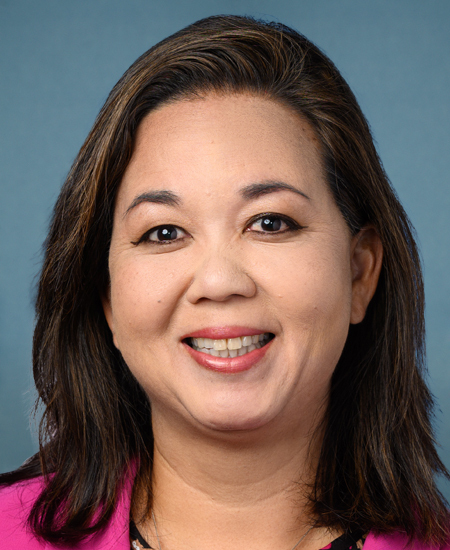
Rep. Jill N. Tokuda
Sponsored bills
Maddy summaryHR 533, the "Promoting a Resolution to the Tibet-China Dispute Act," establishes U.S. policy recognizing Tibetans' right to self-determination under international law and rejects China's historical claims about Tibet. It directs the State Department to counter Chinese disinformation about Tibet’s history and status, including claims that Tibet has been part of China "since ancient times," and amends the 2002 Tibetan Policy Act to require specific disinformation countermeasures. The bill defines "Tibet" to include the Tibet Autonomous Region and Tibetan areas in Qinghai, Sichuan, Gansu, and Yunnan provinces. These provisions aim to guide U.S. diplomatic efforts toward resolving the Tibet-China dispute through dialogue and factual representation.
Maddy summaryThis bill requires the U.S. Department of Education to automatically send information about Supplemental Nutrition Assistance Program (SNAP) eligibility to college students with a zero expected family contribution (EFC) who submit the Free Application for Federal Student Aid (FAFSA). It directs the Secretary to provide written and electronic details about SNAP benefits, including how to apply and contact information for state SNAP agencies, in both formats. The bill mandates consultation between the Education and Agriculture Departments to design this communication. It directly affects low-income undergraduate students who qualify for federal aid but may not know about SNAP food assistance. The policy change aims to connect eligible students with existing nutrition support programs.
Climate and Health Protection Act This bill provides statutory authority for the Climate and Health Program within the Centers for Disease Control and Prevention.
Maddy summaryHRES 1013 is a symbolic resolution designating February 2024 as "National Teen Dating Violence Awareness and Prevention Month." It expresses congressional support for this designation to promote community awareness and prevention efforts around teen dating violence, which affects youth across the U.S. The resolution does not create new laws or funding but encourages schools, families, and communities to observe the month with educational activities. It references statistics on teen dating violence (like 28.1% of teens experiencing digital dating abuse) to highlight the issue's significance.
Maddy summaryHRES 966 is a symbolic resolution condemning alleged sexual violence committed by Hamas during its October 7, 2023, attack on Israel. It specifically references eyewitness accounts, forensic evidence, and Hamas fighters' admissions of ordering gang rape, sexual mutilation, and assault against Israeli civilians. The resolution calls for international condemnation of such acts as weapons of war, urges nations to criminalize sexual violence, and supports investigations into Hamas' actions. As a non-binding resolution, it does not create new laws or directly affect any individuals but formally expresses the House's position on the issue.
Maddy summaryThe Disaster Survivors Fairness Act of 2023 would establish a unified online application system for federal disaster assistance, allowing multiple agencies to share information more efficiently. It would streamline the application process for individuals and households seeking help after disasters, requiring agencies to provide transparent information about application status, denial reasons, and assistance amounts through an interactive dashboard. The bill improves rental assistance for renters, expands hazard mitigation assistance, and amends repair criteria to focus on "damaged" rather than "uninhabitable" properties. It would directly affect survivors of major disasters who apply for federal assistance through programs like FEMA's Individual Assistance. The bill requires FEMA to report on disparities in assistance between homeowners and renters and to conduct studies on rental challenges.
Maddy summaryHRES 1010 is a symbolic resolution supporting the designation of February 2024 as "Hawaiian Language Month" or "'Ōlelo Hawai'i Month." It recognizes the Hawaiian language's historical significance to Native Hawaiians, its near extinction due to past policies, and ongoing revitalization efforts like immersion schools. The resolution urges the U.S. public and organizations to celebrate the month through activities promoting the language, aligning with existing federal policies like the Native American Languages Act. It does not create new laws or allocate funding but serves as a ceremonial endorsement of language preservation.
Maddy summaryThis bill updates the BEACH Act to improve monitoring of water quality at public beaches and coastal recreation areas. It expands the definition of monitored waters to include nearby shallow upstream areas and locations "present on" beaches, and allows states using federal grants to identify specific pollution sources. The bill also extends annual funding for these programs from $30 million per year through 2029 (replacing the previous 2001-2005 authorization) and requires the EPA to incorporate new water testing technologies into its guidance for states. These changes directly affect states and local governments receiving EPA grants for beach water quality monitoring.
Maddy summaryThe Community TEAMS Act of 2024 creates a new federal grant program to support medical student training in rural and medically underserved communities. It provides funding for 1-5 years to partnerships between medical schools and community health providers (such as rural clinics, Federally Qualified Health Centers, or facilities in underserved areas) to expand outpatient clinical rotations. The goal is to help train physicians who will practice long-term in high-need communities by increasing access to community-based training. Grant applicants must include detailed project plans, sustainability strategies, and evaluation methods in their proposals.