

Maddy summaryHR 7849, the Disaster Resiliency and Coverage Act of 2024, establishes a federal grant program to help homeowners in high-risk disaster areas make their homes more resilient. The program provides up to $10,000 per household (adjusted annually for inflation) for specific qualifying mitigation activities, such as reinforcing roofs, installing flood barriers, or creating fire-resistant landscaping. Homeowners must have an adjusted gross income under $250,000 ($500,000 for joint filers) and the work must meet FEMA-established standards. States and tribal governments administer the program, with funds intended to incentivize insurance companies to offer or increase coverage in vulnerable areas.
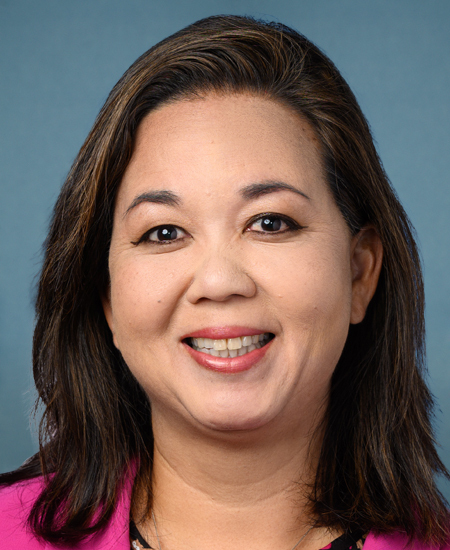
Rep. Jill N. Tokuda
Sponsored bills
Maddy summaryThis bill directs the federal government to launch a national public health education campaign about abortion access. It requires the Secretary of Health to provide medically accurate, culturally competent information on where to access abortion services (including medication abortion and telehealth), legality, identifying misleading crisis pregnancy centers, and spotting misinformation. The campaign specifically targets underserved groups like communities of color, immigrants, LGBTQ+ individuals, and people in rural areas. It prohibits promoting misinformation about abortion safety, abortion reversal, or abstinence-only programs, and bans collecting personal data from users. The effort aims to improve access to reliable information, not to change abortion laws.
Maddy summaryHRES 1105 designates March 21, 2024, as "National Women in Agriculture Day" to recognize the contributions of women in the agricultural sector. It specifically highlights women as producers, educators, mentors, and leaders who drive economic impact (accounting for 36% of U.S. agricultural sales in 2022) and support workforce development. The resolution encourages all citizens to acknowledge these women’s roles in food production, agricultural innovation, and mentoring through programs like 4-H and FFA. As a symbolic resolution, it does not create new laws or funding but formally celebrates their ongoing contributions to U.S. agriculture.
Maddy summaryThis bill would provide federal grants to public housing agencies to modernize public housing through energy efficiency upgrades, infrastructure improvements, and renewable energy systems. It requires all public housing to become "zero-carbon homes" that produce enough renewable energy to meet their own consumption within 10 years. The bill includes specific requirements for workforce development, hiring from low- and very low-income communities (40% in year 1, 50% in year 2, 90% after that), and contracting with resident-owned businesses (20% in year 1, 30% in year 2, 50% after that). It also mandates resident and community engagement in planning, and requires public housing agencies to meet specific energy efficiency and water quality standards. The bill directly affects all public housing agencies managing housing for low- and very low-income residents across the United States, including tribal housing entities.
Maddy summaryHR 7770, the Rosie the Riveter Commemorative Coin Act, authorizes the U.S. Mint to produce and sell three commemorative coins honoring women who worked on the U.S. home front during World War II. It specifies $5 gold coins (max 50,000), $1 silver coins (max 400,000), and half-dollar coins (max 750,000), all to be issued between January 1, 2025, and December 31, 2025. Each coin sale includes a surcharge ($35 for gold, $10 for silver, $5 for half-dollar), with all surcharge funds directed to the Rosie the Riveter Trust for maintaining the Rosie the Riveter WWII Home Front National Historical Park and educational programs. The coins will feature designs reflecting the legacy of diverse women workers and must meet specific weight, diameter, and composition standards.
Maddy summaryHR 5247, the Expedited Hiring for VA Trained Psychiatrists Act of 2023, allows the Veterans Health Administration (VA) to hire psychiatrists who complete VA-residency programs without following standard civil service hiring rules. The bill permits immediate appointment after residency completion (or before, if the process begins early) for positions that have remained unfilled for at least 35 days. This directly affects VA psychiatrists completing specific residency programs and streamlines their hiring into VA clinical roles.
Maddy summaryHR 7746, the "Destroy Zombie Guns Act," requires businesses that destroy firearms to destroy every component of a firearm during the process, not just parts of it. This law directly affects licensed firearm destruction businesses and individuals operating as regular business to destroy firearms for profit. The bill amends federal law (18 U.S.C. § 922) to make it unlawful to fail this complete destruction, adding penalties including fines, up to 2 years in prison, and license suspension or revocation for licensed destroyers who violate the rule. The key mechanism ensures no firearm parts remain usable after destruction, targeting incomplete destruction practices.
Maddy summaryHR 7745, the American Innovation Act, authorizes significant annual funding for federal science and technology programs through fiscal year 2035. It sets specific funding levels for the National Science Foundation ($9.74B in 2025, increasing to $17.04B by 2033), the Department of Energy’s Office of Science, Department of Defense science programs ($21.90B in 2025, rising to $41.09B by 2034), the National Institute of Standards and Technology, and NASA’s Science Mission Directorate. Funding for each agency increases annually through 2034, then adjusts each year by the Consumer Price Index for future years. The bill exempts these appropriations from sequestration and specifies that funds remain available until expended.
Maddy summaryThe PTO Act establishes a standard for paid annual leave, requiring most employers to provide employees with 1 hour of paid leave for every 25 hours worked, up to a maximum of 80 hours per 12-month period. It directly affects private sector employees and certain government workers, including those at the Government Accountability Office, Library of Congress, and federal agencies covered under the Congressional Accountability Act. The bill prohibits employers from interfering with employees' use of leave for any reason, requires clear notice of leave policies, and protects employees from retaliation for taking leave. It includes enforcement mechanisms through the Department of Labor, allowing employees to file complaints or lawsuits for violations of their leave rights. The Act takes effect 180 days after enactment, with specific provisions for collective bargaining agreements.
Maddy summaryThis bill would create a new wealth tax on individuals with significant assets, targeting those with net assets exceeding $50 million. It would tax assets between $50 million and $1 billion at 2%, and assets above $1 billion at 3% (potentially increasing to 6% if certain health care legislation is enacted). The tax would apply to individuals, married couples treated as a single taxpayer, and certain trusts, with specific valuation and reporting requirements for assets. The bill also includes $70 billion in funding over 10 years for the IRS to enforce this new tax and related reporting requirements.