

Maddy summaryThis bill authorizes $5 billion annually (2025-2034) for three key housing programs - Home Investment Partnerships, Community Development Block Grants, and the Housing Trust Fund - but restricts funding to areas already designated with a "high housing cost adjustment" by HUD. It mandates a two-year assessment by the Secretary of Housing and Urban Development to evaluate how area median income (AMI) calculations impact affordability, particularly in high-cost urban areas, including analyzing ZIP code-level metrics and alternatives to AMI. The study must examine rent burdens, income limits for tax-subsidized housing, and the specific effects of high-cost adjustments in places like New York City. The bill directly affects low-income and middle-class families in urban areas where housing costs significantly exceed local median income, aiming to inform potential reforms to housing affordability metrics.
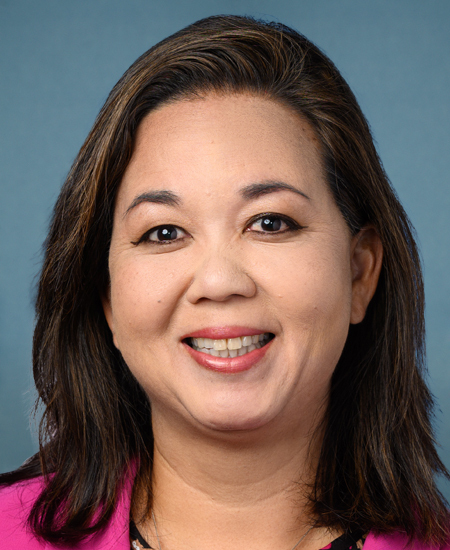
Rep. Jill N. Tokuda
Sponsored bills
Maddy summaryHR 7944, the Water Systems PFAS Liability Protection Act, exempts public water systems, wastewater treatment facilities, and related entities from liability under federal environmental law for PFAS releases, provided they follow all applicable laws during water treatment and disposal. The bill protects these "protected entities" from lawsuits seeking cleanup costs or damages related to PFAS, as long as their actions were consistent with current regulations during water management. However, entities remain liable if they acted with gross negligence or willful misconduct in handling PFAS.
Maddy summaryThe Teen Dating Violence Prevention Act establishes a federal grant program to fund schools and youth organizations in developing and delivering evidence-based educational resources and training focused on preventing teen dating violence. The program, funded with $10 million annually from 2025-2029, supports creating materials to help teens recognize, prevent, and report abuse, training school staff to identify and respond to abuse, and hosting workshops for students and parents. Eligible applicants include schools, community groups, and youth organizations that work with teens aged 12-18, with requirements for involving domestic violence professionals and stakeholders in program design. The bill defines teen dating violence as abuse in intimate relationships among youth, including physical, sexual, emotional, or technological harm.
Maddy summaryThis bill requires financial counselors within the Department of Defense to submit annual financial disclosures to ensure they are free from conflicts of interest. It mandates that these counselors provide services only after agreeing to these disclosures and allows the Secretary of Defense to block any counselor found to have a conflict until the issue is resolved. Additionally, the bill requires the Department of Defense to report to Congress annually on the percentage of counselors who have been verified as free from conflicts. These measures aim to protect military service members and their families from potential predatory financial practices by ensuring the independence of the financial advisors they receive.
Maddy summaryHRES 1127 is a symbolic House resolution commemorating the 45th anniversary of the Taiwan Relations Act (TRA) and reaffirming U.S. policy toward Taiwan. It does not create new law but formally reiterates the U.S. commitment to Taiwan under the TRA framework, including regular defense transfers to support Taiwan's self-defense and advocacy for Taiwan's meaningful participation in international organizations. The resolution highlights longstanding U.S.-Taiwan cooperation on trade, security, education, and global challenges like public health and cybersecurity. It specifically calls on the Secretary of State to advance Taiwan's international engagement and supports existing programs like the Taiwan Fellowship Program and the American Institute in Taiwan. As a procedural resolution, it expresses congressional support for current policy without altering legal obligations.
Maddy summaryHR 7862 directs federal agencies to annually report on converting unused government-owned buildings into affordable housing. It establishes two grant programs: a $1.75 million annual grant for exploring office-to-residential conversions, and a $250 million annual program for states and local governments to convert underutilized public buildings into rental housing. The state/local program requires converted housing to maintain affordability for 30 years, with at least 20% of units reserved for households earning ≤50% of local median income, or 40% for households ≤60% of median income. This bill directly affects federal agencies (through reporting) and state/local governments (through grant funding), focusing on repurposing vacant public property to expand affordable housing options.
Maddy summaryThis bill requires the Health and Human Services Secretary to issue guidance within one year on providing Medicare-covered behavioral health services (like mental health counseling) via telehealth to beneficiaries with limited English proficiency. The guidance must cover best practices for using interpreters during telehealth visits, integrating multi-person video platforms, helping patients learn to use telehealth tools, and offering materials (like appointment reminders) in multiple languages. It directly affects Medicare beneficiaries who face language barriers accessing telehealth services. The bill sets standards for providers but does not change Medicare coverage rules.
Maddy summaryThis bill establishes federal grant programs to expand physician training in rural areas. It provides funding to create new rural residency programs (requiring over 50% of training to occur in rural settings) and technical assistance for organizations developing these programs. Grants for new programs last 3 years (extendable) and target high-need specialties like primary care, maternal health, and psychiatry. The bill authorizes $12.7 million annually from 2025-2029 for these initiatives, directly affecting rural hospitals, medical schools, and health centers seeking to train physicians for rural practice.
Maddy summaryHCONRES 101 is a symbolic resolution introduced in the U.S. House of Representatives on March 22, 2024, by multiple cosponsors. It recognizes that people with disabilities face daily barriers accessing federally funded facilities and reaffirms support for the existing Americans with Disabilities Act (ADA) and Architectural Barriers Act of 1968. The resolution pledges to prioritize "universal and inclusive design" in future federal infrastructure projects but does not create new legal requirements or alter current accessibility standards. As a concurrent resolution, it has no binding effect and serves only to express congressional support for accessibility goals.
Maddy summaryHRES 1110 is a symbolic resolution passed by the U.S. House of Representatives in March 2024 to commemorate March 2024 as National Women’s History Month. It formally supports the month’s goals, recognizes women and organizations advancing women’s history education, and highlights the intersectional contributions of Black, Hispanic, Asian, Native American, Pacific Islander, LGBTQ+, and disabled women throughout U.S. history. The resolution has no legal effect or policy changes - it serves solely as a ceremonial acknowledgment of historical milestones and ongoing advocacy for gender equality. It directly affects all Americans by affirming the significance of women’s historical contributions through official congressional recognition.