

Maddy summaryHR 1591 amends the Elementary and Secondary Education Act to increase annual federal funding for impact aid programs that support school districts near military bases, national parks, and other federal properties. It authorizes specific, rising funding levels for four key areas: payments for federal land acquisitions ($90 million in 2024, growing to $150 million by 2029), basic payments to heavily impacted school districts ($1.6 billion in 2024, growing to $2.45 billion by 2029), payments for students with disabilities ($60 million in 2024, growing to $120 million by 2029), and school construction projects ($22.9 million in 2024, growing to $45.4 million by 2029). These appropriations represent incremental steps toward full federal funding for these aid programs, as specified in the bill's text. The bill directly affects school districts located near federal land, providing predictable annual funding increases for their operational and infrastructure needs.
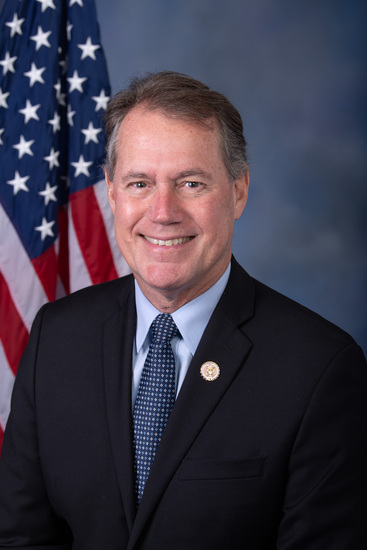
Rep. Ed Case
Sponsored bills
Maddy summaryThis bill authorizes a Congressional Gold Medal to honor the "Hello Girls" - female telephone operators who served in the Army Signal Corps during World War I. They provided critical battlefield communications in France (connecting 26 million calls), wore military uniforms, and faced combat risks, but were denied veteran benefits for 60 years due to being classified as civilian contractors. The medal recognizes their pioneering service, devotion, and the decades-long struggle to gain military recognition. The award follows similar recognition for other WWII women veterans and aims to correct the historical injustice they faced.
Maddy summaryHR 1538 creates a new "emerging business enterprise" designation for very small, young businesses (under 5 years old, with fewer than 25 employees or under 10% of industry size standards, and managers earning no more than 200% of average manager salaries). It requires federal agencies to set annual goals for awarding 3% of contracts to these businesses, prioritizing them if goals aren't met. The bill also waives SBA loan fees for eligible businesses and mandates agencies to report their progress to the Small Business Administration and Congress annually. These provisions aim to increase federal contracting opportunities for early-stage small businesses through defined eligibility, agency targets, and financial incentives.
Maddy summaryThis bill removes federal restrictions that previously limited methadone prescribing for opioid use disorder, allowing certified addiction specialists and program employees to prescribe methadone through pharmacies for up to 30 days per electronic prescription. It directly affects patients with opioid use disorder who can now access treatment more flexibly outside traditional clinic settings, and healthcare providers who gain new prescribing authority. Key provisions include requiring electronic prescriptions, mandating patient informed consent about confidentiality differences, and permitting telehealth for counseling and ancillary services. The bill also requires annual reports to Congress tracking registered providers and patients served.
Maddy summaryHR 1328, the Medical Device Nonvisual Accessibility Act of 2023, requires certain home-use medical devices (like blood pressure monitors and sleep apnea machines) to include nonvisual accessibility features - such as voice commands or audio feedback - by 2025. It directly affects blind or low-vision users who rely on these devices for independent, safe, and private care at home. The bill mandates that devices classified as Class II or III (and cleared via FDA processes) must meet accessibility standards ensuring equal usability for blind or low-vision individuals, with limited waivers allowed for manufacturers facing undue hardship. The FDA will develop and enforce these standards within two years, consulting with accessibility experts and blind users.
Maddy summaryThe Paycheck Fairness Act (HR 17) strengthens equal pay protections by amending the Fair Labor Standards Act. It prohibits pay discrimination based on sex, pregnancy, childbirth, sexual orientation, gender identity, and sex characteristics. The bill modifies employer defenses for pay differences to require demonstration that any disparity is job-related, consistent with business necessity, and accounts for the entire pay differential. It also prohibits employers from relying on wage history when making hiring decisions or setting pay, enhances penalties for violations, and requires the EEOC to collect compensation data disaggregated by sex, race, and national origin.
Maddy summaryHCONRES 22 is a symbolic resolution recognizing the persistent gender pay gap in the U.S., documenting that women earn significantly less than men across racial groups (e.g., Black women earn 67 cents for every dollar earned by White men). It highlights the economic impact of this disparity, noting women lose over $958 billion annually in wages and face barriers like occupational segregation and workplace harassment. The resolution does not create new laws or policies but formally acknowledges the issue and reaffirms Congress’s commitment to addressing the gap. It references specific Equal Pay Days (e.g., March 14 for all women) to underscore the time women must work to earn what men did the previous year.
Maddy summaryHR 1478 requires federal firearm dealers to implement physical security measures, including locked cabinets, security systems, and video surveillance, to prevent gun thefts. The bill mandates quarterly inventory checks, extends background check record retention from 24 hours to 90 days, and repeals restrictions that prevented the ATF from disclosing crime gun trace data. It increases penalties for violations, including fines up to $20,000 and license suspension or revocation for repeated failures. The bill directly affects all federally licensed firearm dealers, manufacturers, and importers by holding them accountable for security failures and recordkeeping. This legislation aims to reduce gun trafficking by strengthening enforcement and transparency in the firearm industry.
Maddy summaryHR 1491, the Small Business Energy Loan Enhancement Act, increases the maximum loan amount for energy-related small business loans under the Small Business Investment Act of 1958 from $5.5 million to $10 million. This directly affects small businesses seeking financing for energy efficiency or renewable energy projects by doubling their potential loan access. The bill requires the Small Business Administration to submit annual reports to Congress detailing which industries and geographic areas received these enhanced loans. These changes aim to expand access to capital for qualifying energy projects without altering eligibility criteria.
Maddy summaryHR 1439, the Vote at Home Act of 2023, would require states to mail ballots to all registered voters for federal elections at least two weeks before Election Day. The bill would eliminate unnecessary requirements for voting by mail, such as needing to provide a reason for voting by mail or obtaining a notary signature. It would also provide free postage for all voting mail and implement automatic voter registration through state motor vehicle offices. The law would take effect for elections held in 2024 and later, affecting all states conducting federal elections.