

Asunción Valdivia Heat Illness and Fatality Prevention Act of 2022 This bill directs the Occupational Safety and Health Administration to promulgate a standard that requires employers to implement certain measures for protecting workers from heat stress and related illnesses or injuries. Heat stress refers to the load of heat that a person experiences due to sources of heat or heat retention (including metabolic heat, environmental factors, and clothing or personal protective equipment) or the presence of heat in a work setting. Further, if an employer cannot reduce exposure to heat stress below hazardous levels through engineering controls (e.g., heat shields and insulation) or personal protective equipment (e.g., heat reflective clothing), the employer must implement a program that mitigates such exposure through access to appropriate hydration and cool-down spaces, acclimatization policies, and periodic paid rest breaks. Additionally, the bill establishes requirements concerning judicial review, implementation, enforcement, recordkeeping, and whistle-blower protections related to the standard. The bill also requires the Department of Labor to include questions about heat-related illness and injury in the National Agricultural Workers Survey (an employment-based, random-sample survey of U.S. crop workers that collects demographic, employment, and health information).
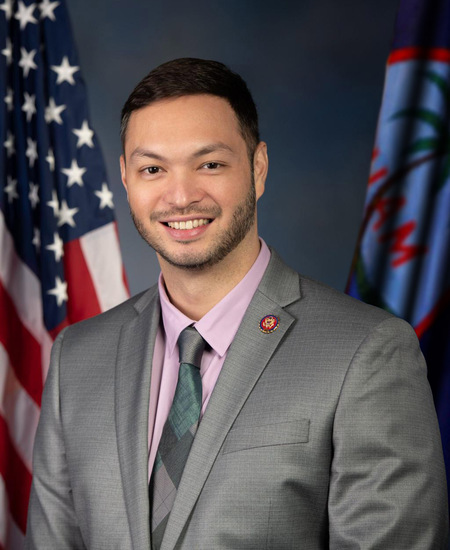
Rep. Michael F. Q. San Nicolas
Sponsored bills
This resolution reaffirms the goals of World Refugee Day and the commitment of the United States to promote the safety and well-being of refugees and asylum seekers.
This resolution expresses support for the goals and values of the 54th anniversary of the Fair Housing Act and for efforts to strengthen housing protections, particularly during the COVID-19 pandemic and recovery.
This resolution supports the goals and ideals of the International Day for the Elimination of Violence against Women. The resolution also recognizes and honors the individuals and organizations in the United States and in other countries who have fought and continue to struggle to eliminate violence against women. Finally, the resolution encourages the President, among other goals, to increase legal and judicial protection to address violence against women and girls, change social norms to end violence against women and girls, and increase women's economic opportunity and education.
This resolution recognizes Immigrant Heritage Month in honor of the contributions immigrants and their children have made to the United States. It also welcomes immigrants presently in the United States and individuals seeking to immigrate to the United States to contribute to the health, safety, diversity, and prosperity of the United States.
Governing Unaccredited Representatives Defrauding VA Benefits Act or the GUARD VA Benefits Act This bill imposes criminal penalties and/or fines on individuals for directly or indirectly soliciting, contracting for, charging, or receiving any unauthorized fee or compensation with respect to the preparation, presentation, or prosecution of any claim for Department of Veterans Affairs benefits. The attempted commission of such offenses is also punishable by fine or imprisonment.
Deter PRC Support to the Russian War Effort Act The bill authorizes the President to impose sanctions on persons associated with China for financial, material, or technological support contributing materially to Russia's military action in Ukraine. The sanctions include, for example, blocking transactions in U.S. property and prohibiting U.S. entry visas.
Children's Safe Welcome Act of 2022 This bill imposes requirements related to the treatment of noncitizen children detained in immigration custody. For example, the bill (1) prohibits an accompanied noncitizen child from being separated from a parent or legal guardian while in immigration custody, except in certain situations; (2) requires each child in immigration custody to receive a legal orientation presentation and have access to legal counsel and child advocates; and (3) requires each unaccompanied noncitizen child in Department of Health and Human Services custody to be placed in the least restrictive setting that most approximates a family and in which any special needs may be met.
Bringing an End to Harassment by Enhancing Accountability and Rejecting Discrimination in the Workplace Act or the BE HEARD in the Workplace Act This bill expands protections against discrimination and harassment in the workplace and raises the minimum wage for tipped employees. Specifically, the bill (1) makes it an unlawful employment practice to discriminate against an individual in the workplace based on sexual orientation, gender identity, pregnancy, childbirth, a medical condition related to pregnancy or childbirth, or a sex stereotype; and (2) provides a statutory definition for what constitutes workplace harassment. Further, these protections apply to all workplaces, regardless of size, and to all workers, including independent contractors, interns, volunteers, and trainees. The bill prohibits employers from entering into contracts or agreements with workers that contain certain nondisparagement or nondisclosure clauses and prohibits certain predispute arbitration agreements and postdispute agreements. It also establishes grant programs to (1) prevent and respond to workplace discrimination and harassment, (2) provide legal assistance for low-income workers, and (3) establish a system of legal advocacy in states to protect the rights of workers. The bill further provides employees the right to retain their tips and it increases, in specified annual increments, the minimum wage for tipped employees to match the federal minimum wage for nontipped employees. Additionally, the bill requires the Equal Employment Opportunity Commission to provide specified training and resource materials, establish and convene a harassment prevention task force, and establish an Office of Education and Outreach with regard to prohibited discrimination and harassment in employment. The bill also requires specified studies, reports, and research on prohibited workplace harassment.
Lifting Immigrant Families Through Benefits Access Restoration Act of 2021 or the LIFT the BAR Act of 2021 This bill repeals certain limits on the eligibility of noncitizens who lawfully reside in the United States for federal means-tested programs, including Medicaid, the Children's Health Insurance Program (CHIP), programs funded through Temporary Assistance for Needy Families (TANF) grants, Supplemental Security Income (SSI), and certain nutrition and housing programs.