

Paycheck Fairness Act This bill addresses wage discrimination on the basis of sex, which is defined to include pregnancy, sexual orientation, gender identity, and sex characteristics. Specifically, it limits an employer's defense that a pay differential is based on a factor other than sex to only bona fide job-related factors in wage discrimination claims, enhances nonretaliation prohibitions, and makes it unlawful to require an employee to sign a contract or waiver prohibiting the employee from disclosing information about the employee's wages. The bill also increases civil penalties for violations of equal pay provisions. Additionally, the Equal Employment Opportunity Commission (EEOC) and the Office of Federal Contract Compliance Programs must train EEOC employees and other affected parties on wage discrimination. The bill directs the Department of Labor to (1) establish and carry out a grant program to provide training in negotiation skills related to compensation and equitable working conditions, (2) conduct studies to eliminate pay disparities between men and women, and (3) make available information on wage discrimination to assist the public in understanding and addressing such discrimination. The bill establishes the National Award for Pay Equity in the Workplace for an employer who has made a substantial effort to eliminate pay disparities between men and women. It also establishes the National Equal Pay Enforcement Task Force to address compliance, public education, and enforcement of equal pay laws. Finally, the bill requires the EEOC to issue regulations for collecting from employers compensation and other employment data according to the sex, race, and national origin of employees for use in enforcing laws prohibiting pay discrimination.
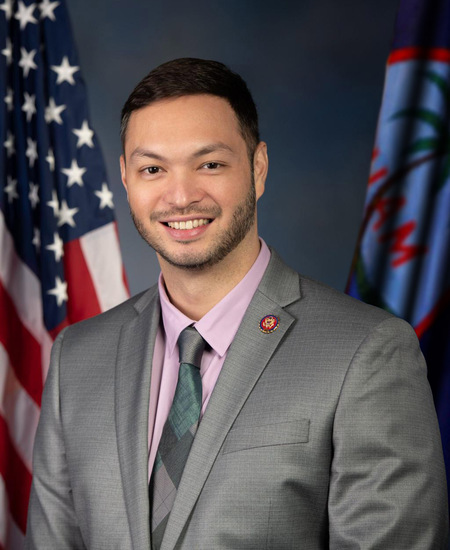
Rep. Michael F. Q. San Nicolas
Sponsored bills
Americans Giving Care to Elders (AGE) Act of 2021 This bill allows a tax credit for a portion of a taxpayer's expenses for eldercare. The credit applies to expenses to care for certain relatives or members of the taxpayer's household who have attained the age of 60 and require assistance with activities of daily living. Eldercare expense include amounts paid for: medical care, lodging away from home, adult day services, personal care, respite care, assistive technologies and devices (including remote health monitoring), environmental modifications (including home modifications), and counseling or training for a caregiver. The amount of eldercare expenses incurred during any year that may be taken into account for the credit may not exceed $6,000.
Collaborative Academic Research Efforts for Tourette Syndrome Act of 2021 This bill requires the National Institutes of Health (NIH) to carry out data collection and expand other research activities on Tourette syndrome. This is a neurological disorder characterized by sudden, repetitive, rapid, and unwanted movements or vocal sounds. Specifically, the NIH must develop a system to collect epidemiological data and information on the availability of medical and social services for individuals with Tourette syndrome and their families. In addition, the NIH must award various grants for research on Tourette syndrome, including to support Collaborative Research Centers for Tourette Syndrome. The NIH must also designate a portion of its funding for Tourette syndrome programs and activities.
Vaccine Access Improvement Act of 2021 This bill modifies the excise tax on certain vaccines to (1) automatically impose the tax on vaccines that the Department of Health and Human Services (HHS) adds to the Vaccine Injury Table, and (2) require HHS to notify the Department of the Treasury and Congress when new vaccines are added to the table. (The excise tax funds the National Vaccine Injury Program, which compensates people who have been injured by vaccines listed on the table.)
Organ Donation Clarification Act of 2021 This bill specifies that certain payments and pilot programs relating to organ donation do not violate the National Organ Transplant Act, which prohibits the exchange of valuable consideration for human organs. Specifically, it excludes additional types of reimbursements and payments related to organ donation from the definition of valuable consideration , such as costs for (1) dependent care; (2) certain medical expenses for up to 10 years after a donation; (3) paperwork or legal services; and (4) term life insurance policies, subject to some limitations. In addition, the federal government, states, or local governments may carry out pilot programs to evaluate the effects of removing disincentives or providing noncash benefits on the availability of organs for transplant, provided these programs meet ethical and other conditions.
National Guard and Reserve Incentive Pay Parity Act This bill requires the military department concerned to pay members of the reserve components a special bonus or incentive pay in the same monthly amount that is paid to members in the regular component of the service for performing comparable work requiring comparable skills.
United States Army Rangers Veterans of World War II Congressional Gold Medal Act This bill provides for the award of a single Congressional Gold Medal to the U.S. Army Rangers Veterans of World War II in recognition of their dedicated service during World War II.
Defenders of Bataan and Corregidor Congressional Gold Medal Act This bill provides for the award of a Congressional Gold Medal to the troops from the United States and the Philippines who defended Bataan and Corregidor, in recognition of their personal sacrifice and service during World War II.
Veteran Education Empowerment Act This bill reauthorizes through FY2029 and otherwise revises a Department of Education (ED) grant program for student veteran centers. Specifically, ED must make grants to institutions of higher education (IHEs) or consortia of IHEs to establish, maintain, improve, or operate a student veteran center. A student veteran center is a dedicated space on a campus that provides students who are veterans or members of the Armed Forces with (1) a lounge or meeting space for themselves, their spouses or partners, their children, and veterans in the community; and (2) a centralized office for student veteran services that serves as a single point of contact to coordinate comprehensive support services for student veterans.
This resolution expresses support for policies and other efforts to prevent childhood sunburns, such as exempting sunscreen from over-the-counter medication bans in schools.