

Maddy summaryThe Formula 3.0 Act removes tariffs on infant formula base powder (a dry mixture requiring only vitamins/minerals to become formula) for manufacturers authorized by the FDA to market infant formula in the U.S. It creates a new duty-free tariff classification (1901.90.57) for this base powder, effective 120 days after enactment. This directly affects infant formula manufacturers and importers who meet FDA authorization requirements. The bill modifies U.S. tariff schedules to eliminate duties on specific infant formula components, aiming to reduce import costs for compliant manufacturers.
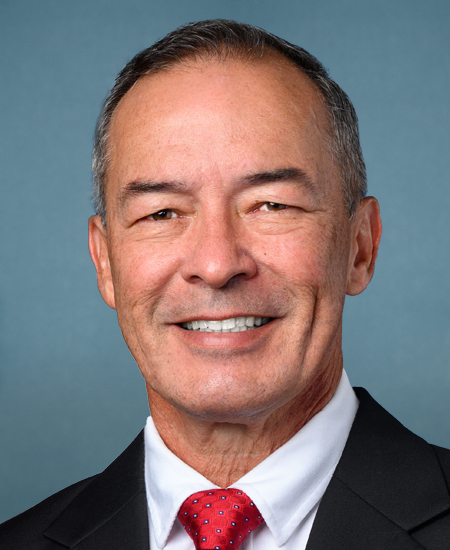
Rep. James C. Moylan
Sponsored bills
Maddy summaryThis bill would require Medicare to cover FDA-approved blood tests that screen for multiple cancers simultaneously (like breast, lung, or colorectal cancer) for beneficiaries. It directly affects Medicare recipients aged 65+ who could access these new screenings once per year, without prior authorization. The key provision adds "multi-cancer early detection screening tests" to Medicare's covered services under Part B, defining them as blood tests analyzing cell-free DNA, while maintaining existing coverage for standard screenings like mammograms. The bill does not change current coverage for individual cancer screenings but ensures Medicare keeps pace with new medical technology.
Maddy summaryHR 1675, the Territory Health Revitalization Act, increases funding access for health programs in U.S. territories. It requires 5% of certain Social Security Act health grants to be reserved for territories (like Guam, Puerto Rico, and the Northern Mariana Islands), removes a restriction blocking the Northern Mariana Islands from qualifying, and guarantees at least two grants to territory-based organizations each year. The bill directly affects territorial health programs and local grantees by ensuring dedicated funding and eligibility. These changes take effect October 1, 2023, modifying existing federal grant allocation rules without creating new programs.
Maddy summaryHR 1571, the Compact Impact Fairness Act of 2023, removes barriers to federal benefits for citizens of the Federated States of Micronesia (FSM), the Republic of the Marshall Islands (RMI), and Palau who legally reside in the U.S. under the Compacts of Free Association. The bill amends the 1996 welfare law to add an exception, making these citizens eligible for most federal benefit programs (like Medicaid and food assistance) that previously excluded them due to their immigration status. It eliminates a 5-year waiting period for benefits and removes specific references to Medicaid, applying the change broadly across all federal programs. This directly affects over 30,000 citizens of these nations living in the U.S. under the compacts, who currently face restrictions on accessing critical support. The bill aims to align federal benefit eligibility with the unique status granted by the Compacts of Free Association.
Maddy summaryThe Territories Health Equity Act of 2023 improves healthcare access and funding for residents of U.S. territories by making several key changes to Medicare and Medicaid programs. It eliminates funding limitations for Medicaid in territories beginning in 2024, removes specific Medicare funding restrictions for Puerto Rico, and allows territories to receive payments for hospitals serving high numbers of low-income residents. The bill creates automatic eligibility for low-income territorial residents to receive Medicare premium and cost-sharing subsidies, eliminates late enrollment penalties for Part B Medicare in Puerto Rico, and requires transparency about Medicaid and CHIP programs in territories. These changes directly affect residents of Puerto Rico, the Virgin Islands, Guam, the Northern Mariana Islands, and American Samoa, as well as healthcare providers in these territories.
Maddy summaryThis bill repeals specific provisions from the Affordable Care Act and its 2010 amendment that restricted certain physician referrals to hospitals under Medicare. It directly affects hospitals and physicians who previously faced limitations on referring Medicare patients to facilities they owned or had financial ties with. The key mechanism restores the original rules that allowed such referrals without the prior restrictions, effectively undoing the 2010 changes. This is a procedural change to existing law, not a new policy.
Maddy summaryThis bill, the Supplemental Security Income Equality Act (HR 256), would extend the federal Supplemental Security Income (SSI) program to residents of Puerto Rico, the U.S. Virgin Islands, Guam, and American Samoa. Currently, these territories are excluded from SSI, which provides monthly financial assistance to low-income elderly, disabled, and blind individuals. The bill amends the Social Security Act to include the territories in the definition of "state" for SSI eligibility, remove payment limits for territories, and ensure U.S. nationals are treated equally with citizens. It also grants the Social Security Commissioner authority to waive requirements to adapt the program to each territory’s needs. The changes would take effect one year after the bill is enacted.
Maddy summaryThis bill would recognize five Southeast Alaska communities (Haines, Ketchikan, Petersburg, Tenakee, and Wrangell) that were excluded from the Alaska Native Claims Settlement Act. It would allow these communities to form Urban Corporations, receive approximately 23,040 acres of federal land each, and provide eligible Native residents with 100 shares of stock in their respective corporations. The bill includes provisions for public access to the land for subsistence and recreational uses while preserving existing agreements for roads and transportation facilities. It also establishes a process for land conveyance and provides $12.5 million in funding for implementation.
Maddy summaryHR 1586, the Forest Protection and Wildland Firefighter Safety Act of 2023, exempts certain fire suppression activities from requiring permits under the Clean Water Act. It directly affects federal agencies like the Forest Service, National Park Service, and Bureau of Land Management, as well as state, local, and tribal governments conducting wildfire response. The bill's key provision removes the need for a Section 402 permit under the Clean Water Act when these covered entities discharge fire retardants, chemicals, or water for fire control or prevention. This change streamlines firefighting operations by eliminating a specific permitting step during active wildfire events.
Maddy summaryHR 7438 directs the U.S. Treasury to mint commemorative coins for the 2026 FIFA World Cup, including 100,000 $5 gold coins, 500,000 $1 silver coins, and 750,000 half-dollar coins. The coins will be sold to the public at face value plus surcharges ($35, $10, and $5 per coin, respectively), with all surcharge revenue paid to FWC2026 US, Inc. for U.S. soccer programs. These funds must support soccer initiatives, particularly in underserved communities and youth development, as specified in the bill. The coins are legal tender but will only be issued during 2026, with no net cost to the U.S. government.