

Maddy summaryHR 5921, the "No U.S. Financing for Iran Act of 2023," prohibits U.S. financial institutions from authorizing transactions related to Iran's imports or exports (excluding agricultural goods, food, medicine, and medical devices for civilians). It also requires the U.S. to oppose International Monetary Fund (IMF) financial aid to Iran and block Iran's access to IMF Special Drawing Rights. The bill amends the Export-Import Bank Act to ban U.S. financing for Iran's government or state-controlled entities. The law expires either 30 days after the President certifies Iran has stopped supporting international terrorism and is no longer a major money laundering concern, or 10 years from enactment.
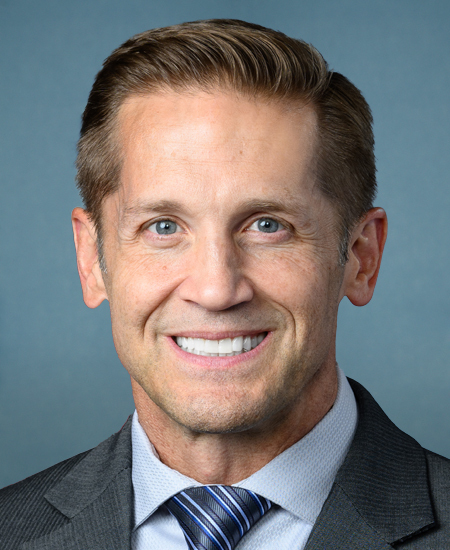
Rep. Richard McCormick
Sponsored bills
Maddy summaryHR 5530, the VA Emergency Transportation Access Act, prevents the Department of Veterans Affairs (VA) from lowering payment rates for specialized transportation used by veterans and eligible individuals (like ambulances or wheelchair vans) without strict requirements. It mandates that any rate change that could reduce access to care must first undergo a detailed review analyzing economic impacts on the VA and transportation industry, and ensure the new rate covers actual costs. The VA must also develop a formal process for rate changes and consult with industry experts, veterans' groups, and healthcare agencies before implementing such changes. This bill directly affects veterans relying on specialized transportation for medical care, particularly those in rural or underserved communities, by safeguarding their access to necessary emergency transport services.
Maddy summaryHRES 1148 is a resolution passed by the U.S. House of Representatives that condemns the Iranian government for supporting terrorism, regional proxy conflicts, and internal suppression of dissent - including its crackdown on protests following Mahsa Amini's death in 2022. It specifically calls for maintaining sanctions against Iran, supporting the Iranian Resistance's Ten-Point Plan (which advocates for a democratic, secular, nonnuclear Iran), and protecting Iranian political refugees in Albania. The resolution also affirms the Iranian people's right to self-determination under international law and urges the U.S. to recognize their struggle for freedom. As a non-binding resolution, it does not create new laws but formally expresses congressional stance.
Maddy summaryThis bill amends U.S. Code to lower the minimum student enrollment required for high schools to establish or maintain a Junior Reserve Officers' Training Corps (JROTC) program, reducing the threshold from 100 to 50 students. It directly affects high schools seeking to start or sustain JROTC units, particularly those with smaller student populations. The key provision changes the existing requirement under Title 10, U.S. Code, making it easier for schools to qualify for JROTC participation. This is a straightforward policy adjustment to existing law, with no additional funding or program changes specified.
Maddy summaryHR 7959, the SHIELD Act, adds trespass convictions to grounds for denying immigration entry or ordering deportation. It directly affects immigrants convicted of trespass under any state, local, tribal, or federal law, regardless of whether the trespass is classified as a misdemeanor or felony. The bill amends existing immigration law to make anyone convicted of trespass (or who admits to acts constituting trespass) inadmissible upon entry or deportable after entry. These provisions apply based on the jurisdiction where the trespass occurred, without considering the offense's classification under local law.
Maddy summaryThis resolution (HRES 1131) is a symbolic House measure celebrating Hindu Americans and condemning anti-Hindu hate. It recognizes Hinduism’s global significance and Hindu Americans’ contributions to U.S. society, including cultural, economic, and spiritual impacts like yoga and Ayurveda. The resolution specifically condemns Hinduphobia, anti-Hindu bigotry, hate crimes targeting places of worship (mandirs), and discrimination faced by Hindu Americans, referencing rising FBI-reported hate crimes. As a non-binding resolution, it does not create new laws or allocate funds but aims to affirm support for Hindu Americans through public declaration.
Maddy summaryThis bill establishes new eligibility rules for women's and girls' amateur sports by defining "female" and "male" based on biological sex at birth. It prohibits individuals designated as male under these definitions from participating in athletic competitions designated for females, women, or girls. The law amends existing U.S. Code provisions to add this requirement, directly affecting athletes and organizations managing female-designated teams. The key change is a clear ban on male-identified participants in female sports, replacing previous eligibility standards with biological sex criteria.
Maddy summaryHR 6727 establishes the United States Foundation for International Conservation, a nonprofit organization that will provide grants to support long-term management of protected and conserved areas in eligible countries. The Foundation requires a 2:1 cost match from other sources, demands host country and community consent through binding agreements, and prioritizes areas with high biodiversity or species of significant importance. It will be governed by a Board of Directors including government officials and private sector experts, operate for 10 years with $1 million authorized for 2024 and $100 million annually from 2025-2035, and must follow international conservation standards while prohibiting funding for countries supporting terrorism or violating human rights.
Maddy summaryHR 6602 amends the Export Control Reform Act of 2018 to require U.S. agencies to resolve disputes involving countries under a comprehensive U.S. arms embargo. It specifically adds these countries to the scope of interagency export control disputes and mandates that such disputes "shall be decided" (replacing the previous "may be decided"). This change ensures timely resolution of export-related conflicts for nations subject to full U.S. arms embargoes. The bill directly affects federal agencies managing export controls and the countries covered by the embargo.
Maddy summaryHR 7725 would block federal funding for graduate medical schools that require students or staff to adopt specific statements about race, gender, or identity (like claiming systemic racism or collective guilt), use race-based distinctions in admissions or programs, maintain DEI offices, or mandate "diversity statements" for admission. It directly affects graduate medical schools at colleges/universities receiving federal financial aid, including student loans. The bill exempts medical education about race-related health needs, demographic data collection for reporting, and religious institutions from adhering to policies conflicting with their beliefs. Schools violating these rules would lose eligibility for federal funds, though they could still comply with anti-discrimination laws and provide general academic instruction.