

Maddy summaryThis bill approves new agreements that amend the Compact of Free Association between the United States and the Federated States of Micronesia, the Republic of the Marshall Islands, and the Republic of Palau. It incorporates related agreements including fiscal procedures and trust fund agreements that govern how U.S. funding is managed and distributed to these nations. The bill provides funding for 2024-2043 to support programs like healthcare, education, veterans' services, and economic development in the Freely Associated States. It establishes reporting requirements and oversight mechanisms for federal agencies implementing these agreements. The bill directly affects U.S. federal agencies, the Freely Associated States, and U.S. funding mechanisms for these Pacific Island nations.
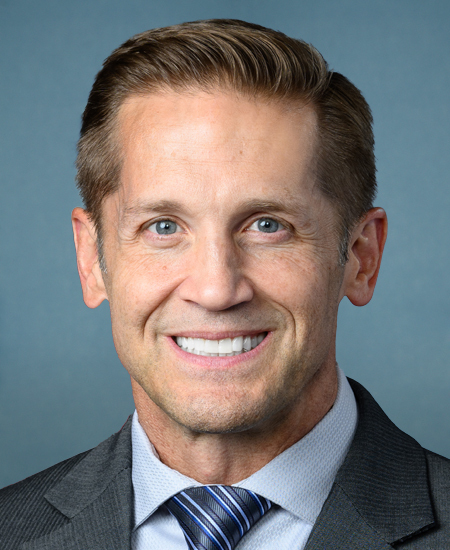
Rep. Richard McCormick
Sponsored bills
Maddy summaryThe FOCA Act of 2023 requires federal agencies to stop mandating or banning contractor agreements with labor organizations (like union contracts) in construction project bids and contracts. It directly affects federal contractors, subcontractors, and agencies managing construction projects funded by the government. The bill prohibits favoring or penalizing contractors based on their labor affiliation status, aiming to promote fair competition and reduce costs. It also mandates updates to federal contracting rules within 60 days of enactment to implement these changes.
Maddy summaryThis bill extends Medicare payment adjustments for physicians and other practitioners through 2025 instead of ending in 2024. It specifically adds a 4.73% payment increase for services provided between January 1, 2025, and January 1, 2026. The legislation modifies existing Medicare payment rules to stabilize practice revenues during transition periods. It directly affects doctors and healthcare providers who bill Medicare for patient services. The key change is the extended timeframe and the defined 4.73% rate for the 2025-2026 period.
Maddy summaryThis bill removes a requirement for ambulatory surgical centers participating in Medicare to report the COVID-19 vaccination status of their healthcare workers. Specifically, it directs the Secretary of Health and Human Services to revise Medicare regulations (42 CFR §§ 416.300-416.330) within 45 days of enactment to eliminate this reporting mandate. The change directly affects ambulatory surgical centers that receive Medicare funding, removing a specific administrative burden related to employee vaccination data. The bill focuses solely on modifying existing reporting rules, with no new funding or program requirements.
Maddy summaryThis bill changes the negotiation period for small-molecule drugs under the federal Drug Price Negotiation Program from 7 years to 11 years, matching the existing 11-year period for biologic drugs. It directly affects drug manufacturers participating in the program by extending the timeframe for price negotiations with the government. The amendment applies to all small-molecule drugs covered under the program, creating a uniform negotiation timeline for both drug types. The change takes effect as if included in the Inflation Reduction Act of 2022.
Maddy summaryThe Preserving Seniors’ Access to Physicians Act of 2023 increases the Medicare payment adjustment rate for physicians from 1.25% to 4.62%, directly affecting doctors who treat Medicare patients (primarily seniors). It also reduces the funding for the Medicaid improvement fund from $5,796,117,810 to $3,973,117,810. These changes impact Medicare providers and Medicaid programs, with the Medicare adjustment aimed at supporting physicians adjusting to payment changes. The bill does not specify how the Medicaid funding reduction relates to its stated goal of preserving seniors' access to physicians.
Maddy summaryHR 6417 amends the existing "Ending Importation of Russian Oil Act" to ban imports of energy products (classified under Harmonized Tariff Schedule chapter 27) produced at any refinery using crude oil originating in Russia. This directly affects U.S. importers and companies bringing in such refined petroleum products. The key provision prohibits these imports regardless of where the refinery is located, targeting oil that has been "laundered" through foreign processing. The bill updates the existing law by adding this origin-based import ban as a new section.
Maddy summaryThis bill updates Medicare physician payment rules to improve stability and accuracy. It raises the budget neutrality threshold from $20 million (pre-2025) to $53 million in 2025, with annual indexing after 2026, to prevent excessive payment adjustments. The bill requires the Medicare program to correct budget neutrality payments based on actual service utilization data (not estimates) starting in 2025, and mandates updating direct cost inputs (like staff wages and equipment prices) every 5 years. It also caps annual changes to the physician payment conversion factor at 2.5% to limit sudden payment shifts, directly affecting Medicare physicians and healthcare providers receiving these payments.
Maddy summaryThis bill (HR 5608) allows health insurance issuers in the Affordable Care Act marketplaces to contribute directly to enrollees' health savings accounts (HSAs) instead of reducing cost-sharing (like deductibles) for silver-level high-deductible health plans. It affects individuals enrolled in these specific plans who elect this option, requiring insurers to pay into their HSAs monthly (equal to the cost-sharing reduction they would have received) using a medical-only debit card. Insurers must also offer high-deductible plans as alternatives to standard silver plans and provide public education about this option starting in 2025. The changes apply to months beginning after December 2024, with funds treated as advance payments toward tax credits.
Maddy summaryThis bill imposes U.S. sanctions on foreign individuals and entities that facilitate North Korea's transfer of arms or material support to Russia for use in Russia's invasion of Ukraine. It targets those responsible for such transfers, including foreign financial institutions enabling significant transactions related to these activities, requiring property blocks and visa restrictions. The bill also amends existing North Korea sanctions to explicitly require halting such material support and mandates the President to submit regular reports to Congress on North Korea's involvement and U.S. strategies to counter it.