Maddy summaryThis bill designates the U.S. Postal Service facility at 119 Main Street in Plains, Georgia, as the "Jimmy and Rosalynn Carter Post Office." It requires all federal references in laws, documents, or records to use this new name instead of the previous designation. The bill directly affects the postal facility and federal administrative records, but does not alter postal services, funding, or operations. This is a ceremonial naming resolution honoring former President Jimmy Carter and his wife, Rosalynn Carter.
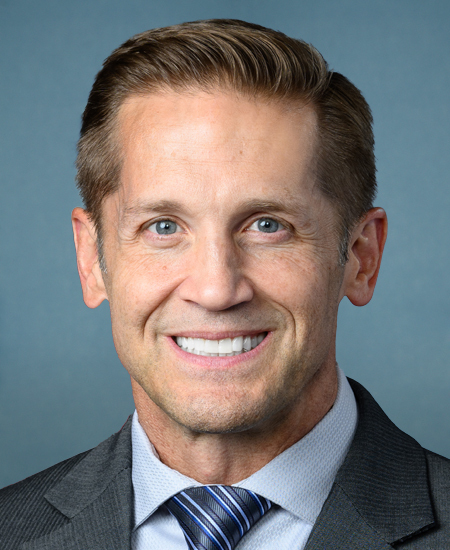
Rep. Richard McCormick
Sponsored bills
Maddy summaryThis bill designates the U.S. Postal Service facility at 151 Highway 74 South in Peachtree City, Georgia, as the "SFC Shawn McCloskey Post Office." It requires all federal references to this location - including in laws, maps, regulations, and official documents - to be updated to the new name. This is a ceremonial naming resolution with no impact on postal services, operations, or funding.
Maddy summary# Summary of Proposed Legislation This comprehensive legislative proposal contains multiple sections addressing election integrity, campaign finance reform, cybersecurity, census operations, and related government functions. Key provisions include: 1. **Campaign Finance Reforms**: - Increased thresholds for political committee reporting requirements - Repeal of requirements for political committees to report donor identification - Exemption of uncompensated internet communications from contribution/expenditure treatment - Protection of donor privacy for tax-exempt organizations through the "Speech Privacy Act of 2023" 2. **Election Security**: - Establishment of a process for testing and monitoring cybersecurity vulnerabilities in election equipment - Requirements for the Secretary of Homeland Security to notify state officials about election cybersecurity incidents - Exclusive authority for the Election Assistance Commission regarding guidelines for voting system certification 3. **Census and Redistricting**: - Establishment of a permanent Census Monitoring Board with bipartisan composition to review census operations - Clarification of state authority over congressional redistricting maps - Provisions regarding the Speaker of the House's authority to join civil actions related to apportionment 4. **Other Key Provisions**: - Termination of the Disinformation Governance Board and prohibition on funding similar entities - Amendments to the Federal Election Campaign Act to increase reporting thresholds and exempt certain communications - Various technical corrections to existing campaign finance law The legislation appears to focus on enhancing election security, reducing regulatory burdens on political organizations, protecting donor privacy, and strengthening oversight of census operations while maintaining constitutional boundaries between federal and state authority.

Maddy summaryHR 54, the WHO Withdrawal Act, directs the U.S. President to withdraw the United States from the World Health Organization (WHO) Constitution upon enactment and prohibits all federal funding for U.S. participation in the WHO or any successor organization. The bill repeals the 1948 law that established U.S. membership and funding for WHO participation. This legislation directly affects all federal departments and agencies that handle international health funding and diplomatic engagement, ending U.S. financial and legal ties to the WHO.
Maddy summaryHR 24, the Federal Reserve Transparency Act of 2025, mandates a comprehensive audit of the Federal Reserve Board and Federal Reserve banks by the Government Accountability Office (GAO) within 12 months of enactment. The bill requires the GAO to submit a detailed report to Congress within 90 days of completing the audit, including findings, conclusions, and recommendations for legislative or administrative action. This audit replaces current limitations on reviewing Federal Reserve operations, particularly regarding entities like special purpose vehicles not previously subject to standard audits. The bill directly affects the Federal Reserve System by increasing congressional oversight of its financial activities and reporting mechanisms.
Stopping Border Surges Act This bill modifies immigration law provisions relating to unaccompanied alien minors and to asylum seekers. The bill requires the Department of Homeland Security (DHS) to repatriate certain unaccompanied, inadmissible alien children, generally those not at risk of being trafficking victims nor having a fear of persecution. Currently, only inadmissible unaccompanied aliens from neighboring countries are subject to repatriation, and DHS has discretion whether to repatriate. When the Department of Health and Human Services releases an unaccompanied child to an individual, it shall provide DHS with certain information about that individual, including Social Security number and immigration status. The bill requires a stricter standard to find a credible fear of persecution and imposes additional rules on credible fear interviews. If an alien is granted asylum because of fear of persecution in a country, the alien shall be deemed to have renounced asylum status by returning to that country, if there has been no change in the country's conditions. The bill also (1) expands the definition of what constitutes a frivolous asylum application, (2) imposes additional limitations on eligibility for asylum, (3) shortens the deadline for applying for asylum, and (4) extends the time period an alien seeking asylum must wait before receiving employment authorization. Any individual who knowingly and willfully makes materially false statements or uses fraudulent documents in asylum-related proceedings shall be fined or imprisoned up to 10 years, or both.
Maddy summaryThe FairTax Act of 2025 would repeal federal income tax, payroll taxes (Social Security and Medicare), and estate and gift taxes, replacing them with a national sales tax. It would impose a 23% tax on the final consumption of goods and services in 2027, with rates adjusting based on federal tax rates. The bill includes a monthly rebate for qualifying families based on the poverty level to offset the tax burden on lower-income households. It would establish a cooperative tax administration system between federal and state governments, with states collecting the tax under certain conditions. The tax would sunset if the 16th Amendment (which allows for income taxes) is not repealed within 7 years of enactment.
Maddy summaryHR 137, the TCJA Permanency Act, makes permanent many tax provisions from the 2017 Tax Cuts and Jobs Act. It permanently increases the standard deduction for individual taxpayers, modifies income tax brackets, and makes permanent the child tax credit increase. The bill also permanently limits deductions for state and local taxes, mortgage interest, and miscellaneous itemized deductions. These changes affect most individual taxpayers who file federal income tax returns.
Maddy summaryThis bill names the U.S. Postal Service facility at 15 South Valdosta Road in Lakeland, Georgia, as the "Nell Patten Roquemore Post Office." It updates all official U.S. government references - such as maps, documents, and records - to use this new name for the location. The bill does not create new policies or affect services; it only changes the facility's official designation. The name honors Nell Patten Roquemore, though the bill itself does not detail her contributions.
Maddy summaryThis bill, HR 1097 (Everett Alvarez, Jr. Congressional Gold Medal Act of 2023), authorizes the award of a Congressional Gold Medal to Everett Alvarez, Jr., in recognition of his service as a U.S. Navy pilot and Vietnam War prisoner of war. It directly honors Alvarez, who was the first U.S. pilot shot down in the Vietnam War, spent over 8.5 years in captivity, and later served in the Peace Corps and Veterans Administration. The bill’s key mechanism is directing the U.S. Mint to strike a gold medal bearing his name and image, with bronze duplicates available for sale to cover costs. It does not create new policies or affect any group beyond the honoree.