

Maddy summaryThe TRAIN Act creates a federal grant program to help community colleges develop career training programs in partnership with local industries. It directly affects community colleges, which would receive funding to establish or improve programs aligned with in-demand industries and occupations. The bill requires 15% of grant funds to cover supportive services like childcare, transportation, and mental health services to help participants complete training. It also mandates performance tracking to ensure programs lead to quality jobs with good wages, benefits, and career advancement opportunities. The program is funded with $110 million in 2024, increasing to $176 million by 2029.
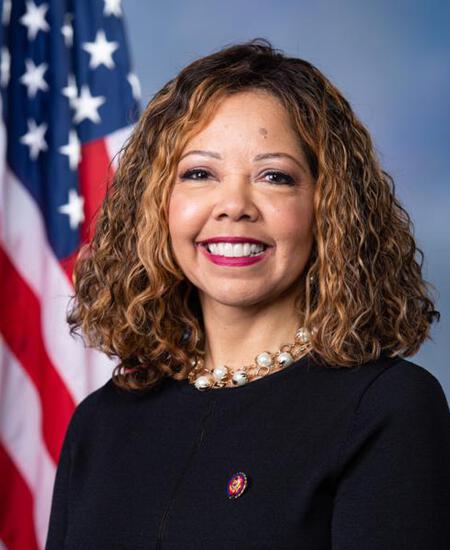
Rep. Lucy McBath
Sponsored bills
Maddy summaryHR 6451, the Mental Health Justice Act of 2023, provides $250 million in federal grants to states, tribes, and localities to hire mental health professionals as first responders for specific emergencies. It directs these professionals to replace police in situations involving mental health crises, substance use, or intellectual/developmental disabilities - such as when a 911 caller describes a mental health emergency or a first responder identifies someone needing mental health support. The bill requires grantees to train responders in de-escalation techniques, link individuals to community-based services (not incarceration), and report on outcomes like reduced arrests or use of force. It also mandates data collection on demographics and prevents funneling people into institutional settings, with annual reports to Congress on program effectiveness.
Maddy summaryThe Confronting Police Violence Against Children Act of 2023 requires the National Institute of Justice to study all incidents where children under 18 were seriously harmed or killed by law enforcement officers over the past 15 years. The report must analyze demographic details (like age, race, disability status), officer training, incident circumstances, and whether children were in mental health crises, while gathering input from legal experts, medical professionals, and community groups. It will provide recommendations for preventing excessive force, improving officer training for youth interactions, and ensuring children receive help from mental health professionals instead of police. The goal is to inform future policies and training practices, not to enact immediate legal changes.
Maddy summaryThis bill establishes a competitive grant program to improve recycling access in underserved communities - defined as areas lacking full recycling services due to cost, distance, or insufficient processing capacity. It allocates $30 million annually (2023-2027) for grants to eligible entities like states, local governments, tribes, or public-private partnerships to fund projects such as expanding transfer stations, adding curbside collection, or creating hub-and-spoke infrastructure networks. Grants range from $500,000 to $15 million per project, with 70% of funds reserved for single or multiple underserved communities, and require 90% federal cost coverage (with possible waivers for financial hardship). The program prohibits grant use for education and mandates a congressional report on implementation and outcomes within two years.
Maddy summaryThis resolution designates the week beginning November 13, 2023, as "National Apprenticeship Week" through symbolic congressional support. It does not create new laws or programs but formally recognizes the value of registered apprenticeships in providing paid on-the-job training, industry credentials, and career pathways. The resolution highlights apprenticeships' role in developing skilled workers, supporting high-wage sectors like healthcare and green energy, and promoting diversity in training opportunities. It aims to increase public awareness of apprenticeships as an effective "earn-and-learn" model for workers and employers.
Maddy summaryThe TREES Act of 2023 establishes a federal grant program to fund tree planting projects that reduce residential energy use. It provides 90% federal funding (up to $50 million annually) for projects in neighborhoods with high energy burdens, low tree canopy, or vulnerable populations like seniors and low-income households. Eligible applicants - including state/local governments, tribes, nonprofits, and power companies - must demonstrate how planting specific tree species will cut cooling and heating costs through shade and wind protection. The program aims to plant at least 300,000 trees yearly, prioritizing projects that maximize energy savings for households spending a high percentage of income on energy bills.
Maddy summaryThis bill establishes a federal framework to coordinate climate resilience efforts across government agencies and communities. It creates a Chief Resilience Officer in the Executive Office of the President to develop a National Adaptation and Resilience Strategy (required within 2 years), which must address vulnerabilities identified in climate assessments and prioritize support for vulnerable communities. The bill mandates a Partners Council - including representatives from tribal nations, state/local governments, and climate-vulnerable communities - to advise on strategy development and submit regular reports on federal resilience gaps. It also requires a centralized adaptation clearinghouse to improve access to climate data and resources for non-Federal partners, with the entire framework set to sunset by 2033 or after the third assessment.
Maddy summaryHCONRES 75 is a non-binding resolution expressing Congress's support for issuing a new commemorative postage stamp honoring the Buffalo Soldiers. It directly affects the U.S. Postal Service by urging the Citizens’ Stamp Advisory Committee to recommend such a stamp to the Postmaster General. The resolution highlights the historical significance of the Buffalo Soldiers - African American soldiers who served in all-Black regiments from 1866 to 1948 - and references a previous 1994 stamp that was discontinued. It does not create a new law but formally requests the Postal Service consider this commemoration.
This concurrent resolution recognizes the difficult challenges Black veterans faced when returning home after serving in the Armed Forces, their heroic military sacrifices, and their patriotism in fighting for equal rights and for the dignity of a people and a nation. The concurrent resolution also recognizes the need for the Department of Veterans Affairs to continue to work to eliminate any health and benefit disparities for minority veterans.
Maddy summaryThis bill requires the U.S. Department of Education to add new data collection about student parents and caregivers to the national higher education data system (IPEDS). Starting in 2024-2025, it mandates colleges to track specific metrics, including enrollment rates, childcare usage, income levels, and graduation outcomes for student parents. The bill also directs the Department to conduct a study on effective campus support strategies, such as childcare access and service integration, to improve outcomes for these students. The collected data and study findings will be reported to Congress and made public, aiming to inform future policies. This directly affects all colleges participating in federal student aid programs and the millions of parenting students in higher education.