

Maddy summaryHR 6830, the "Books Save Lives Act," requires covered schools (elementary/secondary schools receiving federal funds) and public libraries receiving federal assistance to maintain staffed libraries with diverse book collections. These collections must include books written by, illustrated by, or about individuals from underrepresented communities - defined as racial/ethnic minorities, LGBTQ+ individuals, religious minorities, or people with disabilities. The bill states that excluding such "covered books" could be used as evidence of discrimination under civil rights laws like the Civil Rights Act of 1964. It also mandates a report on the impact of book-banning campaigns on these communities within 180 days of enactment.
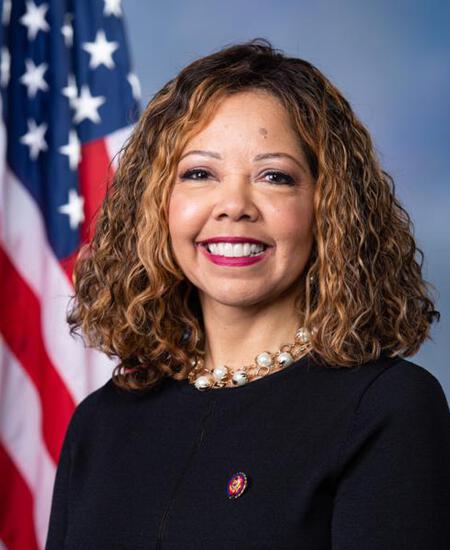
Rep. Lucy McBath
Sponsored bills
Maddy summaryThe Brittany Clardy Missing and Murdered Black Women and Girls Act establishes a new Office within the Department of Justice to address the disproportionate rates of missing and murdered Black women and girls in the U.S. The Office will collect and analyze data on these cases - including case resolution times, Amber Alert usage, and trafficking links - and create a public dashboard for tracking. It also creates a grant program for community organizations to provide culturally appropriate prevention services, law enforcement training, and victim support. The Office must submit biennial reports to Congress with findings and recommendations to improve the criminal justice response to these cases. This bill directly affects Black women and girls facing violence, law enforcement agencies, and community organizations providing related services.
Maddy summaryHR 6720 creates a grant program administered by the U.S. Department of Agriculture to provide stabilization payments to farmworkers, meat processing workers, and grocery workers affected by natural or other disasters designated by the Secretary. Eligible entities - such as labor unions or membership organizations representing these worker groups - can apply for funding to support affected workers. The program is authorized to spend up to $50 million, with the Secretary required to report on its outcomes within four years. This bill directly affects workers in specific food industry sectors during disaster events, offering financial stabilization through grants administered by the Agricultural Marketing Service.
Maddy summaryThe CReatES Act authorizes federal grants to states to create or improve public online repositories that compile detailed information about education and training programs, credentials (such as certificates, licenses, and degrees), and their outcomes. These repositories must include data on costs, career pathways, skills developed, employment outcomes, and employer use of credentials to help workers, employers, and educators make informed decisions. States receiving grants (up to $10 million for three years) must ensure repositories are publicly accessible, updated continuously, interoperable with other states, and exclude personally identifiable information. The bill requires states to collect specific outcome data and submit annual reports on repository development, with funding authorized for fiscal year 2025 through 2027.
Maddy summaryThe YouthBuild for the Future Act increases annual funding for the YouthBuild program, authorizing $159.5 million for 2024 with incremental growth through 2029. It reserves 20% of funds above $125 million for rural programs and tribes, while adding new requirements like meal assistance, benefits counseling for programs like SNAP, and support services for participants with disabilities. The bill updates participant eligibility terms (e.g., "youth justice-involved" instead of "youth offender") and mandates annual consultation with program providers to set performance goals. It directly affects low-income youth in rural areas, tribal communities, and justice-involved youth through expanded workforce training and support services.
Maddy summaryThe Workers POWER Act (HR 6634) strengthens federal labor enforcement by expanding staffing and resources for the Department of Labor's Wage and Hour Division and Occupational Safety and Health Administration (OSHA). It creates new paid student positions (5 in Washington, DC, plus 2 per regional office), establishes child labor fellowships (5 per agency), and increases student loan repayment benefits for eligible employees. The bill also authorizes performance-based bonuses, retention incentives, and $250 million annually in grants to states to improve their labor enforcement capacity. These changes directly affect Department of Labor enforcement staff and state/local labor agencies working to address wage theft, child labor, and workplace safety violations.
Maddy summaryHRES 910 is a commemorative resolution passed by the U.S. House of Representatives to honor the life and legacy of Rosalynn Carter, former First Lady of the United States (1977-1981). The resolution expresses the House's mourning for her passing and recognizes her advocacy for mental health care, founding of The Carter Center, and work establishing support for family caregivers through the Rosalynn Carter Institute. It does not create new laws or policies but formally commemorates her humanitarian contributions. This procedural resolution was introduced by Georgia representatives and passed unanimously on December 5, 2023.
Maddy summaryThe TRAIN Act creates a federal grant program to help community colleges develop career training programs in partnership with local industries. It directly affects community colleges, which would receive funding to establish or improve programs aligned with in-demand industries and occupations. The bill requires 15% of grant funds to cover supportive services like childcare, transportation, and mental health services to help participants complete training. It also mandates performance tracking to ensure programs lead to quality jobs with good wages, benefits, and career advancement opportunities. The program is funded with $110 million in 2024, increasing to $176 million by 2029.
Maddy summaryHR 6451, the Mental Health Justice Act of 2023, provides $250 million in federal grants to states, tribes, and localities to hire mental health professionals as first responders for specific emergencies. It directs these professionals to replace police in situations involving mental health crises, substance use, or intellectual/developmental disabilities - such as when a 911 caller describes a mental health emergency or a first responder identifies someone needing mental health support. The bill requires grantees to train responders in de-escalation techniques, link individuals to community-based services (not incarceration), and report on outcomes like reduced arrests or use of force. It also mandates data collection on demographics and prevents funneling people into institutional settings, with annual reports to Congress on program effectiveness.
Maddy summaryThe Confronting Police Violence Against Children Act of 2023 requires the National Institute of Justice to study all incidents where children under 18 were seriously harmed or killed by law enforcement officers over the past 15 years. The report must analyze demographic details (like age, race, disability status), officer training, incident circumstances, and whether children were in mental health crises, while gathering input from legal experts, medical professionals, and community groups. It will provide recommendations for preventing excessive force, improving officer training for youth interactions, and ensuring children receive help from mental health professionals instead of police. The goal is to inform future policies and training practices, not to enact immediate legal changes.