

Maddy summaryThe RAP Act of 2023 (HR 2952) would prevent prosecutors and plaintiffs from using a defendant’s creative or artistic works - such as poems, songs, art, or films - as evidence in court, unless specific exceptions apply. It requires the government to prove by clear evidence that the work was meant literally (not figuratively), directly relates to the specific facts of the case, is relevant to disputed facts, and has unique value beyond other evidence. If admitted, courts must redact the work to limit its presentation and provide jury instructions about its restricted use. This bill directly affects defendants in both criminal and civil cases who create artistic expression, aiming to protect their creative works from being misused in legal proceedings.
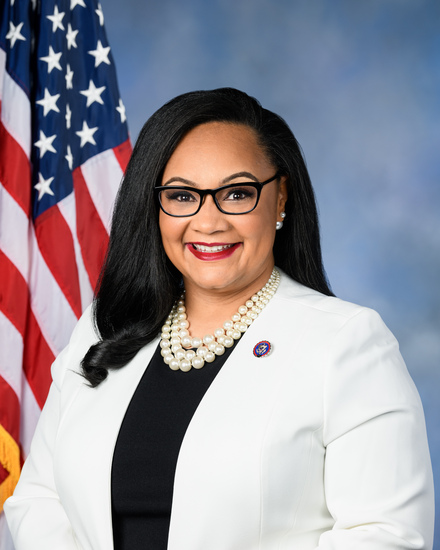
Rep. Nikema Williams
Sponsored bills
Maddy summaryThe Combating Child Labor Act strengthens penalties for employers violating child labor laws under the Fair Labor Standards Act. It increases criminal fines to $500,000 or up to 10 years in prison for willful violations causing death or serious injury to children under 18, and raises civil penalties for such violations up to $700,000 per incident. The bill also requires the Department of Labor to publish an annual report detailing child labor violations, including employer names, types of violations, and trends by industry or region. This report will help track enforcement efforts and identify high-risk areas, directly affecting employers who violate child labor rules and the Department of Labor’s oversight role.
Water Infrastructure Sustainability and Efficiency Act or the WISE Act This bill requires each state to use a certain percentage of funds it receives for capitalization of its clean water state revolving fund for projects to address green infrastructure, water or energy efficiency improvements, or other environmentally innovative activities.
Maddy summaryThis bill creates a federally chartered National Center for the Advancement of Aviation to develop the U.S. aviation and aerospace workforce. The Center will provide grants for education and training programs, including scholarships, internships, and curriculum development for middle schools, high schools, and colleges focused on aviation careers. It will specifically support underrepresented groups and veterans transitioning to aviation careers while coordinating with government agencies to avoid duplicating existing programs. The Center must operate as a non-profit entity, maintain tax-exempt status, and submit annual reports to Congress on its activities.
Performing Artist Tax Parity Act of 2023 This bill modifies the above-the-line tax deduction for the expenses of performing artists (including commissions paid to managers or agents) to provide for a phaseout of such deduction for taxpayers whose adjusted gross income exceeds $100,000 ($200,000 for joint return filers). The $100,000 phaseout threshold is adjusted for inflation annually for taxable years beginning after 2023.
Maddy summaryHR 2918, the Fair Housing for Survivors Act of 2023, amends the Fair Housing Act to explicitly protect survivors of domestic violence, sexual assault, and sex trafficking from housing discrimination. It adds "survivor of domestic violence, sexual assault, or severe forms of trafficking" as a protected class under the law, prohibiting landlords and housing providers from refusing to rent, evicting, or charging more based on this status. The bill also clarifies that discrimination based on survivor status - including denial of housing due to protective orders, shelter stays, or prior incidents - is illegal. This directly affects survivors who face barriers like denied rentals, evictions, or higher costs when seeking safe housing, addressing documented discrimination reported by 67% of survivors in New York studies. The law preserves survivors' ability to pursue other discrimination claims under the Fair Housing Act.
Raise the Age Act of 2023 This bill establishes new restrictions on the sale or transfer of certain semiautomatic firearms to individuals under 21 years of age. Specifically, this bill makes it unlawful for a licensed gun dealer, importer, manufacturer, or collector to sell or deliver a semiautomatic center-fire rifle or semiautomatic center-fire shotgun that has (or has the capacity to accept) an ammunition feeding device with a capacity of more than five rounds to an individual who the licensee knows or has reasonable cause to believe is under age 21. The prohibition does not apply if the individual under age 21 is a full-time law enforcement officer or active-duty member of the Armed Forces. The bill also requires the Federal Bureau of Investigation to report on the operation of its public access line, including a description of information sharing protocols and recommendations for improving such protocols.
Maddy summaryHR 2899, the STOP Violence Act of 2023, adds $20 million in federal grants to help states, local governments, and nonprofits prepare public assembly facilities (like schools, malls, and event venues) for mass violence. The funds are specifically for providing compensation, training, and technical assistance to these facilities to enhance their safety measures against incidents such as active shooter attacks or targeted violence. The bill defines "mass violence" to include active shooter incidents (where someone uses a firearm to kill or attempt to kill in a crowded area) and targeted violence (where an assailant identifies a specific person, group, or institution before attacking). These grants aim to directly support facilities that host large gatherings of people, focusing on practical safety improvements.
Maddy summaryThe Right to Read Act of 2023 defines an "effective school library" as one with certified librarians, adequate resources, and support for digital and information literacy. It requires states and school districts to ensure all students, particularly those in under-resourced schools, have access to such libraries through new reporting requirements and funding mechanisms. The bill provides $500 million annually for literacy programs and mandates biennial data collection on school library resources. It also protects staff from liability for following right-to-read policies and requires school libraries to uphold First Amendment rights by providing diverse reading materials without political bias.
Maddy summaryHR 2370, the Access to AEDs Act, authorizes $25 million in federal funding (2024-2028) to help public elementary and secondary schools improve access to automated external defibrillators (AEDs) and CPR training. The bill directs the Secretary of Health and Human Services to award grants to school districts and partners for developing AED programs, training staff and students, purchasing and maintaining AEDs, and creating cardiac emergency response plans. It specifically targets schools to address sudden cardiac arrest (SCA), which is a leading cause of death among student athletes and youth, with 90% of SCA victims dying without immediate CPR and defibrillation. The law requires grantees to report on their activities and establishes a clearinghouse to collect data on school AED access and costs.