

Maddy summaryThe EACH Act of 2023 would require federal health programs - including Medicaid, Medicare, the Indian Health Service, and TRICARE - to cover abortion services without restrictions. It repeals a provision in the Affordable Care Act that allowed states to limit abortion coverage in health insurance plans sold through state marketplaces. The bill also prohibits the federal government from restricting abortion coverage in private health insurance plans. This would directly affect millions of people, particularly low-income individuals and people of color, who are disproportionately enrolled in Medicaid and currently face barriers to abortion care due to coverage restrictions.
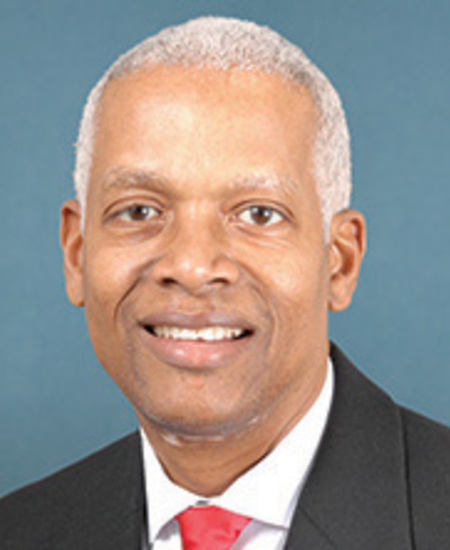
Rep. Henry C. "Hank" Johnson, Jr.
Sponsored bills
Maddy summaryHR 415, the "End the Threat of Default Act," repeals the statutory debt ceiling (section 3101 of Title 31, U.S. Code), which currently limits how much the federal government can borrow. This would eliminate the need for Congress to approve increases to the borrowing cap, removing the risk of a government default on its debts. The bill directly affects the Treasury Department’s ability to manage federal borrowing, as it would no longer require congressional action to authorize new debt issuance. The technical amendments update references to the debt ceiling in other laws to reflect this change.
Maddy summaryThis bill, HR 35 (Close the Medigap Act of 2023), prohibits Medicare supplemental insurance (Medigap) insurers from denying coverage or charging higher premiums based on health status, pre-existing conditions, genetic information, or age. It directly affects Medicare beneficiaries (particularly those with pre-existing conditions) and requires insurers to offer guaranteed issue coverage starting January 1, 2024, with full implementation by 2029. Key mechanisms include banning health-based pricing discrimination, requiring insurers to spend at least 65% of individual policy premiums on healthcare (increasing to align with NAIC recommendations), and improving transparency on the Medicare Plan Finder website. The bill does not change Medicare Part A/B benefits but ensures broader access to supplemental coverage without health-related barriers.
Maddy summaryThe Assuring Medicare’s Promise Act of 2023 directs that taxes collected under the net investment income tax (a tax on investment income for high earners) be added to the Medicare Hospital Insurance Trust Fund, which helps finance Medicare Part A benefits. It modifies the tax code to include certain business income of high-income individuals (with modified adjusted gross income over $400,000 for single filers or $500,000 for joint filers) in the tax base, but includes a phase-in mechanism to limit immediate tax increases. This bill primarily affects high-income taxpayers and aims to strengthen Medicare’s financial stability by increasing trust fund revenue.
Maddy summaryHR 33 would expand Medicare to cover dental, vision, and hearing services for beneficiaries, which are currently not covered under Medicare. The bill provides 100% coverage for preventive dental services in 2024, with basic dental services gradually increasing to 80% coverage by 2027. Vision coverage would include routine eye exams and corrective lenses at 80% coverage, while hearing services would cover hearing exams and hearing aids at 80% coverage. The bill includes specific limitations, such as two dental cleanings per year and one pair of glasses every 24 months, with the Secretary of Health and Human Services having authority to apply additional limitations or modify coverage based on medical recommendations. The changes would take effect on January 1, 2024.
Maddy summaryHJRES 227 proposes a constitutional amendment to abolish the Electoral College and establish a direct national popular vote for President and Vice President. Under this amendment, voters would cast a single ballot for a presidential-vice presidential pair, and the pair receiving the most votes nationwide would be elected. The amendment requires ratification by three-fourths of state legislatures and would take effect one year after ratification, directly changing how the President and Vice President are chosen across all states and the District of Columbia.
Maddy summaryHRES 1615 is a ceremonial resolution recognizing "Interscholastic Athletic Administrators' Day" on December 14, 2024. It formally supports annual recognition of secondary school athletic administrators who oversee student-athlete programs affecting over 8 million students nationwide. The resolution commends these administrators for their role in student development and acknowledges the National Interscholastic Athletic Administrators Association's support for the profession. It contains no new laws, funding, or policy changes - only symbolic acknowledgment of their contributions.
Maddy summaryHR 1584, the Plum Island National Monument Act, establishes Plum Island, New York, as a national monument to protect its natural ecosystems, historical sites, and cultural heritage. The bill designates the Secretary of the Interior as the managing agency, requiring coordination with other federal departments through written agreements for lands within the monument area. It mandates the development of a management plan within three years of funding, which must then be submitted to specific congressional committees. This act directly affects the federal management of Plum Island and sets the framework for conservation and public access to the site.
Maddy summaryHR 7438 directs the U.S. Treasury to mint commemorative coins for the 2026 FIFA World Cup, including 100,000 $5 gold coins, 500,000 $1 silver coins, and 750,000 half-dollar coins. The coins will be sold to the public at face value plus surcharges ($35, $10, and $5 per coin, respectively), with all surcharge revenue paid to FWC2026 US, Inc. for U.S. soccer programs. These funds must support soccer initiatives, particularly in underserved communities and youth development, as specified in the bill. The coins are legal tender but will only be issued during 2026, with no net cost to the U.S. government.
Maddy summaryThe Trafficking Survivors Relief Act of 2024 enables victims of human trafficking to seek to vacate certain convictions or expunge arrests related to offenses they committed as a direct result of being trafficked. It establishes a court process where victims can file motions showing their criminal activity was trafficking-related, with courts required to find by preponderance of evidence that the offense was directly tied to trafficking. If granted, the court must expunge all related records, return any fines paid, and treat the individual as if the offense never occurred. The bill also adds a "human trafficking defense" that creates a presumption of duress for trafficking victims in prosecutions. It requires reports on implementation and training for U.S. attorneys on trafficking indicators.