

Maddy summaryHRES 1613 is a non-binding resolution recognizing the U.S. House of Representatives' support for continued U.S. leadership in ending pediatric HIV/AIDS globally. It highlights that 57% of children with HIV were on treatment in 2023 (compared to 77% of adults) and calls for scaling up prevention of mother-to-child transmission and expanding pediatric HIV treatment access. The resolution specifically encourages the PEPFAR program to develop a dedicated pediatric HIV strategy aligned with global goals. As a formal expression of congressional support, it does not create new law but reaffirms the U.S. commitment to reducing new pediatric HIV infections.
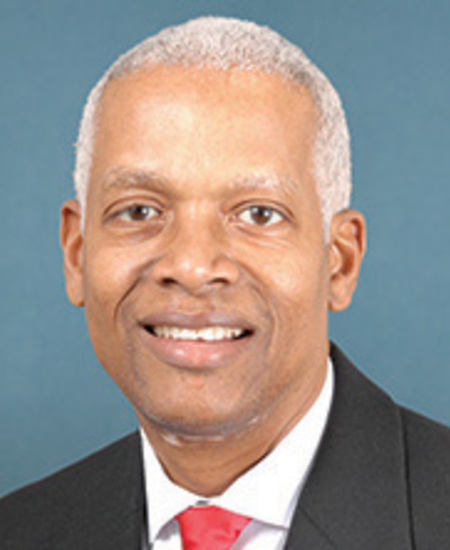
Rep. Henry C. "Hank" Johnson, Jr.
Sponsored bills
Maddy summaryThe SHIELD Act of 2024 makes it a federal crime to knowingly distribute non-consensual intimate images of adults (e.g., photos showing genitals, pubic area, or female nipples without privacy expectations) or nude images of minors with intent to harm, abuse, or degrade. It directly affects individuals whose intimate images are shared without consent and those distributing such content, including social media platforms under specific conditions. Key provisions criminalize distribution causing psychological, financial, or reputational harm, with penalties up to 3 years in prison for minor-related cases and 2 years for adult cases, plus asset forfeiture. Exceptions cover law enforcement, legal reporting, medical/educational use, and platforms that don’t actively promote such content.
Maddy summaryHR 10311, the Franchisee Freedom Act, allows franchisees harmed by franchisor violations of federal rules (specifically part 436 of title 16, CFR) to directly sue franchisors in court. It provides remedies including actual damages, contract rescission, and attorney fees. Lawsuits can be filed in either federal district court or state court where the franchisee resides. This bill directly affects franchisees who have been harmed by franchisor noncompliance with the specified federal regulations.
Maddy summaryHR 6751 authorizes the U.S. Mint to produce commemorative coins honoring Roberto Clemente, a Hall of Fame baseball player and humanitarian, including 50,000 $5 gold coins, 400,000 $1 silver coins, and 750,000 half-dollar coins. The coins must feature Clemente's image and inscriptions like "Roberto Clemente" and "2027," with all sales including a surcharge ($5-$35 per coin) paid to the Roberto Clemente Foundation. The foundation, which supports youth sports, education, and disaster relief programs, will use these funds for its mission, while the U.S. Treasury must recover all production costs. The coins will be sold exclusively in 2027, with no net cost to the government.
Maddy summaryThe Jeanette Acosta Invest in Women’s Health Act of 2024 would expand access to preventive cancer screenings (including breast, cervical, ovarian, and uterine cancer screenings) for women, with a focus on low-income women, women of color, rural communities, and underserved populations. It authorizes $20 million annually for grants to health care providers - such as family planning centers - to increase screenings and establishes a training program for health care providers on best practices and cultural competency to address racial disparities. The bill also mandates a study analyzing cancer screening rates and disparities by race, income, geography, and insurance status, with reports to Congress every five years. These provisions aim to improve early detection, reduce mortality, and address systemic barriers in women’s cancer care.
Maddy summaryThis bill prevents U.S. individuals and companies from facing lawsuits for failing to fulfill contracts due to U.S. sanctions imposed after the contract was signed. It blocks civil lawsuits in federal court where the claim arises from sanctions that restricted a contract's performance, protecting entities acting in good faith to comply with U.S. sanctions. The law specifically covers sanctions related to national security, foreign policy, or economic threats, including export controls. It does not apply to cases involving terrorism victims or specific laws like the Iran Threat Reduction Act.
Maddy summaryThe Working Dog Commemorative Coin Act (HR 807) directs the U.S. Treasury to mint three types of commemorative coins honoring working dogs' service: $5 gold coins, $1 silver coins, and half-dollar coins with specific weight and composition requirements. Each coin will carry a surcharge ($35 for $5 coins, $10 for $1 coins, $5 for half-dollars) that will be paid directly to America's VetDogs to support their programs providing service dogs for veterans, the disabled, and others. The coins will be issued in 2027 with designs reflecting working dogs' roles in military, detection, therapy, and assistance work. The legislation specifies that all surcharge revenue must fund America's VetDogs' operations without creating new government programs. This is a commemorative measure focused on honoring working dogs' contributions through coin sales, with all surcharge funds going to a specific nonprofit organization.
Maddy summaryHRES 1594 is a symbolic House resolution supporting the designation of "National Rural Health Day," observed annually on the third Thursday of November. It recognizes rural health care providers and the communities they serve, highlighting challenges like hospital closures, workforce shortages, and access barriers in rural areas. The resolution expresses the House's commitment to improving rural health care accessibility and affordability but does not create new laws or allocate funding. It is a non-binding gesture aligning with an existing observance since 2011, organized by the National Rural Health Association.
Maddy summaryThis bill establishes federal grants to expand training and support services for unpaid caregivers of people with Alzheimer's disease or related dementia. It authorizes funding for organizations like senior centers, area agencies on aging, and community health centers to provide direct caregiver support, requiring at least 50% of grant funds to go directly to services (not administration) and limiting administrative costs to 10%. Priority is given to nonprofit organizations serving underserved communities, including minority, low-income, and disability communities. The program, funded for fiscal years 2025-2029, aims to improve access to culturally appropriate caregiver resources nationwide.
Maddy summaryThe Our Homes, Our Votes Act requires landlords and public housing agencies managing federally assisted housing (including public housing, Section 8, and supportive housing programs) to include voter registration forms in lease agreements. When tenants sign their lease, it automatically serves as a voter registration application for federal elections, unless they opt out. Landlords must ensure forms include basic eligibility information, provide language access for limited-English speakers, and submit completed forms to election officials within 10 days. This applies to all tenants in covered housing units, streamlining registration without requiring separate action.