

Maddy summaryHR 1934 (ProTECT Act of 2025) prohibits trophy hunting and importing trophies of threatened wildlife species within the U.S. and into the U.S., extending protections currently limited to endangered species under the Endangered Species Act. It amends the law to ban taking (hunting) or importing trophies of species listed as threatened, and blocks permits for such activities, closing a loophole where threatened species lacked these safeguards. The bill defines "trophy" broadly to include recognizable animal parts or derivatives obtained under hunting authorization. This directly affects hunters, importers, and wildlife trade businesses dealing with threatened species.
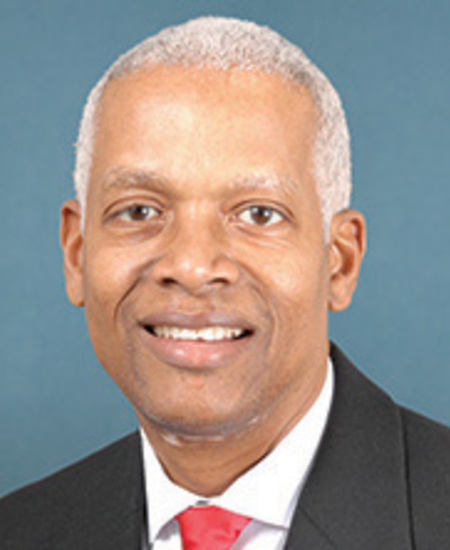
Rep. Henry C. "Hank" Johnson, Jr.
Sponsored bills
Maddy summaryThe JUDGES Act of 2025 authorizes the creation of 66 new district court judgeships across multiple federal judicial districts to address rising caseloads. It specifies phased additions of judges to districts in California, Florida, Texas, New York, and other states from 2029 through 2039, with the total number of new judges increasing over time. The bill also establishes temporary judgeships in Oklahoma, authorizes funding for these positions, and requires the Judicial Conference's judgeship recommendations to be made publicly available. The legislation directly affects federal courts in the specified districts by increasing judicial staffing to reduce case backlogs.
Maddy summaryHR 1918, the Farewell to Foam Act of 2025, prohibits the sale of most foam food containers, packaging peanuts, and foam coolers starting January 1, 2028. It directly affects restaurants, grocery stores, food vendors, manufacturers, and retailers who sell these items, excluding medical coolers used for drugs or medical products. The bill imposes escalating civil penalties for violations: $250 for the second offense, $500 for the third, and $1,000 for fourth or subsequent violations, with reduced penalties for small businesses under specific revenue thresholds. Enforcement is led by the EPA Administrator, with states allowed to enforce under federal guidelines.
Maddy summaryHR 1954, the "Do No Harm Act," amends the Religious Freedom Restoration Act (RFRA) to clarify that RFRA does not override specific federal laws protecting against harm. It explicitly exempts provisions related to anti-discrimination (like the Civil Rights Act), workplace protections (wages, leave, collective activity), child safety, and healthcare access from RFRA's requirements. The bill ensures RFRA cannot be used to challenge government programs or contracts that provide these essential protections. It also clarifies that RFRA applies only to disputes involving government as a party, not private disputes between individuals. This change preserves existing legal safeguards while modifying RFRA's scope.
Maddy summaryHR 1901, the CHIPP Act, makes Children's Health Insurance Program (CHIP) funding permanent for all future fiscal years, removing previous expiration dates that required annual congressional renewal. This directly affects low-income children and families who rely on CHIP coverage and the states that administer these programs. The key mechanism is amending federal law to require "such sums as are necessary" for CHIP funding starting in fiscal year 2029 and beyond. Other provisions adjust funding for related programs like pediatric quality measures and outreach, but the primary change is CHIP’s permanent funding structure.
Congressional Trade Authority Act of 2025 This bill requires congressional approval for a presidential import adjustment due to a national security threat from an import and limits the adjustments to certain goods that are essential to national security. Specifically, the bill limits the President's authority for such import adjustments to goods related to the development, maintenance, or protection of military equipment, energy resources, or critical infrastructure essential to national security. The bill specifies that the term national security (1) means the protection of the United States from foreign aggression, and (2) does not otherwise include the protection of the general welfare of the United States. The bill requires the President to submit a proposal to Congress to adjust imports. Congress must then approve the proposal with a joint resolution before an import adjustment takes effect. Under current law, the President determines whether any adjustment of an import is necessary and must submit to Congress the reasons for any action taken or not taken. Currently, there is a congressional disapproval mechanism to override presidential actions related to petroleum imports. The bill also requires the Department of Defense (currently, the Department of Commerce) to investigate the effect of these imports on national security and submit a report before the President determines whether an adjustment to an import is necessary, establishes requirements for a process to grant requests to exclude certain goods from import adjustments, and applies retroactively to any proposed action taken up to six years before the enactment of this bill.
Maddy summaryHR 1961, the CARE Act, requires the Department of Health and Human Services (HHS) to create an after-action program to review and improve responses to public health emergencies. This program, to be implemented within two years, mandates HHS to analyze coordination with state/local partners, logistics, infection prevention, and recovery strategies, and report findings to Congress. The bill also requires HHS to establish a risk communication strategy within one year to ensure clear, targeted messaging for at-risk populations during health emergencies. It authorizes $3.5 million for the initial implementation of these programs. The law directly affects HHS agencies and their partners, including state health departments, tribes, and non-governmental organizations involved in emergency responses.
Maddy summaryHRES 192 is a ceremonial resolution recognizing the start of Ramadan, the Muslim holy month of fasting and spiritual renewal, and commending Muslims in the U.S. and globally. It acknowledges that approximately 4.5 million Muslims live in the United States and highlights Ramadan’s significance as the ninth month of the Islamic calendar, observed from February 28, 2025. The resolution notes American Muslims’ contributions to society through charitable work, diverse professions, and community leadership, while referencing historical U.S. government recognition of Ramadan, including presidential iftars since 1996. As a symbolic gesture, it has no legal effect or direct impact on any group, policy, or funding.
Protecting Americans’ Social Security Data Act This bill prohibits political appointees and special government employees from accessing Social Security data systems that contain personally identifiable information about Social Security beneficiaries. Specifically, political appointees and special government employees may not access systems maintained by the Social Security Administration (SSA) that issue or record Social Security account numbers, that are used to determine eligibility for or to pay Social Security benefits, or that otherwise contain personally identifiable information about individuals receiving or applying for benefits. The bill also establishes a civil right of action for an individual whose information was negligently accessed or disclosed in violation of these provisions. The individual may bring suit against the United States if the violator was a U.S. employee or officer, or against the violator if they were not a U.S. employee or officer. Such a claim must be brought within two years of the affected individual’s discovery of the violation. Upon a finding of liability, defendants are liable for specified monetary damages. If an individual is criminally charged or subject to proposed disciplinary or adverse action by a federal or state agency for having accessed or disclosed information in violation of these provisions, SSA must notify the individual whose information was accessed or disclosed of the violation as soon as practicable. Finally, the bill requires the SSA Office of the Inspector General to investigate and report to Congress on any unauthorized access to or disclosure of information in a beneficiary data system.
Maddy summaryHR 1876, the "Keeping Our Field Offices Open Act," prevents the Social Security Administration (SSA) from closing, consolidating, or restricting access to its field offices, hearing offices, or resident stations for 180 days after enactment, with exceptions for emergencies. The bill requires the SSA Commissioner to submit a detailed report to Congress by January 2029, analyzing closure criteria, transportation burdens for elderly/disabled users, cost-benefit impacts, and plans to replace lost services. For future closures, it mandates 120 days of public notice, two public hearings, and a final report to Congress, while ensuring total office numbers don’t fall below 2025 levels. This directly affects SSA field offices, their users (including elderly and disabled individuals), and employees. The bill’s key mechanism is a procedural safeguard to ensure transparency and minimize disruption before any office changes take effect.