

Maddy summaryThis bill would expand Medicare to cover dental, vision, and hearing services for beneficiaries 65 and older (and some younger people with disabilities), effective January 1, 2026. It would provide 100% coverage for preventative dental services in 2026, with basic and major dental services gradually increasing to 80% coverage by 2029. Vision benefits would include 80% coverage for annual eye exams and specific limits on eyeglasses, frames, and contact lenses ($100 per year for lenses, $100 every two years for frames, $200 every two years for contacts). Hearing services would include 80% coverage for hearing exams and hearing aids, with a limit of one hearing aid per ear every 48 months. The bill also adds oral health professionals to the United States Preventive Services Task Force to help guide coverage decisions.
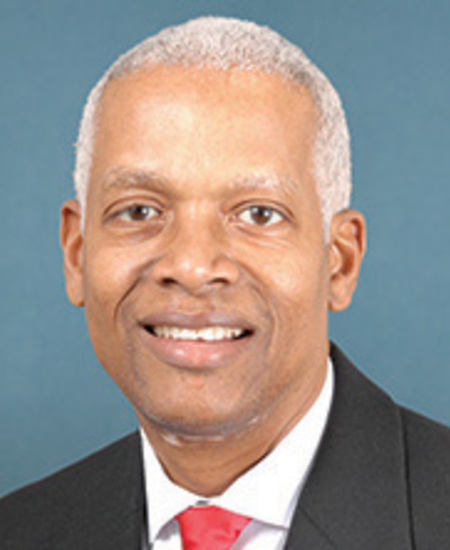
Rep. Henry C. "Hank" Johnson, Jr.
Sponsored bills
Maddy summaryHR 2046 requires federal agencies and the President to obtain congressional approval before selling, transferring, or disposing of any U.S. property listed on the National Register of Historic Places. Specifically, officials must first notify Congress and then secure a joint resolution approving the action. This applies to all historically significant properties, including land, buildings, monuments, and sites owned by the federal government. The bill directly affects federal agencies and the executive branch by adding a legislative review step for all such transactions.
Maddy summaryHR 2047, the Pink Tariffs Study Act, requires the Treasury Secretary to conduct a study analyzing how U.S. import tariffs impact different consumer groups. The study must examine whether tariffs are regressive (burdening lower-income consumers more), show gender bias (like higher tariffs on women's clothing vs. men's), and break down effects by gender, family type (e.g., single-parent households), and income level. It mandates the study be completed within one year of the bill's enactment and submitted to Congress. This bill directly affects all U.S. consumers by focusing on how tariff policies may unequally impact them based on these demographic and economic factors.
Maddy summaryHR 2064 establishes a federal grant program through HUD to provide up to $30,000 in assistance per household for first-time homebuyers purchasing qualifying homes. The program helps low-to-moderate income individuals (earning ≤120% of local median income, or 150% in high-cost areas) cover down payments, closing costs, or home modifications needed for occupancy. Recipients must live in the home as a primary residence for 5 years; failure to do so requires partial repayment proportional to non-occupancy. The bill authorizes $6.7 billion annually (2026-2030), reserves 3% for tribes, and excludes assistance from federal taxation.
Maddy summaryHCONRES 18 is a symbolic resolution designating March 10, 2025, as "Abortion Provider Appreciation Day." It expresses congressional support for abortion providers and clinic staff who deliver care amid heightened challenges following the Dobbs decision. The resolution acknowledges the risks providers face, including harassment and violence, and celebrates their role in ensuring patient access to abortion care. It does not create new laws, funding, or policy changes - it solely serves as a formal expression of appreciation for providers' work.
Maddy summaryHRES 210 is a symbolic resolution recognizing National Women and Girls HIV/AIDS Awareness Day on March 10. It highlights that women, especially women of color (including Black and Latina women), are disproportionately affected by HIV in the U.S. and globally, with data showing they account for significant shares of new diagnoses and deaths. The resolution calls for greater focus on HIV vulnerabilities among women and girls, improved access to prevention tools like PrEP, and stronger investment in care, treatment, and research to reduce health disparities. It urges support for evidence-based programs addressing gender-based violence, discrimination, and barriers to sexual health services.
Maddy summaryThis bill adjusts probationary periods for certain federal employees who were involuntarily separated between January 20, 2025, and January 20, 2029. It allows eligible employees (those separated while on probation in an Executive agency) to count their prior service time toward a new probationary period when rehired into a similar position with their former agency. Specifically, the new probation period equals the original required duration minus the time already served in their previous federal role. The law expires on January 20, 2029, and applies only to appointments matching the employee’s prior position.
American Teacher Act This bill establishes grants to increase the minimum salary of public elementary and secondary school teachers. It also authorizes a national campaign regarding the value of the teaching profession. First, the bill directs the Department of Education (ED) to award four-year grants to state educational agencies (SEAs) and, through them, subgrants to local educational agencies to establish a minimum annual salary of $60,000 (to be adjusted annually for inflation) for these teachers. Second, the bill directs ED to award grants to eligible SEAs to provide cost-of-living adjustments to the annual base salary of teachers. Finally, the bill authorizes ED to carry out a national campaign to (1) increase awareness about the importance of teachers and the value of the teaching profession, (2) encourage secondary school and college students to consider teaching as a professional career, and (3) diversify the pool of individuals who enter the teaching profession.
Maddy summaryThis bill mandates that all new $20 U.S. currency printed after December 31, 2028, must prominently feature Harriet Tubman's portrait on the front. It requires the Treasury Secretary to release a preliminary design for this updated $20 bill by December 31, 2026. The bill directly affects the U.S. Treasury Department, codifying a 2016 announcement to feature Tubman on the $20 note (replacing Andrew Jackson) and ending a historical pattern where no woman had appeared on U.S. paper money.
Maddy summaryThis bill provides federal grants to public or nonprofit health care providers serving minority, low-income, or medically underserved communities to expand maternal and infant health services. It specifically funds prenatal, postnatal, and postpartum care while requiring grantees to offer culturally appropriate services and limit administrative costs to 10% of grant funds. Priority is given to organizations led by or located within the communities they serve, aiming to reduce racial and economic disparities in care access and health outcomes. The funding is authorized for fiscal years 2026-2030, with grantees required to coordinate with other federal maternal health programs to avoid duplication.