Maddy summaryThis bill prohibits firearm sales or transfers to individuals convicted of a "violent misdemeanor" within the past five years. A "violent misdemeanor" is defined as a state or local offense involving physical force, a deadly weapon, or intent to cause injury - requiring the original conviction to have included legal representation and a jury trial (or valid waiver). The law excludes expunged convictions or pardons unless civil rights restoration explicitly allows firearm possession. It directly affects people with recent violent misdemeanor convictions, blocking their access to firearms under federal law.
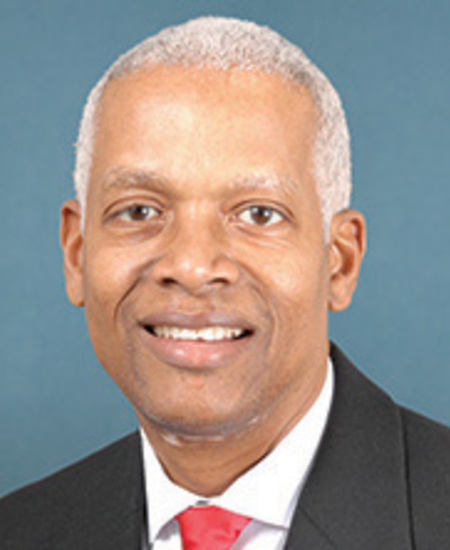
Rep. Henry C. "Hank" Johnson, Jr.
Sponsored bills
Maddy summaryHR 2648, the Secure Background Checks Act of 2025, amends federal law to add two new restrictions to firearm purchase background checks. It prohibits individuals who fail to meet their state's age requirements or who do not reside in (or maintain a business in) the state where the gun seller operates, unless an exception applies. The bill directly affects prospective gun buyers who would now be blocked from purchasing firearms under these new criteria. These changes modify existing provisions in Title 18 of the U.S. Code to expand the categories of people barred from gun purchases based on state residency and age compliance.
Federal Firearm Licensee Act This bill establishes new security requirements and expands recordkeeping and reporting requirements for federally licensed dealers, importers, and manufacturers of firearms (i.e., federal firearms licensees, or FFLs). The bill also broadens the authority of the Bureau of Alcohol, Tobacco, Firearms and Explosives (ATF) to administer federal firearms laws and enforce violations. Specifically, bill requires FFLs to implement and comply with a plan to secure their business premises, conduct quarterly physical checks of their business inventories, maintain video surveillance of the area where firearms are sold or transferred, and initiate firearms-related background checks for employees. Additionally, the bill requires FFLs to report to the ATF any inventory firearm that is lost, stolen, or unaccounted for and to notify the ATF about default-proceed transactions (i.e., allowable firearm transfers to an unlicensed person prior to the completion of a background check when the submitted background check remains incomplete after three business days). Finally, the bill removes limits on the ATF's authority to conduct activities related to the administration of federal firearms laws. It enhances the ATF's inspection authority, including by removing the limit on the number of annual compliance inspections (currently, one), requiring inspections of high-risk FFLs, and authorizing an additional 650 investigators. Finally, the bill directs the ATF to deny an application for a federal firearms license if it would endanger public safety or if the applicant is unlikely to comply with the law.

Maddy summaryHR 2655 would end the federal income tax on unemployment compensation for most recipients starting in 2025. It amends the tax code to remove the requirement that unemployment benefits be included in taxable income after December 31, 2024. This means individuals receiving unemployment benefits in 2025 or later would not owe federal income tax on those payments. The change applies to all eligible unemployment benefits received after the 2024 deadline, effectively sunsetting the existing tax treatment.
Maddy summaryHR 2632, the TRICARE Equality Act, updates how the TRICARE health program operates for military beneficiaries in Puerto Rico. It requires the Defense Secretary to treat Puerto Rico similarly to U.S. states when designating TRICARE Prime service areas, expands travel benefits for eligible Puerto Rico residents who would qualify on the mainland, and mandates coordination between federal health offices and Puerto Rico’s health department for health information sharing. The bill also requires the Defense Secretary to report to Congress within 180 days on implementation progress. These changes directly affect military service members, retirees, and their families using TRICARE in Puerto Rico.
Maddy summaryThe IDEA Full Funding Act (HR 2598) mandates specific annual federal funding levels for the Individuals with Disabilities Education Act (IDEA), directly affecting schools and students with disabilities nationwide. It requires the federal government to appropriate either a fixed dollar amount or a specified percentage (increasing annually from 4.5% to 40%) of a calculated total - based on the number of eligible students and average per-pupil costs - starting in fiscal year 2026 through 2035. The bill sets clear, escalating funding targets, with the higher of two calculated amounts (dollar figure or percentage) becoming available for obligation each fiscal year. This establishes a binding financial commitment to address long-standing underfunding of special education services under IDEA.
Maddy summaryHR 2601, the "Delete DOGE Act," prohibits federal funding for the U.S. DOGE Service (Department of Government Efficiency) and related entities established under specific executive orders. It blocks all federal funds from implementing, administering, or enforcing the covered executive orders (Executive Orders 14158, 14210, and 14222) or supporting any new projects initiated by the DOGE department after January 20, 2025. The bill restricts U.S. Digital Service funding to only maintaining existing digital services as of January 19, 2025, and bans federal funds from being used by individuals associated with the DOGE entities or their directives. This directly affects the DOGE department, its employees, contractors, and any new initiatives tied to its executive orders.
Maddy summaryThis bill requires the State Department to obtain specific congressional authorization and submit a detailed reorganization plan before making any structural changes. The plan must cover impacts on diplomatic operations, consular services, workforce transitions, and risks to U.S. foreign policy interests. If the department bypasses these requirements, federal funds cannot be used for State Department efficiency activities or official travel by politically appointed officials. The bill directly affects State Department leadership and congressional committees, mandating strict oversight before any reorganization takes effect.
Maddy summaryThis bill (HR 2532) blocks federal funding for large-scale layoffs at the Department of Health and Human Services (HHS) and its sub-agencies. It prohibits using federal funds to remove 3% or more of all HHS employees, or 3% or more at any single sub-agency, within a 60-day period. This applies to actions like layoffs under federal workforce rules (Title 5) or agency reorganizations. The bill directly affects HHS employees and its operating divisions by preventing rapid, widespread workforce reductions. It does not change HHS policies but restricts how personnel actions can be funded.
Maddy summaryHR 2554, the Lower Drug Costs for Families Act, modifies how Medicare calculates rebates for prescription drugs under Parts B and D. It changes the base year for rebate calculations from 2021 to 2016, which would increase rebates to Medicare by accounting for higher drug price growth since 2016. The bill also adjusts how "commercial market" drug units are counted for rebates, excluding units paid for through Medicaid or other programs. These changes apply to Medicare Part B drugs starting in 2026 and Part D drugs starting in 2025, directly affecting drug manufacturers and Medicare's rebate payments.