

Maddy summaryHRES 298 is a non-binding House resolution expressing support for designating April 7, 2025, as "World Health Day" in alignment with the World Health Organization's (WHO) established observance. It recognizes the importance of prioritizing public health nationally and globally, highlighting concerns like declining life expectancy, maternal and infant mortality, and healthcare access disparities affecting children, seniors, and marginalized communities. The resolution does not create new laws or allocate funds but acknowledges the need for equitable healthcare access and interagency collaboration. It formally supports the WHO's theme "Healthy Beginnings, Hopeful Futures" for its 2025 campaign on maternal and newborn health.
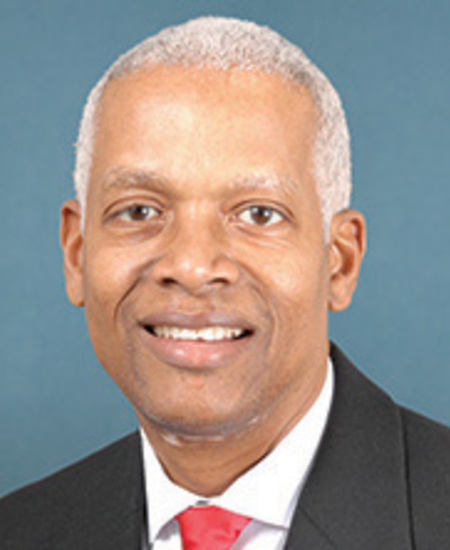
Rep. Henry C. "Hank" Johnson, Jr.
Sponsored bills
Maddy summaryThe No Tax Breaks for Union Busting Act would deny tax deductions for employers who spend money to influence employees' decisions about union activities, such as union elections or collective bargaining. It defines "labor organization activities" broadly to include union elections, labor disputes, and collective actions. The bill requires employers to report such spending on tax returns and prevents them from deducting these expenses from taxable income. This would apply to employers using tactics like captive audience meetings, outside consultants, or other efforts to sway workers' union decisions. The policy aims to remove tax incentives for employers to interfere with workers' rights under labor law.
Maddy summaryHR 2668, the DART Act of 2025, expands federal funding under the Edward Byrne Memorial Justice Assistance Grant (JAG) program to support state and local diversion and rehabilitation programs instead of incarceration. It allows JAG funds to cover pre-arrest diversion, specialty courts, and post-release rehabilitation services, directly affecting local justice systems and individuals facing the criminal justice system. The bill creates a National Diversion and Rehabilitation Clearinghouse to share evidence-based practices, provide technical assistance, and promote trauma-informed approaches. These changes aim to reduce recidivism by addressing root causes like addiction and mental health, shifting focus from incarceration to treatment and community-based solutions.
Maddy summaryThe Tax Fairness for Workers Act (HR 2671) would allow certain employees to deduct work-related expenses directly from their gross income. Specifically, it creates an above-the-line deduction for union dues (amending IRC Section 62(a)(1)) and reinstates a deduction for other out-of-pocket work costs like uniforms or tools (amending IRC Section 67(g)), effective for 2025 tax years. This directly affects union members and workers with significant job-related expenses who previously could not deduct these costs. The bill removes the prior limitation that barred these deductions, making them available without needing to itemize. The policy change simplifies tax filing for affected workers by treating these expenses as deductible business costs.
Maddy summaryThis bill, HR 2253 (Puppy Protection Act of 2025), sets new federal standards for commercial dog dealers who sell puppies to the public. It requires specific housing sizes based on dog size (e.g., 12-30 square feet per dog), daily exercise in safe outdoor areas, clean water and nutritious food twice daily, and annual veterinary exams including dental checks. The bill also limits breeding frequency (max 2 litters in 25 months), sets age minimums for breeding (18 months for small dogs, 2 years for large dogs), and mandates health screenings to prevent genetic diseases. These requirements apply directly to commercial dealers, with final regulations to be issued within 18 months of enactment.
Maddy summaryHR 2195, the Feed Hungry Veterans Act of 2025, would expand eligibility for food assistance under the Supplemental Nutrition Assistance Program (SNAP) to more veterans. It adds four new qualifying categories to the existing rules: veterans with a "catastrophically disabled" determination under military disability law, veterans under 65 receiving a pension, and veterans meeting specific combined disability rating thresholds. The bill amends the Food and Nutrition Act to include these new groups in SNAP eligibility, directly affecting veterans who currently may not qualify under existing disability rating criteria. The changes would take effect on October 1, 2030.
Maddy summaryThis bill, HR 2102 (Major Richard Star Act), allows veterans with combat-related disabilities to receive both full military retired pay and veterans' disability compensation simultaneously, without the previous offset that reduced retired pay. It directly affects veterans already eligible for both benefits due to combat-related injuries, removing the requirement that their retired pay be reduced by the disability compensation amount. The key provision amends Title 10 and Title 38 to eliminate the offset rule (sections 5304 and 5305 of Title 38) for these veterans. The change applies to payments starting after the bill’s enactment date, effective for all qualifying veterans. This is a policy change to increase financial support for affected veterans, not a new benefit.
Maddy summaryHRES 292 is a non-binding House resolution supporting "Financial Literacy Month" to raise awareness about personal finance education. It references statistics showing widespread financial literacy gaps, including 14.2% of U.S. households being unbanked or underbanked, only 42% of adults budgeting, and just 28 states requiring high school economics courses. The resolution calls on federal, state, local, school, nonprofit, and business entities to observe Financial Literacy Month with programs and activities. It does not create new laws or policies but aims to highlight the importance of financial education for managing money, credit, and debt.
Maddy summaryHR 2649, the STOP Violence Act of 2025, allocates $20 million in federal grants to help public venues prepare for mass violence. The funds will go to states, local governments, and nonprofits serving crime victims to provide training and safety improvements at places like schools, malls, and event centers. The bill specifically defines "mass violence" to include active shooter incidents and targeted attacks where an assailant identifies specific people or locations beforehand. This funding aims to strengthen safety measures at facilities where large groups gather, without changing existing laws or creating new mandates.
Maddy summaryThe Safe Workplaces Act requires the Occupational Safety and Health Administration (OSHA) to develop nonmandatory guidance for workplaces to reduce violence threats. Within 4 years of enactment, OSHA must issue this guidance, tailored to specific settings like hospitals, retail stores, schools, and restaurants, based on a study and report completed within 15 months. The guidance will cover practical safety measures such as staff training, security personnel, physical barriers, and environmental improvements (e.g., better lighting or weapon detectors). It directly affects employers and employees across diverse workplaces by providing voluntary strategies to address violence risks. The bill does not create new laws but establishes a process for OSHA to share best practices on preventing workplace violence incidents.