

Maddy summaryThis bill requires the Department of Homeland Security (DHS) to create a system tracking all detentions or removals of U.S. citizens and lawful permanent residents (LPRs) during immigration enforcement. DHS must report these cases quarterly to Congress, including instances where minors were removed alongside undocumented parents. The system must also include cases involving citizens or LPRs detained by other agencies and transferred to DHS. A separate process for individuals to prove citizenship or LPR status during detention must be established within 180 days.
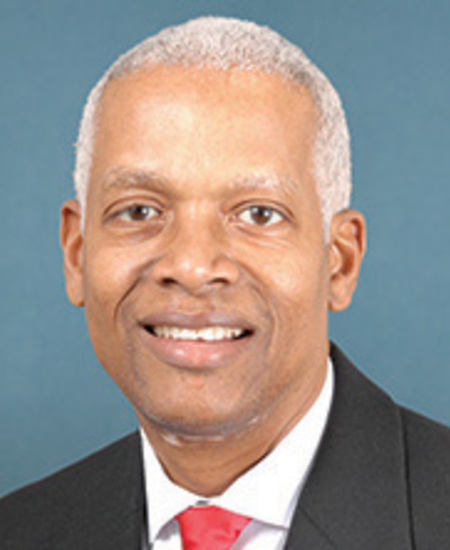
Rep. Henry C. "Hank" Johnson, Jr.
Sponsored bills
Maddy summaryThe RAP Act of 2025 amends federal evidence rules to generally prohibit the use of a defendant's creative or artistic expression (such as music, poetry, or visual art) as evidence in criminal or civil trials. It directly affects defendants whose artistic works might otherwise be presented against them, making such evidence inadmissible unless the government proves specific conditions by "clear and convincing evidence." These conditions require showing the expression was intended literally, directly relates to the specific facts of the case, is uniquely relevant, and has distinct probative value not available through other admissible evidence. If admitted under the exception, courts must redact the evidence and provide special jury instructions. The law aims to protect artistic expression from being misused in legal proceedings.
Maddy summaryH.J. Res. 108 proposes a constitutional amendment to remove legal immunity for federal officials, including the President, from criminal prosecution for actions taken while performing official duties. It would prohibit the President from granting pardons to themselves and eliminate the defense that "official authority" excuses violations of federal or state law (with limited exceptions for certain congressional actions). If ratified, this amendment would require Congress to pass implementing laws to enforce these changes. The proposal is currently in the House Judiciary Committee and requires approval by three-fourths of state legislatures to become part of the Constitution.
Maddy summaryHR 4606, the Ally’s Act, requires private health insurance plans (including employer-sponsored plans and individual coverage) to cover hearing implants and related services. It directly affects people with hearing loss who need cochlear implants, bone conduction devices, or external sound processors, as determined by a physician or audiologist. The bill mandates coverage for devices, maintenance, repairs, upgrades every 5 years, hearing assessments, surgery, and rehabilitation - without separate cost-sharing or stricter limits than other medical services. Insurers cannot deny coverage if a provider deems the service medically necessary. The law applies to all applicable health plans and takes effect for plan years beginning January 1, 2026.
Maddy summaryThis bill establishes state-level judicial threat intelligence centers to improve safety for judges and court staff. It defines "eligible organizations" (nonprofits with judicial security expertise) and requires the State Justice Institute to fund these centers to provide security training, threat monitoring, coordinate with law enforcement, and develop standardized reporting systems. The centers will create resources for judicial officer safety, conduct security assessments, and track threats through a national database. State Justice Institute must submit annual reports detailing threat types and severity to congressional committees. The bill directly affects state and local judges, court staff, and the nonprofit organizations operating these centers.
Maddy summaryThe Franchisee Freedom Act (HR 4614) gives franchisees - business owners operating under franchise agreements - new legal tools to address violations by franchisors. It allows franchisees harmed by breaches of federal franchise rules (like the FTC's Franchise Rule) or this bill's provisions to sue for actual damages, cancel contracts, and recover legal fees. The bill specifically prohibits franchisors from restricting franchisees' rights to join other franchisees or trade associations, or retaliating against them for doing so. This directly affects franchisee-franchisor relationships by strengthening franchisees' ability to seek remedies and organize.
Maddy summaryHR 4482, the Stop NOAA Closures Act, imposes a temporary moratorium on closing, suspending, or limiting access to National Oceanic and Atmospheric Administration (NOAA) facilities, effective until a report is submitted to Congress by January 21, 2029. The bill requires NOAA and the General Services Administration to submit detailed reports to specific congressional committees before any future facility closure, suspension, lease termination, or consolidation - outlining cost-benefit analyses, service impacts, and justification. Exceptions apply only for emergencies posing immediate threats to personnel safety. This bill directly affects NOAA's facility management decisions and mandates congressional oversight for future closures.
Maddy summaryHR 4542, the "No Cages in the Everglades Act," bans federal funding for any immigration detention facility within or adjacent to Florida's Everglades ecosystem - including construction, operation, or maintenance. It directly affects U.S. Immigration and Customs Enforcement (ICE) and any state/local governments operating such facilities. Key provisions include requiring DHS to submit a detailed report within 90 days on facility costs, construction history, compliance with detention standards, and ecological risks, while also granting Congress unannounced access to inspect all DHS detention facilities. The bill aims to prevent new immigration detention operations in the protected Everglades area and enhance oversight of existing facilities.
Maddy summaryThis resolution (HRES 592) expresses the U.S. House of Representatives' support for Nelson Mandela International Day, designated by the United Nations on July 18. It honors Nelson Mandela's legacy as an anti-apartheid leader, global symbol of reconciliation, and advocate for peace, human rights, and democracy. The resolution urges all U.S. citizens to reflect on his values of tolerance and democracy but has no legal effect or direct impact on policies or individuals. As a ceremonial resolution, it does not create new laws or obligations.
Maddy summaryThe Black Farmers and Socially Disadvantaged Farmers Increased Market Share Act creates a new grant program to support food hubs that increase market access for socially disadvantaged farmers and ranchers. The program provides competitive grants for food hubs to develop infrastructure, equipment, and marketing services, with priority given to projects benefiting underserved communities. The bill also establishes a 25% tax credit for businesses that purchase agricultural products from these food hubs and requires USDA to prioritize purchasing from socially disadvantaged farmers in domestic food assistance programs. These provisions aim to address historical barriers to market access for socially disadvantaged farmers by supporting their participation in food distribution systems.