

Maddy summaryHR 5867, the Plant-Powered School Meals Pilot Act, creates a federal grant program to help schools serve 100% plant-based meal options. It authorizes $10 million for grants to school food authorities (specifically those serving 50%+ students eligible for free/reduced-price meals) over three years to cover staff training, meal preparation, community partnerships, and procurement from underserved farmers. The bill also establishes a separate $2 million pilot to reimburse schools for nondairy beverage substitutions for students with dietary needs, prioritizing schools with high lactose intolerance rates. Both pilots require annual reporting on participation, meal counts, and fund usage, with final reports submitted to Congress.
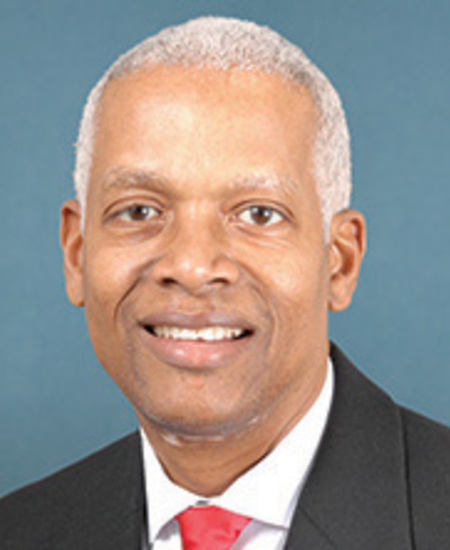
Rep. Henry C. "Hank" Johnson, Jr.
Sponsored bills
Maddy summaryThe GRAD Act (HR 5850) prevents colleges from changing or ending a student's enrollment status if federal financial aid under Title IV is delayed due to a government shutdown. It directly affects students receiving federal aid and the institutions that award it. The bill amends the Higher Education Act to require schools to maintain enrollment status during disruptions caused by lapses in government funding. This ensures students aren’t penalized for aid delays beyond their control during shutdowns.
Maddy summaryHRES 833 is a non-binding resolution passed by the U.S. House of Representatives to honor Dr. Jane Goodall, a renowned primatologist, conservationist, and advocate for wildlife protection. The resolution recognizes her groundbreaking chimpanzee research at Gombe Stream, her founding of the Jane Goodall Institute and Roots and Shoots program (which engages youth in environmental action globally), and her decades-long advocacy for ethical animal treatment and conservation. It commemorates her legacy following her passing on October 1, 2025, and extends condolences to her family and affiliated organizations. This resolution has no legal effect but serves as a symbolic tribute to her global environmental impact.
Maddy summaryThis resolution expresses the U.S. House of Representatives' support for recognizing October 26, 2025, as Intersex Awareness Day, which honors intersex individuals - those with natural variations in physical sex characteristics (such as anatomy, hormones, or chromosomes) that differ from typical male or female bodies. It affirms the day’s goals of promoting bodily autonomy and addressing issues like nonconsensual medical procedures on intersex children. The resolution encourages federal agencies, schools, and organizations to observe the day through educational activities that increase public awareness and support for the intersex community. It does not create new laws or policies but symbolically aligns with existing federal actions promoting nondiscrimination and health equity for intersex people.
Maddy summaryHR 5830, the Guaranteed Income Pilot Program Act of 2025, would establish a 3-year pilot program providing monthly cash payments to 20,000 eligible low-income individuals aged 18-65. Participants would receive payments equal to the fair market rent for a 2-bedroom apartment in their ZIP code, paid monthly on the 15th, with these payments not counting as income for other federal benefits. The program, funded at $495 million annually for fiscal years 2026-2030, requires a study tracking impacts on participants' financial stability, health, housing, and other outcomes. The final report would assess the program’s feasibility for broader expansion.
Maddy summaryHRES 824 is a ceremonial House resolution recognizing the religious and historical significance of Diwali, the festival of lights. It acknowledges Diwali’s meaning across Hindu, Sikh, and Jain traditions - symbolizing light over darkness, good over evil, and marking spiritual milestones like Guru Hargobind’s release and Lord Mahavira’s Nirvana. The resolution expresses respect for Indian-Americans and the global Indian diaspora, highlighting Diwali’s role in U.S. religious diversity. As a non-binding recognition, it does not create new laws, policies, or funding, but formally honors the cultural observance.
Maddy summaryThis bill requires federal agencies to report detailed spending data on advertising contracts starting with the 2027 budget. Specifically, agencies must disclose total advertising expenditures and break down spending for contracts with women-owned, minority-owned, and socially/economically disadvantaged small businesses (as defined by law). The reporting applies to both past fiscal year spending and estimated future spending for each agency. This is a transparency measure focused solely on data collection, not on changing how contracts are awarded or funding levels.
Maddy summaryHRES 815 is a non-binding House resolution expressing that immigration enforcement by ICE and CBP must be transparent and respect constitutional rights. It requires ICE/CBP officers to wear body cameras during public operations, ban masks/face coverings (except for safety threats), and visibly display name/badge/agency. The resolution also calls for civilian oversight boards, mandatory de-escalation training, and Justice Department oversight of ICE. It directly affects all ICE and CBP enforcement personnel and their interactions with the public, particularly in residential raids and detention. The resolution references similar pending bills but does not create new law.
Maddy summaryThis bill requires congressional and White House approval before any corporate or individual name, logo, or advertisement can be displayed on the White House grounds or in its buildings. It blocks permanent or semi-permanent displays (like plaques or signage) without consent from the House Speaker, Minority Leader, and White House Curator. The law applies to all White House grounds and structures, preventing unsanctioned commercial endorsements or sponsorships. Existing rules for commemorative monuments (under the Commemorative Works Act) would still govern approved displays.
Head Start Shutdown Protection Act of 2025 This bill requires the Department of Health and Human Services to reimburse a state, local government, or school district that uses its funds to maintain participation in the Head Start program or the Early Head Start program during a government shutdown in which there is a lapse in federal appropriations for the programs. The Head Start programs provide comprehensive early childhood education and development services to low-income children. The programs seek to promote school readiness through the provision of educational, health, nutritional, social, and other services.