

Maddy summaryThe AIR PUMP Act requires airlines to provide nursing crew members (like flight attendants and pilots) with reasonable break time to express breast milk for up to one year after their child's birth, as well as a private, non-bathroom space for this purpose. It specifically excludes breaks during critical flight phases and ensures accommodations won't compromise safety, security, or require significant costs (e.g., aircraft modifications). The bill includes anti-retaliation protections for employees who request accommodations or file complaints, and enforces these requirements through the Department of Labor using existing Fair Labor Standards Act mechanisms. This directly affects airline employees who are nursing parents and their employers, aligning airline workplace policies with federal breastfeeding protections.
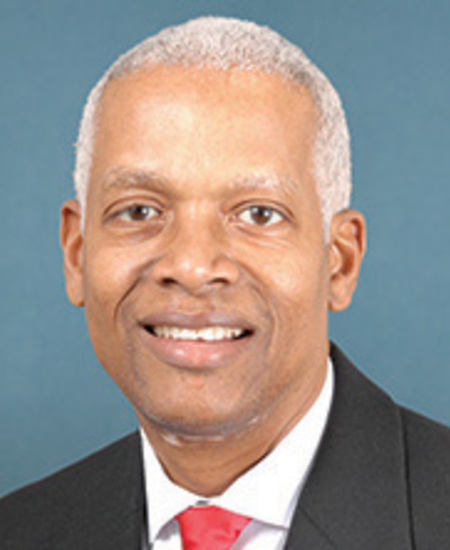
Rep. Henry C. "Hank" Johnson, Jr.
Sponsored bills
This resolution rejects the Supreme Court's decisions in the Insular Cases (a series of cases regarding the application of constitutional rights in U.S. territories) and recognizes that constitutional and democratic principles apply throughout the states and territories of the United States.
Maddy summaryHR 3567, the Combating Workplace Discrimination in Correctional Facilities Act of 2023, prohibits forcing incarcerated individuals to participate in work programs and bans retaliation against them for refusing such work. It removes the requirement that prisoners exhaust administrative remedies before filing lawsuits about prison conditions and expands protections under the Civil Rights Act of 1964 to specifically cover "incarcerated workers" in correctional facilities. The bill also mandates that agencies operating correctional facilities provide disability rights notices, implement compliance policies, and submit annual reports on ADA and Rehabilitation Act adherence. These changes directly affect incarcerated workers in federal and contracted correctional facilities by strengthening workplace rights and reducing barriers to legal action.
Maddy summaryThe EVs for All Act of 2023 establishes a Department of Energy grant program to fund electric vehicle (EV) sharing services at public housing projects. Eligible entities - like public housing agencies, local governments, and partner nonprofits - can apply for grants to purchase used EVs, install charging equipment, and run community outreach. Grants prioritize projects in historically marginalized communities with high pollution or limited transportation access, require fair labor practices, and mandate affordable, non-discriminatory charging fees. The program requires grantees to report on usage, emissions reductions, and service costs while ensuring EVs meet domestic content and worker protection standards.
Maddy summaryHR 3502, the Responsible Firearms Marketing Act, directs the Federal Trade Commission (FTC) to study and regulate deceptive advertising practices related to firearms. The FTC must study marketing that targets minors, implies illegal use, or promotes semiautomatic assault weapons, then report findings to Congress within two years. If the FTC identifies unfair practices, it must issue enforceable regulations within 18 months of the report to prohibit such marketing by firearm manufacturers, dealers, and importers. The law aims to stop deceptive advertising through FTC enforcement under existing consumer protection rules, directly affecting the firearms industry.
Maddy summaryHR 3548, the Pursuing Equity in Mental Health Act, aims to reduce mental health disparities for racial and ethnic minority groups by directing federal funding and policy changes. It increases annual grants for primary/behavioral health services to $60 million in 2023 and $80 million yearly through 2029, prioritizing entities serving minority communities. The bill requires the NIH to study mental health disparities within 9 months and mandates new training for mental health professionals (including social work and psychiatry) on culturally appropriate care. Additionally, it funds a $15 million annual outreach strategy to combat stigma and improve access to care, requiring materials tailored to cultural and language needs of minority groups.
Maddy summaryThe Kids Fly Safe Act (HR 3551) requires the Federal Aviation Administration (FAA) to conduct a study on child safety during air travel, collaborating with health, safety, and transportation agencies. The study will examine specific issues like age-appropriate safety seats, evacuation procedures for children, protection of strollers and child equipment in cargo, accessibility of airport facilities (such as diaper-changing stations), and airport safety measures for children. The FAA must submit a report with findings and recommendations to Congress within 180 days of the bill’s enactment. This bill does not create new regulations but aims to inform future policy through a detailed review of current child safety practices in aviation.
Maddy summaryThis bill requires sponsors of NIH-funded or NIH-approved clinical trials (for drugs, devices, biological products, or behavioral interventions) to set specific, measurable goals for recruiting participants reflecting race, ethnicity, age, and sex - either based on disease prevalence or the U.S. population. Key mechanisms include mandating detailed plans for achieving these goals, annual reporting of demographic data (without personally identifiable information), and strategies to reduce participation barriers like virtual visits or flexible scheduling. It also requires training for researchers on diversity and health inequities, and establishes a remediation process if goals aren’t met. The law aims to improve representation in clinical trials to ensure medical research better serves all patient groups.
Maddy summaryHR 3523, the Perinatal Workforce Act, provides $15 million annually from 2024 to 2028 to expand and diversify maternity care providers. It directs HHS to issue guidance for states on recruiting diverse providers (including midwives, nurses, and community health workers) and requires grant recipients to prioritize students from racial/ethnic minority groups, implement bias training, and target health professional shortage areas. The bill also mandates annual reporting on workforce diversity and outcomes, and requires a GAO report assessing barriers to equitable access in maternal healthcare. This legislation directly affects hospitals, nursing schools, midwifery programs, and insurers by funding targeted workforce development to address racial disparities in maternal care.
Maddy summaryThis bill requires that AM radio receivers be included as standard equipment in all new motor vehicles (such as cars and trucks) sold in the United States, with a rule to be issued by the Department of Transportation within one year. The rule must ensure AM radio is easily accessible on the dashboard and allows manufacturers to use digital AM radio technology instead of traditional AM. During the one-year period between the bill's enactment and the rule's effective date, manufacturers must clearly label vehicles without AM radio. The bill also directs a study to evaluate whether an alternative system could deliver emergency alerts as reliably as AM radio across the country, especially during crises.