

Maddy summaryThis bill reauthorizes the National Alzheimer's Project Act through 2035 (extending the previous deadline of 2025) and adds new requirements to promote healthy aging and reduce Alzheimer’s risk factors. It mandates the program to provide information on healthy behaviors that may lower cognitive decline risk and expands the advisory group to include representatives from agencies like the Department of Justice, FEMA, and Social Security Administration, plus experts with diverse clinical trial experience. The bill directly affects Alzheimer’s research, care programs, and the federal advisory group overseeing national efforts. Key changes include requiring annual evaluations instead of initial ones and adding a focus on reducing health disparities in Alzheimer’s initiatives.
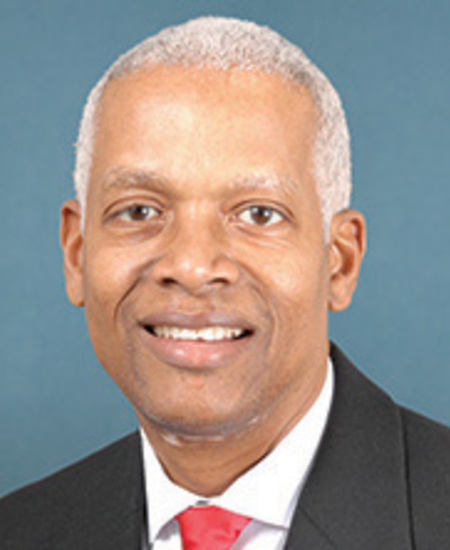
Rep. Henry C. "Hank" Johnson, Jr.
Sponsored bills
Maddy summaryHR 8521, the Joan Trumpauer Mulholland Congressional Gold Medal Act, authorizes the presentation of a gold medal to Joan Trumpauer Mulholland in recognition of her civil rights activism during the 1960s. The bill directly honors her as a key figure who participated in sit-ins, Freedom Rides, and the Jackson Movement, risking arrest and personal danger to challenge segregation. The key mechanism requires the Treasury Secretary to strike a gold medal and sell bronze duplicates to cover costs, with proceeds going to the U.S. Mint. This is a ceremonial honor with no policy changes or direct effects on legislation or constituents.
Maddy summaryHR 8533, the Safe Air on Airplanes Act, requires the Federal Aviation Administration to update aircraft safety regulations to address bleed air systems. It prohibits new jet and turboprop aircraft designs from using these systems, mandates filters to remove oil fumes in new aircraft within 7 years, and sets a 30-year phase-out schedule for existing aircraft designs (25% by year 10, 50% by year 20, 100% by year 30). The bill directly affects aircraft manufacturers and airlines by changing requirements for new aircraft production and fleet modifications. It focuses on technical air quality standards for cabin air, not health outcomes or costs.
Maddy summary# Summary of the Unaccompanied Noncitizen Children in Immigration Custody Act This comprehensive legislation establishes a framework to protect the rights and well-being of unaccompanied noncitizen children in U.S. immigration custody. Key provisions include: 1. **Office of the Ombudsperson**: Creates an independent, confidential office within the Department of Health and Human Services to monitor compliance, conduct investigations, and receive complaints. The Ombudsperson will establish regional offices across the country and issue annual public reports. 2. **Childcare Facility Standards**: Sets strict requirements for childcare facilities housing unaccompanied children, including staffing ratios, medical services, legal access, and education. Requires facilities to meet all applicable standards within 30 days of operation. 3. **Legal Rights and Representation**: Guarantees free legal orientation presentations, screenings, and representation for all unaccompanied children. Requires government-appointed counsel to represent children throughout all immigration proceedings. 4. **Child Advocates**: Mandates appointment of independent child advocates for vulnerable children, with expanded services to cover all locations where children are housed or appear in immigration court. 5. **Data Collection and Transparency**: Requires detailed weekly data collection on children's custody status, length of stay, family reunification processes, and facility compliance. Mandates public reporting of this data. 6. **Nondiscrimination Protections**: Prohibits discrimination based on race, ethnicity, national origin, religion, sex, sexual orientation, gender identity, disability, or HIV status. Requires culturally appropriate services and protections for LGBTQI children. 7. **Privacy and Confidentiality**: Requires separation of children's case files from immigration files (A-Files), prohibits using case files for immigration enforcement, and protects counseling records from disclosure. 8. **Influx Facility Standards**: Establishes strict requirements for temporary facilities, including staffing ratios, background checks, medical services, and reporting mechanisms. 9. **Compliance and Enforcement**: Includes audit requirements, civil action provisions for violations, and penalties for interference with the Ombudsperson's work. The legislation explicitly states it does not abrogate, modify, or replace the Flores settlement agreement, and maintains all rights under that agreement. It emphasizes the importance of treating children with dignity, providing inclusive services, and ensuring their well-being throughout the immigration process.
Maddy summaryHR 8501 prohibits the U.S. government from issuing licenses to export certain defense articles to the United Arab Emirates (UAE) or its agencies. This ban takes effect immediately upon the bill's enactment and continues until the President certifies to Congress that the UAE has stopped providing material support to Sudan's Rapid Support Forces (RSF). The restriction applies specifically to military equipment listed in Categories I-VIII, XIV, XVI-XVIII of the U.S. Munitions List (e.g., weapons, vehicles, and related technology). The bill directly affects U.S. defense exporters and the UAE government, requiring congressional oversight before exports can resume.
Maddy summary# Summary of Legislative Text This is a comprehensive legislative proposal focused on addressing substance use disorder through public health approaches, with significant funding and program requirements. Key elements include: 1. **Major Funding Programs:** - **Subtitle A (Local Grants):** $3.0 billion annually (2024-2033) for local entities to provide prevention, treatment, and recovery services - **Subtitle B (State/Regional Grants):** $4.6 billion annually (2024-2033) for state-level programs - **Subtitle C (Other Grants):** $1.0 billion annually (2024-2033) for specific entities and underserved populations - **Subtitle D (Innovation/Training):** $1.5 billion annually (2024-2033) for training, research, and capacity building 2. **Key Program Requirements:** - Mandates for evidence-based treatment services across multiple levels of care - Requirements for cultural competency, particularly for Native American communities - Specific focus on harm reduction, prevention, and recovery support - Provisions for naloxone distribution and overdose reversal programs 3. **Regulatory Changes:** - New certification requirements for covered manufacturers, distributors, and dispensers of Schedule II controlled substances - Penalties for failure to submit certifications or submitting false certifications - Creation of a "Comprehensive Addiction Resources Fund" for penalty revenues 4. **Focus Areas:** - Prevention services (including trauma-informed approaches) - Early intervention services - Recovery support services - Harm reduction programs - Workforce development for treatment providers - Special attention to underserved populations (rural communities, racial minorities, formerly incarcerated individuals) 5. **Funding Priorities:** - 10% of funds for Native American communities - Specific requirements for cultural competency and language access - Mandated data collection and reporting systems This legislation represents a significant shift toward public health approaches to substance use disorder, emphasizing prevention, treatment, and recovery support rather than punitive measures, with substantial funding commitments over a decade.
Maddy summaryThis bill amends patent law (Title 35, U.S. Code) to create a "good faith exception" for certain fines. It directly affects entities (like companies or individuals) that face fines under Sections 41(j) and 123(f) for making patent-related assertions or certifications. The key provision states that fines won't apply if the entity can prove the assertion or certification was made in good faith. This changes the automatic imposition of fines to require a showing of good faith as a defense. The bill focuses on procedural adjustments to patent law, not substantive changes to patent rights.
Maddy summaryHR 8388, the Aaron Salter, Jr., Responsible Body Armor Possession Act, bans civilians from purchasing, owning, or possessing "enhanced body armor" (defined as bullet-resistant protection meeting Type III standards per National Institute of Justice guidelines). This law directly affects most non-law enforcement civilians, with key exceptions for law enforcement officers (including corrections officers), government entities, and individuals who legally owned such armor before the law took effect. The bill creates a new federal offense punishable by fines or up to 10 years in prison for knowingly violating the ban. It does not restrict standard body armor or apply to law enforcement personnel.
Maddy summaryThis bill renames the Department of Veterans Affairs community-based outpatient clinic in Hinesville, Georgia, to the "John Gibson, Dan James, William Sapp, and Frankie Smiley VA Clinic." The change updates the clinic's official name in all federal references, including documents, maps, and records. It directly affects the clinic's identification and veterans who use its services, though the bill does not alter healthcare services or funding. The renaming is procedural and commemorative, with no new policy or funding mechanisms.
Maddy summaryHRES 1206 is a symbolic House resolution supporting the designation of May 2024 as "Mental Health Awareness Month." It does not create new laws or funding but aims to raise public awareness about mental health challenges, emphasizing the need to reduce stigma and treat mental well-being as equally important as physical health. The resolution cites statistics on rising mental health crises - including increased anxiety, depression, and suicide rates among youth, LGBTQ+ individuals, veterans, and communities of color - to underscore the urgency of the issue. It encourages nationwide efforts to promote mental health awareness and access to care during this designated month.