

Maddy summaryHR 7921, the Countering Antisemitism Act, establishes a National Coordinator to Counter Antisemitism within the Executive Office of the President and creates an Interagency Task Force to coordinate federal efforts against antisemitism across multiple agencies. The bill requires federal agencies to report on implementing the U.S. National Strategy to Counter Antisemitism, mandates annual threat assessments of antisemitic violent extremism from the FBI, DHS, and National Counterterrorism Center, and addresses antisemitic discrimination in higher education through a designated Office for Civil Rights Designee. It also includes provisions for a study on Holocaust education by the U.S. Holocaust Memorial Museum, a study on online antisemitism with recommendations for Congress, and amendments to the Nonprofit Security Grant Program to require public reporting on grant applications and awards.
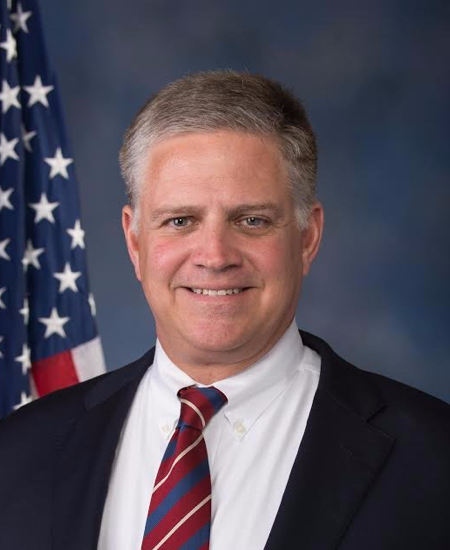
Rep. A. Drew Ferguson IV
Sponsored bills
Maddy summaryH.J.Res. 116 seeks to block a Department of Labor rule finalized on January 10, 2024, which aimed to clarify how businesses classify workers as employees or independent contractors under the Fair Labor Standards Act (FLSA). If passed, this resolution would prevent the rule from taking effect, directly affecting businesses that use independent contractors and their workers, who rely on FLSA protections for minimum wage and overtime pay. The bill uses a specific congressional process (under Chapter 8 of Title 5, U.S. Code) to disapprove the rule, rather than creating new policy. This action would maintain the existing classification standards until a new rule is established.
Maddy summaryHR 7866, the United States-Israel Anti-Tunnel Cooperation Enhancement Act, increases funding for U.S.-Israel collaboration on anti-tunnel technology from $50 million to $80 million. The bill directly affects U.S. defense and homeland security agencies working with Israel to detect, map, and disrupt underground terror tunnels used by groups like Hamas. Key provisions include authorizing the higher funding level under existing law to enhance joint efforts against subterranean threats, such as tunnels used for attacks, weapon storage, and hostage holding beneath civilian areas in Gaza. This focuses on concrete policy changes to scale up bilateral cooperation on a specific security technology.
Maddy summaryThis bill amends budget scoring rules to require the Congressional Budget Office to account for long-term savings from preventive health programs when evaluating legislation. It directs the CBO to assess if a bill reduces future government costs through evidence-based preventive health services (like screenings or vaccinations) and include those savings in budget projections. The change affects how Congress scores the fiscal impact of health-related bills, requiring them to consider savings over 20 years (not just the current budget cycle). It does not create new programs but changes the budget analysis process for preventive health measures.
Maddy summaryThis resolution (HRES 1092) is a symbolic statement by the U.S. House of Representatives. It affirms that the existing U.S.-Israel Free Trade Agreement supports Israel's economy during the conflict with Hamas, recognizing that trade under this agreement has historically boosted economic ties between the two nations. The resolution does not create new laws or funding but formally expresses the House's view that maintaining this trade relationship is important for Israel's economic stability. It cites historical trade growth and current economic data to underscore this position.
Maddy summaryThe Action for Dental Health Act of 2023 extends the authorization period for federal grants addressing dental workforce shortages. It amends Section 340G(f) of the Public Health Service Act to change the grant funding period from 2019-2023 to 2024-2028. This extension directly affects dental health programs and organizations receiving these grants, ensuring continued funding for initiatives that train and deploy dental professionals in underserved communities. The key provision is a straightforward renewal of the grant timeline without altering funding amounts or eligibility criteria.
Maddy summaryThe Laken Riley Act (HR 7511) would require federal authorities to detain non-citizens charged with or convicted of burglary, theft, larceny, or shoplifting offenses. It also creates new legal standing for state attorneys general to sue federal immigration officials in federal court if they believe immigration enforcement decisions (like releasing aliens or granting parole) cause financial harm exceeding $100 to the state or its residents. The bill amends immigration laws to expand detention requirements for certain property crimes and allows states to seek court orders to enforce immigration policies. It does not create new criminal penalties but modifies existing immigration enforcement procedures. The bill’s findings and political language about the Laken Riley case are not part of its policy provisions.
Maddy summaryThe PURR Act of 2024 establishes a uniform federal regulatory framework for pet food in the U.S., replacing inconsistent state-level rules and separating pet food regulation from livestock feed. It preempts state laws on pet food labeling and marketing, creates a standardized process for reviewing new pet food ingredients (requiring FDA action within 90 days), and allows certain marketing claims like "natural" or "hairball control" without premarket approval if truthful and substantiated. The bill defines key terms (e.g., "companion animal" as dogs/cats), sets ingredient listing rules, and mandates FDA guidance on topics like nutritional adequacy and calorie claims. This directly affects pet food manufacturers, the FDA’s Center for Veterinary Medicine, and pet owners by creating clearer safety standards and labeling consistency nationwide.
Maddy summaryHR 7184, the Congressional Budget Office Data Access Act, amends the Privacy Act of 1974 to allow federal agencies to disclose certain personal data to the Congressional Budget Office (CBO). This change directly affects federal agencies that collect personal information under the Privacy Act, enabling them to share data with the CBO when performing its budget analysis duties. The key provision adds a new exception (paragraph (11)) to the Privacy Act, explicitly permitting disclosures to the CBO Director or their authorized representatives for the CBO's official budgetary work. This streamlines data access for the CBO without altering privacy protections for individuals.
Maddy summaryHRES 993 is a non-binding congressional resolution designating February as "Career and Technical Education (CTE) Month" to celebrate CTE programs nationwide. It supports CTE as a pathway preparing students for high-demand, skilled careers in fields like infrastructure and technology, recognizing that over 12 million students currently participate in CTE programs across high schools and colleges. The resolution encourages educators, counselors, and parents to promote CTE as a respected educational option, highlighting its role in reducing high school dropout rates and aligning student skills with workforce needs. It does not create new laws or allocate funding, but symbolically affirms bipartisan support for CTE, referencing the 1917 Smith-Hughes Act as foundational to current efforts.