

Maddy summaryThe TRACK Act of 2023 requires federal agencies (including HHS, NIH, Defense, and Veterans Affairs) to create a public database tracking all government funding for biomedical research and development. It compiles specific details about contracts, grants, licensing agreements, and tax benefits related to drug, device, and therapy development - including funding amounts, recipient organizations, product names/prices, and patent information. The database must be searchable by the public within one month of the bill’s enactment and updated every two weeks. This directly affects federal agencies managing biomedical funding and the private companies, institutions, and researchers receiving that support. The goal is to increase transparency about how taxpayer dollars fund medical product development.
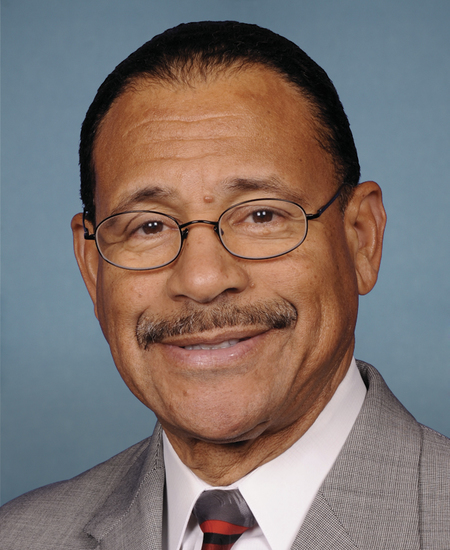
Rep. Sanford D. Bishop, Jr.
Sponsored bills
This resolution expresses support for the goals and ideals of Endometriosis Awareness Month. Endometriosis is a painful condition in which the tissue that normally lines the inside of the uterus grows outside the uterus.
Maddy summaryThis bill prohibits colleges receiving federal funds from retaliating against students who belong to single-sex social organizations (like traditional fraternities or sororities). It specifically bans schools from requiring students to waive membership rights as a condition of enrollment or taking adverse actions - such as disciplinary measures, denying financial aid, or restricting housing - solely based on their membership in these groups. The bill clarifies that institutions aren't required to officially recognize such organizations and can still take action for misconduct unrelated to the group's single-sex policy. It defines "adverse action" broadly to include denials of scholarships, housing, or leadership opportunities tied to membership. The law directly affects students in single-sex organizations and the federal funding policies of colleges under the Higher Education Act.
Maddy summaryHR 1619 requires schools participating in the National School Lunch Program to provide fluid milk substitutes (like soy or almond milk) upon request by a student or their parent/guardian. The bill removes the previous requirement that substitutions needed a medical authority's written statement for most dietary needs, instead allowing requests based on the student's or parent's request alone. It aligns the definition of acceptable substitutes with current Dietary Guidelines for Americans. This change directly affects students with dietary restrictions, making it simpler for schools to accommodate their needs without extra medical documentation.
Maddy summaryThis bill authorizes a Congressional Gold Medal to honor the "Hello Girls" - female telephone operators who served in the Army Signal Corps during World War I. They provided critical battlefield communications in France (connecting 26 million calls), wore military uniforms, and faced combat risks, but were denied veteran benefits for 60 years due to being classified as civilian contractors. The medal recognizes their pioneering service, devotion, and the decades-long struggle to gain military recognition. The award follows similar recognition for other WWII women veterans and aims to correct the historical injustice they faced.
Maddy summaryThe Strengthening Local Processing Act of 2023 provides targeted support for smaller meat and poultry processing businesses (defined as those with fewer than 50 employees under existing regulations). It creates a free, searchable database of validation studies and scale-appropriate model safety plans to help these businesses meet federal food safety requirements, while increasing federal funding for state inspection programs from 50% to 65%. The bill also establishes a $20 million annual grant program to help small processors improve safety, expand capacity, and access training, with priority given to businesses serving farmers within 200 miles and those owned by disadvantaged individuals. These changes directly benefit small meat and poultry processing establishments that often struggle with compliance costs and resources.
This resolution recognizes the city of Atlanta, Georgia, as the cradle of the Civil Rights Movement and a continuing example of the success that results from equal opportunities.
Maddy summaryHRES 181 is a non-binding House resolution expressing symbolic support for designating February 28, 2023, as "Rare Disease Day." It does not create new laws or policies but formally recognizes the importance of raising awareness about rare diseases, improving early diagnosis, and supporting research for treatments. The resolution acknowledges that rare diseases affect over 25 million people in the U.S. and highlights ongoing efforts like the FDA’s Rare Disease Endpoint Advancement Pilot Program. It aligns with the global observance of Rare Disease Day, which began in the U.S. in 2009.
Maddy summaryHR 1328, the Medical Device Nonvisual Accessibility Act of 2023, requires certain home-use medical devices (like blood pressure monitors and sleep apnea machines) to include nonvisual accessibility features - such as voice commands or audio feedback - by 2025. It directly affects blind or low-vision users who rely on these devices for independent, safe, and private care at home. The bill mandates that devices classified as Class II or III (and cleared via FDA processes) must meet accessibility standards ensuring equal usability for blind or low-vision individuals, with limited waivers allowed for manufacturers facing undue hardship. The FDA will develop and enforce these standards within two years, consulting with accessibility experts and blind users.
Maddy summaryThe Paycheck Fairness Act (HR 17) strengthens equal pay protections by amending the Fair Labor Standards Act. It prohibits pay discrimination based on sex, pregnancy, childbirth, sexual orientation, gender identity, and sex characteristics. The bill modifies employer defenses for pay differences to require demonstration that any disparity is job-related, consistent with business necessity, and accounts for the entire pay differential. It also prohibits employers from relying on wage history when making hiring decisions or setting pay, enhances penalties for violations, and requires the EEOC to collect compensation data disaggregated by sex, race, and national origin.