

Maddy summaryHRES 1466 is a non-binding resolution expressing support for designating September 15-21, 2024, as "National Adult Education and Family Literacy Week." It does not create new programs but aims to raise public awareness about the importance of adult foundational education, workforce skills, and family literacy programs. The resolution encourages public support for existing initiatives that help adults improve literacy, numeracy, and digital skills, which the text notes benefit economic stability, parental involvement in children’s education, and workforce readiness for millions of adults. It specifically highlights challenges like low literacy among 43 million adults, unemployed individuals, and incarcerated populations.
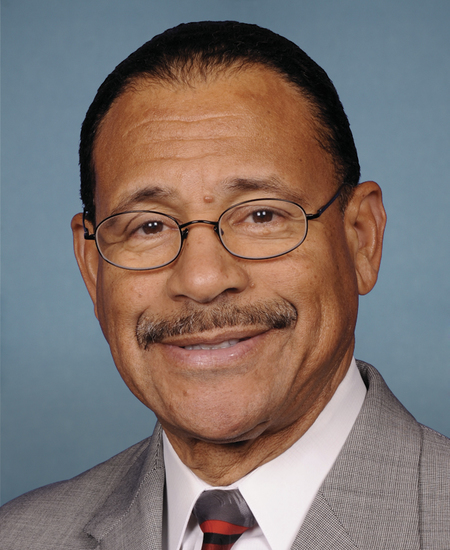
Rep. Sanford D. Bishop, Jr.
Sponsored bills
Maddy summaryHR 9647, the President Jimmy Carter Congressional Gold Medal Act, authorizes Congress to award a single gold medal to former President Jimmy Carter in recognition of his service. The bill directs the Treasury Secretary to design and strike the medal, with bronze duplicates available for sale to cover costs. It does not create new policies or affect any government programs or individuals beyond this ceremonial honor. The medal is intended to commemorate Carter's presidency, humanitarian work through the Carter Center, and his Nobel Peace Prize. This is a procedural bill with no substantive legislative impact.
Maddy summaryHRES 1456 is a symbolic resolution designating September 17, 2024, as "Constitution Day" to honor the signing of the U.S. Constitution on September 17, 1787. It calls for the people of the United States to observe the day with ceremonies and activities, recognizing the Constitution's historical significance and foundational role in American governance. This resolution does not create new laws or affect any individuals or policies; it is purely a non-binding expression of support by the House of Representatives.
Maddy summaryHR 9449 establishes a "preferred provider list" for healthcare providers offering community care to veterans through the VA. It requires providers to complete annual, evidence-based suicide prevention training to be listed publicly, making it easier for veterans to find trained providers. The VA must annually report to Congress on the list's implementation, including provider numbers, veteran utilization patterns, and recommendations for improvement. This directly affects veterans seeking community care and healthcare providers participating in the VA's community care program.
Maddy summaryHRES 1443 is a non-binding resolution expressing the House of Representatives' support for universal access to high-quality, affordable child care and early education for all young children and families. It highlights that current child care costs consume 14% of middle-income families' income (vs. a recommended 7%) and that 50% of U.S. families live in areas with insufficient child care options ("child care deserts"). The resolution calls for future legislation to ensure no family pays more than 7% of income for care, expand access during non-traditional hours, guarantee workforce pay parity with K-12 educators, and fund infrastructure upgrades. It does not create new programs but urges the House to prioritize comprehensive child care reform.
Maddy summaryHRES 1438 is a symbolic resolution passed by the U.S. House of Representatives on September 11, 2024, condemning the September 4, 2024, shooting at Apalachee High School in Winder, Georgia. It honors the four victims - Christian Angulo, Richard Aspinwall II, Cristina Irimie, and Mason Schermerhorn - expresses condolences to their families and the Winder community, and acknowledges the trauma experienced by students, staff, and the broader community. The resolution has no policy changes or funding provisions; it serves solely as a formal expression of grief and support following the tragedy.
Maddy summaryThis bill allows VA health care professionals to prescribe controlled medications via telemedicine without requiring an in-person exam, directly affecting veterans receiving VA telehealth services. It permits prescriptions for controlled substances (like certain pain medications) when the provider is licensed under state law, acting within professional practice, and the prescription serves a legitimate medical purpose. The law requires the VA Secretary to establish regulations for this process but clarifies it doesn’t change existing Controlled Substances Act obligations. This expands access to telemedicine for veterans needing controlled medications while maintaining safety and licensing standards.
Maddy summaryThis symbolic resolution expresses congressional support for designating September 29, 2024, as "Veterans of Foreign Wars of the United States Day" to honor the organization's 125th anniversary. It requests the President issue a proclamation encouraging government agencies and the public to observe the day with ceremonies, though it creates no new laws or policy changes. The resolution recognizes the VFW's historical service to veterans but does not directly affect any individuals or programs.
Maddy summaryThis bill prioritizes funding for rural healthcare facilities through the USDA's Community Facilities Program. For fiscal years 2025-2031, the Secretary of Agriculture must give priority to rural hospitals and healthcare providers seeking loans or grants to develop essential facilities. Funds can be used for medical supplies, telehealth expansion, staffing support, or renovating closed facilities. Additionally, 10% of guaranteed loan funds under the program must be reserved annually to support these rural healthcare projects.
Maddy summaryThis bill creates a program to help resolve ownership disputes on farmland or forest land held by multiple heirs, primarily affecting underserved heirs (low-income, socially disadvantaged, or veteran landowners with undivided ownership). It authorizes $60 million annually (2024-2028) for the USDA to fund cooperative agreements with nonprofit legal/accounting providers, offering free services to these heirs to transition land to farming, maintain agricultural use, or meet eligibility for USDA programs. Eligible entities must provide services at no cost, submit annual progress reports, and focus on properties in agricultural production or viable for it, with strict criteria for defining "underserved heirs." The bill does not change land ownership rights but provides structured support to resolve succession issues through legal assistance.