

Maddy summaryHRES 1530 is a non-binding House resolution recognizing former President Jimmy Carter's 100th birthday. It honors his life, public service, and key achievements, including his presidency (noting the Panama Canal treaties, Camp David Accords, and founding the Departments of Education and Energy), post-presidency work with the Carter Center, and decades of humanitarian efforts. The resolution does not create new laws or affect any policies; it is purely commemorative. It formally acknowledges his contributions to Georgia, the U.S., and global peace efforts, including his 2002 Nobel Peace Prize. This symbolic gesture has no direct impact on citizens or government operations.
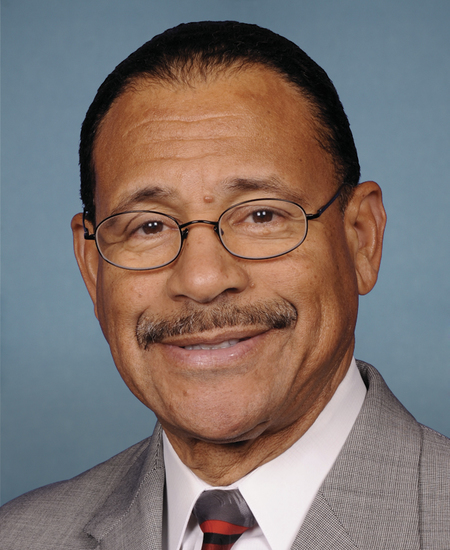
Rep. Sanford D. Bishop, Jr.
Sponsored bills
Maddy summaryThis resolution formally recognizes the 100th anniversary of Booker T. Washington High School in Atlanta, which opened in 1924 as the city's first public high school for Black students. It honors the Atlanta Black community's decades-long advocacy - including successful voter mobilization and school bond referendums - that led to the school's construction after years of systemic barriers to Black education. The resolution celebrates the school's historical significance, its role as a cultural cornerstone, and the achievements of its notable alumni. As a ceremonial resolution, it does not create new laws or policies.
Maddy summaryHR 9878, the No Shame at School Act of 2024, requires schools to automatically certify students from households with unpaid meal fees for free or reduced-price meals (instead of allowing discretion), and mandates retroactive reimbursement for past unpaid meals. It directly affects school districts and students in households owing meal fees by prohibiting stigmatizing practices like special tokens, public lists of names, or withholding grades due to unpaid fees. Key provisions ban schools from physically segregating students, using debt collectors, or taking food away from students who owe fees, while requiring clear communication to households about meal applications. The bill defines "covered child" as any student enrolled in a participating school meal program whose household owes fees or is eligible for free/reduced meals.
Maddy summaryHRES 1517 is a symbolic resolution expressing the U.S. House of Representatives' support for designating October 7-12, 2024, as "National 4-H Week." It does not create new laws or policies but formally recognizes 4-H, the nation’s largest youth development program, which engages nearly 6 million young people through hands-on learning in health, science, and leadership. The resolution highlights 4-H’s role in developing youth leadership via its network of volunteers, land-grant universities, and the Department of Agriculture. It has no direct impact on any specific group or program, as it only serves as a formal acknowledgment of the organization’s work.
Maddy summaryHRES 1516 is a resolution passed by the U.S. House of Representatives to commend Big Brothers-Big Sisters of America on its 120th anniversary. It recognizes the organization’s work in providing youth mentorship that helps young people graduate from school and plan for their future. The resolution highlights how the organization, operating in over 5,000 communities nationwide, has supported millions of young people through long-term mentor relationships. As a symbolic gesture, it does not create new laws or policies but expresses congressional support for the organization’s mission.
Maddy summaryHRES 1515 designates October 1, 2024, as "National Animal Rescue Day" to raise public awareness about animal adoption, promote spaying and neutering to reduce pet overpopulation, and encourage more adoptions nationwide. The resolution supports community events, educational efforts, and charitable activities on that day to assist animal shelters and reduce the number of animals euthanized. It is a non-binding symbolic gesture without legal force, intended to unite communities around animal rescue initiatives.
Maddy summaryHRES 1495 designates September 2024 as "Sickle Cell Disease Awareness Month" to raise public education about sickle cell disease (SCD), which affects approximately 100,000 people in the U.S., predominantly in African American communities. The resolution urges the Department of Health and Human Services to address access barriers for SCD treatments in Medicare and Medicaid, calls for increased National Institutes of Health research funding, and proposes forming a federal interagency cabinet to coordinate SCD policy. It also encourages public events during September to highlight early detection, treatments, and preventative care for SCD complications. As a symbolic resolution, it does not create new laws but directs federal agencies to prioritize equitable access and research for SCD.
Maddy summaryHR 9782, the Uterine Cancer Study Act of 2024, directs the U.S. Department of Health and Human Services (HHS) to study whether hair straighteners - specifically chemical products - may be linked to uterine cancer, with a focus on higher rates among women of color. The study will review existing research, examine impacts across racial and ethnic groups, and break down results by product type (e.g., dyed, bleached, or permed straighteners). HHS must submit a study methodology within 45 days of the bill’s enactment and complete the study, reporting findings to Congress within two years. The bill does not impose new regulations but may inform future FDA safety requirements for hair straightening products. This affects women of color disproportionately impacted by uterine cancer and the broader population using such products.
Maddy summaryHRES 1491 is a ceremonial resolution designating October 23, 2024, as "Public Radio Music Day" to honor public radio music stations. It expresses the House's appreciation for these stations' role in serving listeners, musicians, and communities across all 50 states, the District of Columbia, and Puerto Rico. The resolution highlights how these noncommercial stations provide unique access to diverse music genres, support local artists, and foster community cultural engagement. As a symbolic gesture with no legal or financial impact, it does not change any policies or directly affect specific groups beyond recognizing the stations' contributions.
Maddy summaryThis bill establishes a Diversity and Inclusion Administrator at the Department of Labor to increase African American participation in apprenticeship programs. It requires all new and renewing registered apprenticeship programs to submit plans for boosting African American enrollment, and authorizes competitive grants for programs targeting underrepresented groups in industries like construction, tech, and healthcare. Grant recipients must report on metrics including participant demographics, program completion rates, and job placement in related fields. The law directly affects African American youth and other underrepresented groups by mandating systemic changes to apprenticeship programs nationwide.