

Maddy summaryHR 485, the Muhammad Ali Congressional Gold Medal Act, authorizes Congress to award a gold medal in recognition of Muhammad Ali's lifetime contributions to sports, civil rights, and humanitarian causes. The bill directs the Treasury Secretary to strike the medal and present it to Ali's widow, Lonnie Ali, following his death in 2016. It also permits the sale of bronze duplicates to cover costs, with proceeds going to the U.S. Mint. This is a commemorative measure with no policy impact, solely honoring Ali's legacy through a symbolic medal.
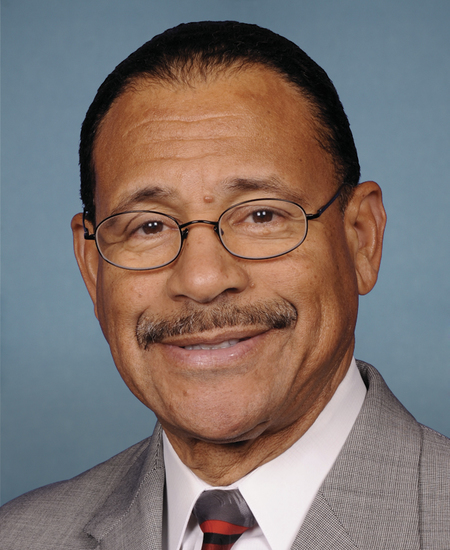
Rep. Sanford D. Bishop, Jr.
Sponsored bills
Maddy summaryHR 429, the Rosie the Riveter Commemorative Coin Act, authorizes the U.S. Treasury to mint and sell three types of commemorative coins ($5 gold, $1 silver, and half-dollar) to honor women who worked on the U.S. home front during World War II. The coins will be sold at face value plus surcharges ($35 for gold, $10 for silver, $5 for half-dollar), with all surcharge revenue directed to the Rosie the Riveter Trust to support the Rosie the Riveter WWII Home Front National Historical Park and related educational programs. The coins must be issued between January 1, 2028, and December 31, 2028, in specified quantities (50,000 gold, 400,000 silver, 750,000 half-dollar), with all costs covered by the sales revenue to avoid net government expense.
Maddy summaryHR 433, the Department of Education Protection Act, prohibits the use of federal funds to reorganize the Department of Education. Specifically, it blocks any spending from current fiscal year appropriations on activities that would decentralize the department, reduce staffing, or alter its structure, responsibilities, or authority relative to its organization as of January 1, 2025. The bill directly affects the Department of Education by preventing structural changes to its existing offices and operations. This is a procedural measure focused solely on preserving the current departmental framework, not on changing education policy or funding.
Maddy summaryHR 307, the ARC Act of 2025, aims to reduce avoidable amputations by expanding access to peripheral artery disease (PAD) screening and prevention. It requires Medicare and Medicaid to cover PAD screening tests (like ankle-brachial index tests) without cost-sharing for at-risk beneficiaries, including seniors, diabetics, and those with other vascular risk factors. The bill also establishes a federal education program to raise awareness about PAD and creates quality measures to incentivize hospitals to prioritize non-amputation treatments through early detection. These provisions directly affect millions of Americans, particularly minorities disproportionately impacted by PAD-related amputations, by making preventive care more accessible and integrated into routine care.
This resolution honors the life, achievements, legacy, and distinguished public service of former President Jimmy Carter. The resolution also (1) acknowledges President Carter's contributions to the state of Georgia, the United States, and the world; and (2) establishes his legacy as one of the great leaders and statesmen of the United States.
Maddy summaryThis bill increases healthcare affordability for low- and middle-income people by expanding eligibility for premium tax credits under the Affordable Care Act. It removes the previous 400% of poverty level cap for subsidy eligibility and replaces it with a new sliding scale based on income tiers, ranging from 0% to 8.5% of household income for coverage costs. The scale adjusts linearly across income levels, with households earning 300-400% of poverty paying 6.0%-8.5% of income (up from the prior fixed 400% cap), while lower-income households pay progressively less. These changes apply to tax years beginning after December 31, 2025, directly affecting individuals purchasing health insurance through marketplace plans.
Maddy summaryThis bill amends the tax code to create a special rule for deducting losses of uncut timber (timber not yet cut for sale) from disasters like fires, storms, pests, or drought. It requires taxpayers to base deductions on the timber's pre-loss appraised value minus salvage value, using a certified appraiser's assessment within one year. Crucially, taxpayers must reforest the affected area with hardwoods or softwoods within five years to keep the tax benefit; failure to reforest results in recapturing the deduction. The rule applies only to timber held for sale in an active business, excluding passive activities. This changes how businesses can claim tax deductions after timber losses while linking the benefit to reforestation efforts.
Maddy summaryHR 212, the Capitol Remembrance Act, requires the Architect of the Capitol to create a permanent exhibit in the U.S. Capitol within two years of the bill's enactment. The exhibit must include preserved Capitol property damaged during the January 6, 2021, attack, photographic records of the event, and a plaque honoring Capitol Police, other law enforcement, and Capitol staff who were injured or died protecting the building. It also allows for the inclusion of relevant artwork depicting the attack. This bill directly affects Capitol visitors and staff by establishing a permanent memorial to the events of January 6.
Maddy summaryHR 82, the Social Security Fairness Act of 2023, repeals two provisions that reduce Social Security benefits for certain government workers. It eliminates the Government Pension Offset (GPO), which cuts spousal or survivor benefits for people with pensions from jobs not covered by Social Security (like federal or state government roles), and the Windfall Elimination Provision (WEP), which lowers retirement benefits for those with similar pensions. The law takes effect for benefits paid after December 2023, requiring the Social Security Administration to adjust benefit calculations to remove these reductions. This change directly affects public-sector employees who previously had their Social Security benefits reduced due to their government pensions.
Maddy summaryThis bill designates the U.S. Postal Service facility at 119 Main Street in Plains, Georgia, as the "Jimmy and Rosalynn Carter Post Office." It requires all federal references in laws, documents, or records to use this new name instead of the previous designation. The bill directly affects the postal facility and federal administrative records, but does not alter postal services, funding, or operations. This is a ceremonial naming resolution honoring former President Jimmy Carter and his wife, Rosalynn Carter.