

Maddy summaryHR 401, the "No Taxpayer Funding for the World Health Organization Act," prohibits the U.S. government from providing any assessed or voluntary contributions to the World Health Organization (WHO) starting on the day the bill becomes law. This directly affects the WHO, which would lose U.S. funding through these specific channels, and the U.S. government, which would no longer allocate taxpayer money for this purpose. The key mechanism is a statutory ban that overrides existing law, requiring immediate cessation of such payments without needing additional authorization. The bill does not impact other U.S. international health programs or the WHO's broader operations.
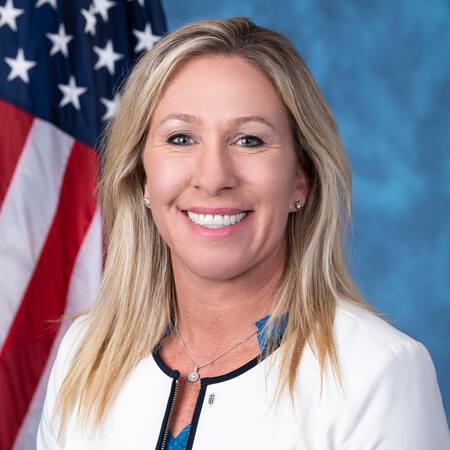
Rep. Marjorie Taylor Greene
Sponsored bills
Maddy summaryHRES 34 is a non-binding resolution expressing the House of Representatives' view that the federal government should drop all charges against Edward Snowden. It states the House believes the NSA's bulk telephone records program was illegal and unconstitutional, that Snowden's disclosure of it was in the public interest, and that the government should dismiss the espionage and theft charges against him. This resolution does not change any law or affect legal proceedings, as it only states the House's position. It directly relates to Snowden's case and the NSA program's legality, based on prior court rulings and reports.
Maddy summaryHR 335, titled "Repeal the NFA Act," seeks to eliminate the National Firearms Act (NFA) of 1934, a federal law regulating certain firearms like machine guns, short-barreled rifles, and suppressors. If enacted, the bill would remove the NFA from the Internal Revenue Code by repealing Chapter 53, which currently governs the taxation and registration of these firearms. This repeal would directly affect firearm owners and manufacturers subject to NFA regulations, removing federal requirements for registration and tax payments on specified weapons. The bill focuses solely on repealing existing law without introducing new provisions or exceptions.
Maddy summaryHRES 25 is a resolution to erase the January 13, 2021, impeachment of President Donald Trump from the U.S. House of Representatives' official records, as if it never occurred. It argues the impeachment process was flawed due to lack of due process, omission of context about the 2020 election, and constitutional concerns like ignoring the Senate trial timeline. The resolution does not change the Senate's prior acquittal of Trump but seeks to remove the House's vote from its internal documentation. As a procedural resolution, it would only affect the House's records and has no legal impact on the impeachment's outcome.
Maddy summaryThis House resolution (HRES 26) declares that conduct by Antifa members at affiliated demonstrations is domestic terrorism under existing law (18 U.S.C. §2331) and designates Antifa as a domestic terrorist organization. It calls on the Department of Justice to prosecute Antifa-related terrorism and use available resources to combat such activity. The resolution does not create new law but formally characterizes Antifa’s actions as terrorism for congressional purposes. It directly affects Antifa members and affiliates by framing their conduct under federal terrorism definitions.
Maddy summaryHRES 24 is a resolution seeking to remove the December 18, 2019, impeachment of President Donald Trump from the House of Representatives' official records. It claims the impeachment was based on insufficient evidence that did not meet the constitutional standard for impeachment under Article II, Section 4. If passed, the resolution would treat the impeachment as if it never occurred, erasing it from the House's historical record. This is a procedural measure affecting only the House's internal documentation, not legal outcomes or the Senate trial.
This resolution honors the life, achievements, legacy, and distinguished public service of former President Jimmy Carter. The resolution also (1) acknowledges President Carter's contributions to the state of Georgia, the United States, and the world; and (2) establishes his legacy as one of the great leaders and statesmen of the United States.
Maddy summaryThis bill directs the Department of Homeland Security to implement the Migrant Protection Protocols (MPP) as outlined in a 2019 policy memo. It requires migrants seeking asylum at the U.S. border to remain in Mexico while their cases are processed, rather than being allowed to stay in the U.S. pending a hearing. The bill does not create new rules but mandates the reinstatement of a policy that was previously in effect from 2019 to 2021. This would directly affect asylum seekers arriving at the U.S.-Mexico border. The policy change would apply to all migrants covered by the existing MPP framework.
Maddy summaryThe Healthcare Freedom Act of 2025 would rename health savings accounts as "health freedom accounts" and make them available to all individuals, removing the previous requirement of having a high-deductible health plan. It increases the annual contribution limit to $12,000 (or $24,000 for joint returns) and expands eligible expenses to include direct primary care and health care sharing ministries. Employers could contribute to these accounts for new hires starting five years after enactment, with a transition rule for existing accounts. The bill would directly affect individuals using these accounts and employers who choose to participate in the new system.
Maddy summaryThis bill protects individuals charged with nonviolent political protests by preventing pretrial detention for such offenses (unless involving violence), requiring faster trials, and allowing lawsuits for wrongful detention. It also restricts government use of national security powers against U.S. citizens unless they act as foreign agents, mandates disclosure of surveillance investigations upon citizen request, and gives defendants in D.C. trials the right to choose their trial location. Key provisions directly affect people arrested for peaceful protest activities, aiming to limit government overreach in such cases. The bill does not change sentencing guidelines but emphasizes judges should follow standard sentencing ranges for these offenses.