

Safe Schools Improvement Act of 2021 This bill requires states to direct their local educational agencies (LEAs) to establish policies that prevent and prohibit bullying and harassment of elementary and secondary school students. In particular, these policies must prohibit bullying and harassment based on race, color, national origin, sex, sexual orientation, gender identity, disability, or religion. Further, LEAs must provide (1) students, parents, and educational professionals with annual notice of the conduct prohibited in their disciplinary policies; (2) students and parents with grievance procedures that target such conduct; and (3) the public with annual data on the incidence and frequency of that conduct at the school and LEA level. The Department of Education must conduct and report on an independent biennial evaluation of programs and policies to combat bullying and harassment in elementary and secondary schools. The National Center for Education Statistics must collect state data to determine the incidence and frequency of the conduct prohibited by LEA disciplinary policies.
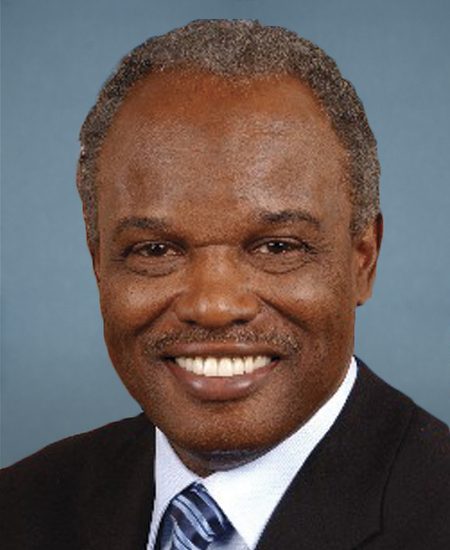
Rep. David Scott
Sponsored bills
Medicare Dental, Vision, and Hearing Benefit Act of 2021 This bill provides for Medicare coverage of dental, vision, and hearing care. Coverage includes (1) routine dental cleanings and exams, basic and major dental services, emergency dental care, and dentures; (2) routine eye exams, eyeglasses, and contact lenses; and (3) routine hearing exams, hearing aids, and exams for hearing aids. With respect to such care, the bill establishes special payment rules, limitations, and coinsurance requirements.
This resolution expresses support for the goals and ideals of Uterine Fibroids Awareness Month. Uterine fibroids are muscular tumors that grow in the wall of the uterus and may cause pain, heavy menstrual bleeding, and reproductive issues.
Disaster Reforestation Act This bill sets forth a special rule for the tax deduction for casualty losses of uncut timber (including pre-merchantable timber). It provides that in losses of any uncut timber from fire, storm, insects, invasive species, drought, or other casualty, or from theft, the basis for determining the amount of the deduction for such loss shall not be less than the excess of the value of such timber determined immediately before such loss was sustained, over the salvage value of such timber. To be eligible for the casualty loss deduction, the uncut timber subject to the loss must be reforested not later than the close of the five-year period beginning on the date of the loss.
Black Farmers and Socially Disadvantaged Farmers Increased Market Share Act This bill addresses ways to increase market access for socially disadvantaged farmers and ranchers and to ensure civil rights accountability for Department of Agriculture (USDA) employees. ( Socially disadvantaged farmers and ranchers are those who have been subjected to racial or ethnic prejudice because of their identity as members of a group without regard to individual qualities.) Specifically, USDA must establish a program to make grants to support new or expanding food hubs designed to increase market access for socially disadvantaged farmers and ranchers. USDA shall establish a process to prioritize the purchase of agricultural food products from socially disadvantaged farmers and ranchers. That process must account for barriers to market entry faced by socially disadvantaged farmers and ranchers while maintaining the integrity of the purchasing process. The bill also establishes an agriculture hub income tax credit, which shall be an amount equal to 25% of the qualified food hub expenses for the taxable year. USDA must (1) ensure that its officials and employees are held accountable for engaging in discriminatory or retaliatory actions, harassment, civil rights violations, or related misconduct; and (2) bear the burden of proving by substantial evidence that an adverse decision was valid.
Tax-Free Pell Grant Act This bill excludes from gross income, for income tax purposes, any amount received as a federal Pell Grant. It also expands the definition of qualified tuition and related expenses under the American Opportunity and Lifetime Learning tax credit to include computer or peripheral equipment (up to a maximum of $1,000), child and dependent care expenses, and course materials.
Expand American Educational Opportunity Act of 2021 This bill replaces the Hope Scholarship and Lifetime Learning tax credits with a modified American Opportunity Tax Credit that (1) allows an income tax credit of up to $2,500 of the qualified tuition and related expenses of a student who is carrying at least one half of a normal course load, (2) allows a lifetime dollar limitation for the credit of $15,000 for all taxable years, and (3) increases the refundable portion of the credit to a maximum of $1,500. The bill defines qualified tuition and related expenses as tuition, fees, computer or peripheral equipment, child and dependent care expenses, and course materials for the taxpayer, the taxpayer's spouse, and dependents at certain postsecondary educational institutions. The bill also allows an exclusion from gross income, for income tax purposes, of any amount received as a Federal Pell Grant.
Therapeutic Fraud Prevention Act of 20 21 This bill prohibits commercial conversion therapy, which is a practice or treatment designed to change a person's sexual orientation or gender identity or otherwise change behaviors, thoughts, or expressions related to gender or sexual attraction. This prohibition does not apply to treatment that assists an individual undergoing a gender transition or facilitates identity exploration and development.
Insulin Access for All Act of 2021 This bill prohibits cost-sharing (e.g., copayments) under Medicaid and the Medicare prescription drug benefit for insulin and associated medical supplies.
Vanessa Guillén Military Justice Improvement and Increasing Prevention Act This bill modifies the process and policy related to the disposition of charges and convening of courts-martial for certain sexual assault cases and other specified offenses under the Uniform Code of Military Justice (UCMJ). Among other elements, the bill provides that the determinations on the preferral, disposition, and referral of charges for specified offenses under the UCMJ must be made by a commissioned officer of the Armed Forces who is designated as a court-martial convening authority (in grade O-6 or higher) and who is available for detail as trial counsel, has significant trial experience, and is outside the chain of command of the member subject to the charges.