

Ensuring Diversity in Community Banking Act This bill establishes and revises provisions related to minority depository institutions, community development financial institutions, and impact banks. The bill (1) expands the definition of minority depository institutions to include women-owned banks, and (2) establishes impact banks as depository institutions with total assets less than $10 billion and where a certain total dollar value of loans are extended to low-income borrowers. The bill establishes a program allowing minority depository institutions and impact banks to receive deposits from certain Department of the Treasury accounts through designated custodial entities. It also establishes the Minority Bank Deposit Program to prioritize the use of minority depository institutions to the maximum extent possible to serve the financial needs of federal departments and agencies. Federal banking agencies must issue rules allowing new minority depository institutions and impact banks three years to meet capital requirements.
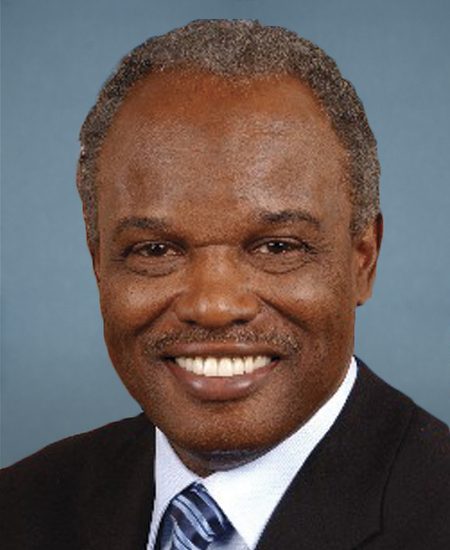
Rep. David Scott
Sponsored bills
Gateway to Careers Act of 2022 This bill establishes a career pathway grant program through which the Department of Education must award competitive grants to certain public institutions of higher education and postsecondary technical education schools. Grant recipients must use these funds to (1) carry out activities that support the development and implementation of career pathway programs, and (2) provide support services to students engaged in career pathway programs.
This resolution extends collective bargaining rights prescribed in the Congressional Accountability Act of 1995 to employees of the House of Representatives.
Keeping School Meals Flexible Act This bill extends authority through June 30, 2023, for the Department of Agriculture (USDA) to waive certain requirements for the school meal programs to address COVID-19. The bill extends the authority for USDA to issue a single waiver of child nutrition program requirements to all states under the National School Lunch Program for purposes of providing meals and snacks with appropriate safety measures with respect to COVID-19; grant waivers of requirements to allow non-congregate feeding in the Child and Adult Care Food Program for purposes of providing meals and snacks with appropriate safety measures with respect to COVID-19; and grant waivers related to the nutritional content of meals served in child nutrition programs if it determines the waiver is necessary to provide meals and snacks, and there is a food supply chain disruption due to COVID-19.
Stop the Wait Act of 2022 This bill allows individuals with disabilities to begin receiving Social Security Disability Insurance (SSDI) benefits in the month they become eligible for the benefits. It also allows these individuals to immediately enroll in Medicare if they cannot afford minimum essential coverage. (Under current law, an individual must generally wait 5 months after the onset of disability to begin receiving SSDI benefits and an additional 24 months to become eligible for Medicare.)
Diverse and Equitable Participation in Clinical Trials Act or the DEPICT Act This bill requires applications for an investigational use exemption of a new drug or medical device to include information about the demographic diversity of the clinical trial population and addresses related issues. (Generally, a developer of a new drug or device may seek an investigational use exemption to facilitate clinical investigations, as part of the process to obtain approval to sell that drug or device.) Specifically, the Food and Drug Administration (FDA) must issue regulations to require applications for such exemptions to include certain information, including (1) demographic data disaggregated by subgroup, where such data is available, about the expected or potential patient population; (2) the applicant's enrollment targets for the clinical trials involved, disaggregated by age group, sex, race, and ethnicity; (3) a diversity plan for how the applicant will meet these targets; and (4) what is known about the patient population, such as comorbidities. The regulations must also require certain applicant reports to the FDA to address issues related to demographic diversity in clinical trials and product safety and effectiveness for demographic subgroups. The bill also authorizes the FDA to, in certain instances, require additional studies or surveillance after a drug or device has been approved if the clinical trials used in the application process did not meet the demographic enrollment targets.
TSA Security Threat Assessment Application Modernization Act This bill requires the Transportation Security Administration (TSA) to standardize the enrollment and renewal system for individuals applying for or renewing multiple TSA Security Threat Assessment programs, including the Transportation Worker Identification Credential, Hazardous Materials Endorsement, and TSA PreCheck programs. The standardization shall permit an individual to (1) enroll at a TSA-designated universal enrollment center once and use the application for one of such programs to enroll in two or more of such programs,with specified exceptions for those applying for or renewing enrollment in more than one program at different times; (2) apply successful, valid clearance results from a TSA Security Threat Assessment to satisfy vetting requirements for participation in any related program without additional cost; and (3) undergo a streamlined and expeditious renewal process. Additionally, the TSA must publish on its website information relating to the standardization of the enrollment system.
This resolution expresses support for the goals and ideals of Endometriosis Awareness Month. Endometriosis is a painful condition in which the tissue that normally lines the inside of the uterus grows outside the uterus.
This resolution expresses support for the goals and ideals of Uterine Fibroids Awareness Month. Uterine fibroids are muscular tumors that grow in the wall of the uterus and may cause pain, heavy menstrual bleeding, and reproductive issues.
This resolution expresses support for the goals and ideals of PCOS Awareness Month. Polycystic ovary syndrome (PCOS) is caused by a hormone imbalance. Symptoms can include infertility, weight gain, excess hair growth, and acne.