

Health Equity and Accountability Act of 2022 This bill directs the Department of Health and Human Services (HHS) and others to undertake efforts to reduce health disparities. For example, the bill (1) requires more detailed reporting of demographic and health disparities data, including related to public health emergencies; (2) directs certain components of HHS to support health workforce diversity; and (3) increases access to culturally and linguistically appropriate health care. The bill also modifies eligibility and other requirements for Medicare, Medicaid, private health insurance, nutrition assistance, and other programs to reduce health disparities among vulnerable populations. The bill includes specific provisions with respect to noncitizens; maternal, infant, and child health; mental and behavioral health; specified conditions that disproportionately affect racial and ethnic minority groups, such as certain cancers, HIV/AIDS, kidney disease, and diabetes; investments in communities facing health and other inequities; and nondiscrimination in the provision of services in federally supported health programs. Additionally, the bill (1) revises health information technology programs to address health disparities, and (2) supports health impact assessments and other efforts pertaining to environmental justice and social determinants of health (i.e., nonmedical factors that influence health outcomes, such as income and educational attainment). The bill also requires various studies and reports on issues related to health care and health disparities, including a report by the Government Accountability Office on health workforce diversity.
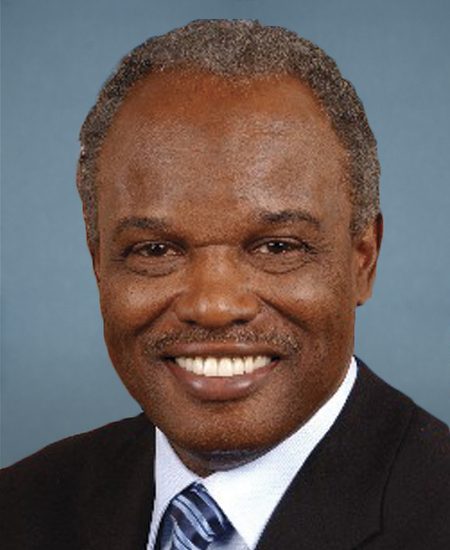
Rep. David Scott
Sponsored bills
This resolution commends U.S. Capitol Police Officer Caroline Edwards for protecting Members of Congress, staff, and others during the events of January 6, 2021.
Grandfamily Housing Act of 2021 This bill establishes grants through the Department of Housing and Urban Development for owners of intergenerational dwellings. Grants must be used to (1) provide services such as tutoring, health care services, and after-school care; (2) perform outreach to intergenerational families in the surrounding community; and (3) maintain spaces within the property to be used for programs and services for intergenerational families.
Veterans, Women, Families with Children, Race, and Persons with Disabilities Housing Fairness Act of 2021 or the Housing Fairness Act of 2021 This bill expands efforts to detect and address housing discrimination. Specifically, the Department of Housing and Urban Development (HUD) must conduct a nationwide testing program to (1) detect and document differences in the treatment of prospective renters, homebuyers, or mortgage borrowers; (2) measure patterns of adverse treatment because of the race, color, religion, sex, familial status, disability status, or national origin of a renter, homebuyer, or borrower; and (3) measure the prevalence of such discriminatory practices across housing and mortgage lending markets. The bill also reauthorizes through FY2025 the Fair Housing Initiatives Program, which supports organizations that provide direct assistance to individuals who have been victims of housing discrimination. Additionally, HUD shall implement a grant program to assist public and private nonprofit organizations in (1) conducting comprehensive studies of the causes and effects of housing discrimination and segregation on education, poverty, and economic development or on veterans and military personnel; and (2) implementing pilot projects that test solutions to help prevent or alleviate housing discrimination and segregation.
Maddy summaryHRES 1190 is a symbolic resolution expressing congressional support for designating November 9 as "Gold Star Father’s Day" to honor fathers who lost children in military service. It directly affects Gold Star Fathers - men who have lost a child while serving in the U.S. Armed Forces - and aims to recognize their sacrifice alongside existing observances like Gold Star Mother’s Day (established in 1936). The resolution does not create new laws or benefits but seeks to promote annual recognition of these fathers’ loss, aligning with the 2015 Gold Star Fathers Act that ensured fathers received similar benefits to mothers of fallen service members. It was introduced in June 2022 with bipartisan co-sponsors.
Small Business Contracting Fairness Act of 2022 This bill removes the maximum annual revenue threshold that limits certain small businesses owned by socially and economically disadvantaged individuals from receiving funding under the disadvantaged business enterprise program. The program provides such small businesses the opportunity to compete for federally funded transportation contracts.
Recovering America’s Wildlife Act of 2022 This bill provides funding for the conservation or restoration of wildlife and plant species of greatest conservation need, including endangered or threatened species, and establishes related requirements. TITLE I--WILDLIFE CONSERVATION AND RESTORATION (Sec. 101) This title establishes and funds a subaccount of the Wildlife Conservation and Restoration Account, which was established under the Pittman-Robertson Wildlife Restoration Act. The subaccount must be used to support efforts of states, territories, or the District of Columbia to recover and manage wildlife and plant species of greatest conservation need. The Department of the Interior must use a portion of the funding from the subaccount for grants to state fish and wildlife departments, the District of Columbia fish and wildlife department, fish and wildlife departments of territories, nonprofit organizations, or regional associations of fish and wildlife departments. The grants must be used for innovative recovery efforts for species of greatest conservation need, species listed as endangered or threatened species, or the habitats of such species. Funding for the subaccount must supplement existing funds available to the states from funds distributed under the Dingell-Johnson Sport Fish Restoration Act and the Wildlife Conservation and Restoration Account. Recipients of the funding from the subaccount must match federal funds as specified by the title. The Government Accountability Office must study and report on the progress of states, territories, the District of Columbia, and Indian tribes in protecting species of greatest conservation need, endangered species, and threatened species. TITLE II--TRIBAL WILDLIFE CONSERVATION AND RESTORATION (Sec. 201) This title establishes and funds a Tribal Wildlife Conservation and Restoration Account to support Indian tribes' efforts to recover and manage wildlife and plant species of greatest conservation need. Indian tribes are not required to provide matching funds. TITLE III--ENDANGERED SPECIES RECOVERY AND HABITAT CONSERVATION LEGACY FUND (Sec. 301) This title establishes and funds through FY2026 the Endangered Species Recovery and Habitat Conservation Legacy Fund. The U.S. Fish and Wildlife Service must use the fund to (1) implement an Endangered Species Recovery Grant Program; (2) address its interagency consultation responsibilities under the Endangered Species Act of 1973; (3) work with nonfederal entities to conserve wildlife habitat and at-risk species, threatened or endangered species, or species proposed to be listed as threatened or endangered species; or (4) address the development and permitting of voluntary conservation agreements under such act. Amounts made available under the fund must supplement other federal amounts made available to carry out such activities. The President must annually submit to Congress, together with the annual budget of the United States, a list of threatened species and endangered species for which recovery plans will be developed or implemented with amounts from the Endangered Species Recovery and Habitat Conservation Legacy Fund. TITLE IV--REPORT (Sec. 401) Interior must also report on information concerning the amount of grants and contracts that were awarded or are allocated under this bill to Historically Black Colleges and Universities, Hispanic-serving educational institutions, tribally controlled colleges and universities, minority-serving educational institutions, minority-owned business enterprises, women-owned business enterprises, and community-based organizations that are principally administered by, operated by, or serving minority communities.
Assault Weapons Excise Act This bill imposes an additional 1000% excise tax on large capacity ammunition feeding devices and semiautomatic assault weapons. It exempts from such additional tax devices and weapons acquired by the United States or by a state or local government.
Military Spouse Hiring Act This bill expands the Work Opportunity Tax Credit (WOTC) to include the hiring of a qualified military spouse. (The WOTC permits employers who hire individuals who are members of a targeted group such as qualified veterans, ex-felons, or long-term unemployment recipients to claim a tax credit equal to a portion of the wages paid to those individuals.) A qualified military spouse is any individual who is certified by the designated local agency as being (as of the hiring date) a spouse of a member of the Armed Forces.
This resolution declares gun violence to be a public health crisis. It also urges the Centers for Disease Control and Prevention to expand research and data collection on preventing gun violence and the Surgeon General to report on firearm injuries and violence prevention.