

Maddy summaryThis bill directs federal agencies to improve mental health support for educators and school staff, including teachers, administrators, and support personnel. It requires the Department of Health and Human Services to share evidence-based practices for preventing suicide and promoting mental wellness, and to run a national awareness campaign reducing stigma around seeking care. The bill creates new grant programs for schools and colleges to fund mental health initiatives and training, with $35 million annually for 2024-2026. Additionally, it mandates a federal review of mental health challenges in the education workforce and a GAO report on existing federal grant programs addressing these issues.
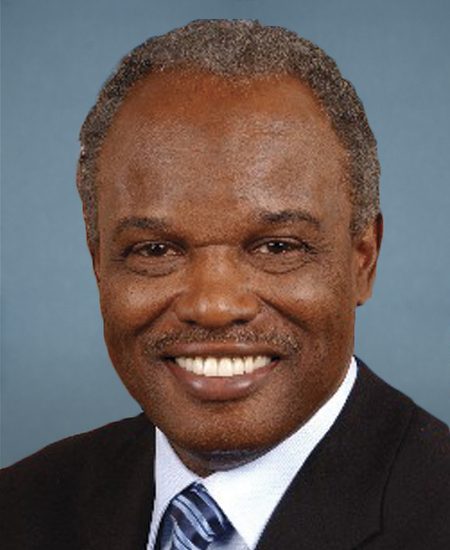
Rep. David Scott
Sponsored bills
Thomas W. Dortch, Jr. Congressional Gold Medal Act This bill provides for the award of a Congressional Gold Medal to Thomas W. Dortch, Jr., in recognition of his contributions in helping marginalized people, communities, and institutions.
Maddy summaryHR 927, the Supreme Court Ethics Act, establishes new ethics rules and oversight for Supreme Court justices. It requires the Judicial Conference to create a binding code of conduct within one year and mandates the appointment of an Ethics Investigations Counsel to receive public complaints, investigate potential violations, and issue annual public reports. The bill also requires justices to publicly disclose their reasons for recusing themselves or denying recusal motions in cases. These provisions directly affect Supreme Court justices by creating a formal process for handling ethics concerns and increasing transparency around their conduct.
Maddy summaryHR 926 would require the Supreme Court to establish a code of conduct for justices within 180 days of enactment, along with procedures for handling ethics complaints against them. The bill mandates minimum disclosure standards for gifts, income, and reimbursements received by justices and their law clerks, and requires justices to recuse themselves when they or their family received gifts from parties in a case. It would also require parties and amici curiae to disclose gifts given to justices and lobbying contacts related to justices' nominations, and establish a judicial investigation panel to review complaints against justices. The legislation aims to increase transparency in Supreme Court ethics processes and provide clearer recusal standards for justices.
Maddy summaryThis bill makes significant changes to US corporate tax rules to prevent tax avoidance through foreign operations. It requires corporations to calculate foreign income tax liabilities country-by-country, limits interest deductions for large international financial reporting groups, and modifies rules for "inverted corporations" (where US companies move tax residence abroad). The bill also creates new rules treating foreign corporations managed primarily in the US as domestic corporations for tax purposes. These changes aim to close tax loopholes related to outsourcing and foreign tax planning.
Maddy summaryHR 969 (GAAME Act of 2023) requires public schools receiving federal funding under the Elementary and Secondary Education Act to provide structured, standards-aligned arts and music education. It mandates that schools offer sequential arts education (defined as dance, media arts, theater, and visual arts) taught by state-certified arts educators, and sequential music education taught by state-certified music educators. The bill also directs targeted funding for schools to support certified educators, professional development, supplies, instruments, and other resources needed for these programs. This directly affects all public elementary and secondary schools participating in federal education programs, aiming to ensure consistent access to arts and music instruction.
This resolution condemns Iranian state-sponsored terrorist attacks against U.S. citizens and officials and Iranian dissidents. The resolution also expresses support for the people of Iran who are legitimately defending their rights for freedom against repression and condemns the killing of Iranian protesters by the Iranian regime.
Maddy summaryHCONRES 13 is a concurrent resolution expressing Congress's support for maintaining the current policy that prohibits imposing new fees on local radio stations for playing music. It states that Congress should not impose any performance fee, tax, royalty, or charge on local radio stations for broadcasting sound recordings over the air, or on businesses like bars and restaurants that play music publicly. The resolution argues that such fees would harm local radio stations - critical sources for emergency information and community programming - and jeopardize the economic model that has supported both radio and the music industry for decades. This resolution does not create new law but formally opposes potential legislative changes to the existing fee structure.
Maddy summaryHR 765, the African American History Act, authorizes $2 million annually for the National Museum of African American History and Culture to develop educational resources and programs about African American history. The bill directs the museum to create accessible teaching materials, support teacher professional development, and expand digital content for schools and the public, focusing on contributions, civil rights, and historical contexts. It requires annual reports to Congress and expires in 2028. The program directly supports educators, students, and families in learning about African American history through museums, schools, and online platforms.
Maddy summaryThis bill clarifies that general sales taxes collected by states or localities cannot be counted as "excise taxes" for federal transportation funding purposes. It amends two sections of transportation law to specifically exclude "State or local general sales taxes" and "generally applicable sales taxes" from requirements meant for special taxes like fuel taxes. The change directly affects states and local governments that apply for federal transportation funds, ensuring those funds are supported by the intended tax sources. The bill makes no new tax rules but prevents states from using broad-based sales tax revenue to meet federal transportation funding criteria.