

Safe Responsible Ethical Scientific Endeavors Assuring Research for Compassionate Healthcare Act or the Safe RESEARCH Act This bill prohibits the National Institutes of Health (NIH) from conducting or supporting research on human fetal tissue obtained from an abortion procedure. It also imposes other restrictions on human fetal tissue research. Under the bill, the NIH may conduct or support research on human fetal tissue only if it was obtained from a stillbirth. Current law allows research on tissue from stillbirths or from spontaneous or induced abortions. The bill also applies informed consent and other requirements applicable to research on the transplantation of human fetal tissue for therapeutic purposes to all research with human fetal tissue. This includes research on stem cells and other human fetal tissue alternatives. Additionally, human fetal tissue used for this research must be obtained in accordance with state anatomical gift laws. These laws govern organ and tissue donation for therapeutic, research, and other purposes. Some states already apply anatomical gift laws to human fetal tissue donation. Currently, executive branch officials may not prohibit the NIH from conducting or supporting research on the transplantation of human fetal tissue for therapeutic purposes. The bill repeals this limitation on executive branch officials. It also repeals a requirement that the NIH fund certain proposals for this research.
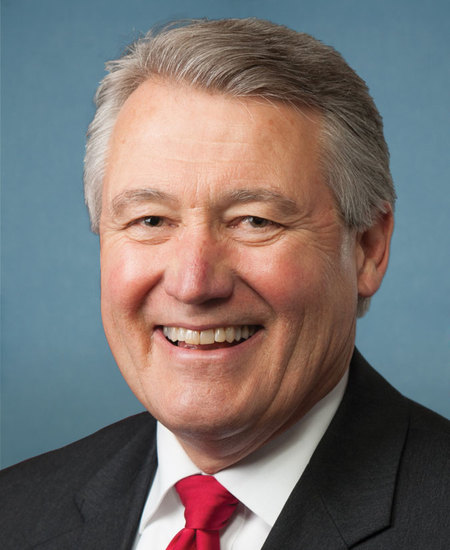
Rep. Rick W. Allen
Sponsored bills
Maddy summaryHR 1210, the "Stop Fentanyl Border Crossings Act," amends the Public Health Service Act to give the Secretary of Health and Human Services new authority to block border entries. It directly affects countries with substantial fentanyl smuggling, allowing the Secretary to suspend the introduction of people and property from those nations if they determine it poses a serious public health danger. The key provision permits the Secretary to prohibit border crossings for a set period when fentanyl smuggling creates an increased risk of drugs entering the U.S., based on regulations they establish. This is a procedural change to existing public health law, not a new program.
Maddy summaryHR 742, the TELL Act, requires U.S.-based websites and mobile apps that store user data in China to clearly inform users that their data is stored there and whether the Chinese government or state entities have access to it. The bill mandates two specific disclosures in plain language at the point of use, aiming to increase transparency about data handling. Violations would be treated as deceptive practices under the Federal Trade Commission Act, allowing the FTC to enforce the law using existing authority. This directly affects companies operating in the U.S. that store user data in China, giving users clearer information about data location and access.
Maddy summaryThe TABS Act of 2023 would rename the Consumer Financial Protection Bureau (CFPB) to the Consumer Financial Empowerment Agency (CFEA) throughout U.S. federal law. This bill would change the agency's name in the Consumer Financial Protection Act of 2010 and over 25 other federal statutes, including the Dodd-Frank Act and Truth in Lending Act. The bill does not alter the agency's responsibilities, authority, or budget structure - only its name. This is a procedural change affecting all federal documents, regulations, and references to the agency.
This resolution supports the designation of National FFA Week. It also (1) recognizes the important role of the National FFA Organization (Future Farmers of America) in developing the next generation of leaders who will change the world, and (2) celebrates the 90th anniversary of the iconic FFA jacket.
Feral Swine Act This bill extends through FY2028 the feral swine eradication and control pilot program to respond to the threat feral swine pose to agriculture, native ecosystems, and human and animal health.
Maddy summaryHRES 132 is a non-binding House resolution expressing condolences for the over 36,000 earthquake victims in Türkiye and Syria and commending humanitarian response efforts. It specifically condemns the Assad regime for obstructing aid delivery and exploiting the disaster, urging the Biden administration to open all UN border crossings for aid and prevent U.S.-funded assistance from being diverted to Syria’s government. The resolution also calls for continued enforcement of the Caesar Syria Civilian Protection Act to protect Syrian civilians. As a symbolic resolution, it does not create new law but formally directs the administration’s diplomatic approach to the crisis.
Maddy summaryHR 1200, the National Right-to-Work Act, prohibits requiring workers to join a union or pay dues as a condition of employment in both private-sector workplaces (covered by the National Labor Relations Act) and railroad industries (covered by the Railway Labor Act). The bill amends key sections of these laws to eliminate provisions that allowed union security agreements, meaning workers in unionized settings would no longer be forced to pay dues to retain their jobs. This directly affects employees in unionized workplaces across the U.S., particularly those in industries with existing union contracts that included mandatory dues. The law changes the legal framework to ensure union membership and dues payment remain voluntary for all workers.
Maddy summaryThe Stop the Cartels Act (HR 597) aims to disrupt drug trafficking organizations and related criminal activities by requiring enhanced intelligence gathering on cartels in Mexico and Central American countries, mandating improved U.S.-Mexico law enforcement cooperation, and cutting federal funding from jurisdictions that restrict immigration enforcement. The bill creates a "Special Transnational Criminal Organization" designation for major cartels like the Sinaloa Cartel and Jalisco New Generation Cartel, requires monthly reports on migrant encounters at the border, and establishes refugee processing centers in Mexico and Central America. It also increases staffing for immigration courts by 500 judges, prohibits asylum applications from nationals of countries with refugee processing centers, and reauthorizes substance abuse prevention funding at higher levels while repealing several existing drug programs. These provisions directly affect U.S. intelligence and law enforcement agencies, Mexican and Central American governments, local jurisdictions receiving federal funds, and migrants seeking asylum or refugee status.
Women's Public Health and Safety Act This bill allows a state to exclude from participation in the state's Medicaid program a provider that performs an abortion, unless (1) the pregnancy is the result of rape or incest, or (2) the woman suffers from a physical issue that would place her in danger of death unless an abortion is performed. Under current law, a state plan for medical assistance must provide that any individual eligible for medical assistance may obtain required services from any provider qualified to perform them.