

Stop Funding Our Adversaries Act of 2023 This bill prohibits federal agencies from conducting or supporting, either directly or indirectly, research that will be conducted by China's government, the Chinese Communist Party, or any agent, instrumentality, or entity belonging to or controlled by either entity.
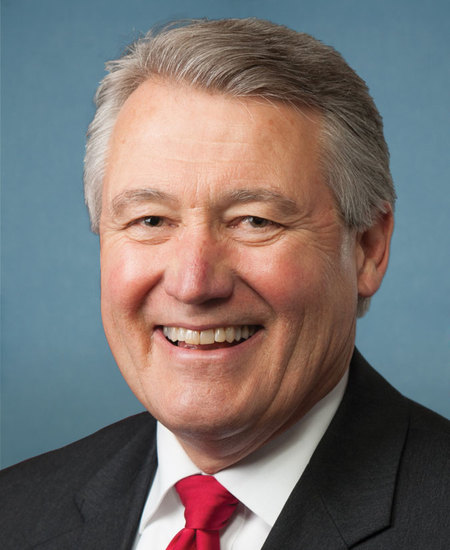
Rep. Rick W. Allen
Sponsored bills
Maddy summaryHR 1613, the Drug Price Transparency in Medicaid Act of 2023, requires Medicaid programs to mandate pass-through pricing for covered outpatient drugs. This means pharmacy benefit managers (PBMs) and managed care entities must pay pharmacies directly for the drug's ingredient cost plus a fixed dispensing fee, eliminating "spread pricing" where PBMs keep profits from the difference between what they pay pharmacies and what Medicaid reimburses. The bill also establishes a national survey of retail pharmacy drug prices to determine average acquisition costs, requiring participating pharmacies to report pricing data to states. These changes apply to Medicaid contracts entered into or renewed 18 months after the bill's enactment, affecting states, PBMs, managed care organizations, and community pharmacies.
Maddy summaryHCONRES 14 is a concurrent resolution expressing Congress's disapproval of President Biden's 2021 revocation of the Presidential permit for the Keystone XL pipeline, which had been granted in 2019 to TransCanada (now TC Energy). The resolution has no legal effect but formally states the House's opposition to the executive action that canceled the pipeline project's permit. Introduced on February 7, 2023, it serves as a symbolic statement without altering any policy or affecting any entity.
Maddy summaryH.J. Res. 30 seeks to block a Department of Labor rule that would have required retirement plan managers (like those handling 401(k)s) to follow strict "prudence and loyalty" standards when selecting investments and voting on company matters. The rule, published in December 2022, aimed to protect retirement savings by ensuring fiduciaries prioritize participants' interests. This resolution, if passed, would prevent the rule from taking effect, avoiding new compliance requirements for retirement plan managers and sponsors. It directly affects retirement plan administrators and the millions of participants in these plans.
Maddy summaryThis bill amends the Toxic Substances Control Act to address reviews of chemical substances critical to energy infrastructure. It requires the EPA Administrator to consider economic, societal, and environmental costs/benefits when reviewing such substances (defined by the Secretary of Energy as essential to U.S. energy systems with vulnerable supply chains), overriding a standard prohibition against these factors. If the EPA fails to act within the review timeline, companies can proceed with their planned actions without further EPA review, and the EPA is relieved of making that determination. The bill also mandates the EPA conduct a preliminary review and provide a draft determination before asking a company to withdraw a submission or pause the review period.
Maddy summaryHR 1155, the Keeping America’s Refineries Act, exempts certain petroleum refineries from a specific requirement under the Clean Air Act. It directly affects refineries operating alkylation units that use hydrofluoric acid (HF), specifically those with valid Clean Air Act permits or that meet American Petroleum Institute safety standards. The bill prohibits the EPA from mandating that these refineries assess "safer technology" or alternative risk management measures for HF use in their hazard assessments. This change removes a regulatory step requiring refineries to evaluate safer alternatives for HF acid, focusing solely on their existing operational compliance.
Maddy summaryHR 1131 requires the EPA to revise its air permitting rules to allow "flexible air permitting" for specific energy facilities. This applies to owners or operators of facilities processing "critical energy resources" (as defined by the Energy Secretary), which are essential energy sources with vulnerable supply chains. The bill directs the EPA to adopt the existing 2009 flexible permitting framework (from the Federal Register) to enable these facilities to adjust operations more easily. This change would streamline permitting for facilities deemed critical to U.S. energy security, without altering environmental standards.
Maddy summaryHR 1141, the Natural Gas Tax Repeal Act, repeals a specific provision (Section 136) of the Clean Air Act that established an incentive program for reducing methane emissions and waste in natural gas systems. This bill directly affects natural gas producers and operators who previously participated in or were subject to the methane emissions reduction program. The key mechanism is the removal of this incentive program, eliminating federal requirements and financial incentives related to methane waste reduction for the natural gas industry. The bill also rescinds unobligated funds allocated for this program. This is a policy change removing a regulatory incentive, not a tax repeal.
Maddy summaryHR 1070 creates a new interim permit process for owners or operators of critical energy resource facilities under the Solid Waste Disposal Act. This allows these facilities to operate under an interim permit while awaiting final EPA approval, streamlining permitting for projects involving critical energy resources. The bill defines "critical energy resource" as energy sources essential to U.S. energy systems with vulnerable supply chains (as determined by the Secretary of Energy), and "critical energy resource facility" as one processing or refining such resources. The interim permit must still be approved by the EPA Administrator, ensuring environmental oversight remains in place. This change directly affects energy infrastructure projects focused on securing critical supply chains.
Maddy summaryH.J. Res. 26 is a congressional disapproval resolution blocking the District of Columbia Council's approval of its Revised Criminal Code Act of 2022 (D.C. Act 24-789). It directly affects the District of Columbia by preventing the new criminal code from taking effect, as Congress disapproved the Council's action under the Home Rule Act. The resolution formally rejects the Council's enactment of the code, which was transmitted to Congress on January 27, 2023. This procedural action stops the District from implementing the revised criminal code without further congressional action.