

Maddy summaryThis bill allows small businesses and self-employed individuals to form shared health insurance plans across different industries, rather than being limited to their own industry. To qualify, the group must exist for at least two years, not discriminate based on health status, and have a governing board with 75% employer representation. These plans must offer equal coverage regardless of health conditions and can adjust premiums based on employer risk pools, while still prohibiting pre-existing condition exclusions. It directly affects small business owners and self-employed people seeking affordable group health options outside traditional industry boundaries.
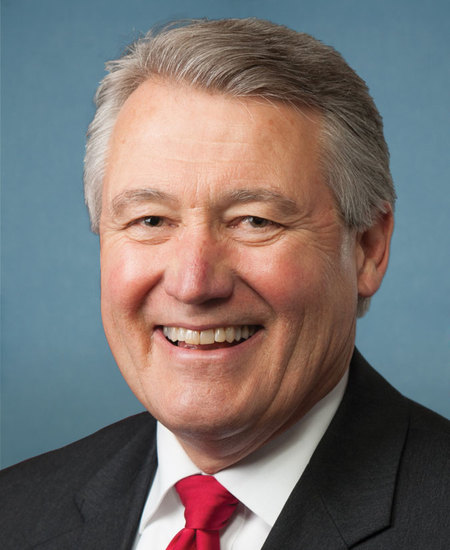
Rep. Rick W. Allen
Sponsored bills
This resolution expresses support for keeping AM radios in cars. (Several car manufacturers announced plans to remove AM radio options from some or all of their models.)
Maddy summaryHR 1730 amends the Small Business Act to require Small Business Development Centers (SBDCs) and Women’s Business Centers (WBCs) to provide specific support related to career and technical education (CTE). The bill directs these centers to help small businesses hire CTE program graduates and assist CTE graduates in starting small businesses. It adds new provisions (subparagraphs W/X for SBDCs and paragraphs 4/5 for WBCs) to their existing service requirements, without creating new funding. This directly affects SBDCs, WBCs, small businesses seeking CTE talent, and CTE students/graduates aiming to launch ventures. The change modifies how existing federal small business support programs operate, focusing on connecting CTE education with workforce and entrepreneurship opportunities.
Maddy summaryThe HALT Fentanyl Act expands the definition of fentanyl-related substances in the Controlled Substances Act to include many structurally similar compounds, making it easier to regulate new fentanyl analogs without individual listing. It defines these substances based on specific chemical modifications to fentanyl, with limited exceptions for substances already controlled or listed elsewhere. The bill also streamlines research procedures for schedule I substances by creating expedited registration processes and allowing multiple studies under one registration, while requiring the Attorney General to publish a list of substances meeting the new definition.
Maddy summaryThis bill amends the Elementary and Secondary Education Act to expand how existing federal funds can support student mental health. It allows states and schools to use funds for specific activities, including telehealth services, mental health first aid training, emergency response planning, and partnerships with local health agencies. The changes apply directly to public K-12 schools receiving ESEA funds, enabling them to coordinate mental health services more effectively. The bill does not create new funding but redirects existing resources toward these mental health support mechanisms.
Maddy summaryThis bill requires that AM radio receivers be included as standard equipment in all new motor vehicles (such as cars and trucks) sold in the United States, with a rule to be issued by the Department of Transportation within one year. The rule must ensure AM radio is easily accessible on the dashboard and allows manufacturers to use digital AM radio technology instead of traditional AM. During the one-year period between the bill's enactment and the rule's effective date, manufacturers must clearly label vehicles without AM radio. The bill also directs a study to evaluate whether an alternative system could deliver emergency alerts as reliably as AM radio across the country, especially during crises.
Broadband Expansion And Deployment Fee Equity and Efficiency Act of 2023 or the BEAD FEE Act of 2023 This bill restricts recipients of Broadband Equity, Access, and Deployment (BEAD) Program grants from charging fees related to the deployment of broadband infrastructure. The BEAD Program provides funds to states and territories for broadband deployment, connectivity, mapping, and adoption projects. Generally, the bill prohibits grant recipients from charging fees for (1) considering requests for deploying broadband infrastructure; or (2) using or accessing land, or existing infrastructure on land, that is owned or managed by a state, territory, or locality (i.e., a right-of-way) to deploy broadband infrastructure. However, the bill permits recipients to charge fees if they are nondiscriminatory, publicly disclosed, and based on actual and direct costs. Additionally, recipients must describe the fees in a manner that distinguishes between (1) recurring and nonrecurring fees, and (2) using a right-of-way with and without existing infrastructure.
Maddy summaryHR 3328 (Protecting Children From Experimentation Act of 2023) prohibits healthcare professionals from performing or referring for gender transition procedures on minors under 18. The bill defines "gender transition procedures" to include puberty-blocking drugs, cross-sex hormones, and surgeries (like genital or non-genital procedures) aimed at altering physical characteristics to match a gender different from a minor’s biological sex. It excludes care for minors with medically verified disorders of sex development or conditions requiring urgent medical treatment. Violations could result in fines, up to 5 years in prison, or both for providers, while minors receiving such care cannot be prosecuted.
Maddy summaryHR 3256, the Preventing Executive Climate Overreach Act, would eliminate the legal effect of Executive Order 14096. This order, issued by the President to advance environmental justice in federal programs, would no longer be enforceable. The bill's key provision directly states that the executive order "shall have no force or effect." As a result, the administration would be unable to implement environmental justice policies based on that order.
Maddy summaryHR 801, the Securing the Border for Public Health Act of 2023, gives the Secretary of Health and Human Services authority to temporarily ban people and goods from specific countries. This can be done if the Secretary determines a serious risk of introducing communicable diseases or certain controlled substances (like fentanyl, narcotics, or opiates) into the U.S. The ban would apply to persons and property from designated countries for a time deemed necessary to protect public health. It directly affects travelers and importers from countries identified under this provision.