

Maddy summaryHJRES 75 proposes a constitutional amendment requiring the federal government to balance its annual budget by ensuring total spending does not exceed total revenue or 18% of the previous year's GDP. It would mandate that Congress approve new taxes or tax increases with a two-thirds vote and require the same supermajority to raise the national debt limit. The amendment allows temporary exceptions for specific budget shortfalls with a two-thirds vote in both chambers, but otherwise enforces strict fiscal limits. It directly affects federal budget decisions made by Congress and the executive branch, with enforcement mechanisms allowing members of Congress to seek judicial action if the rules are violated. The amendment would take effect ten years after ratification by three-fourths of state legislatures.
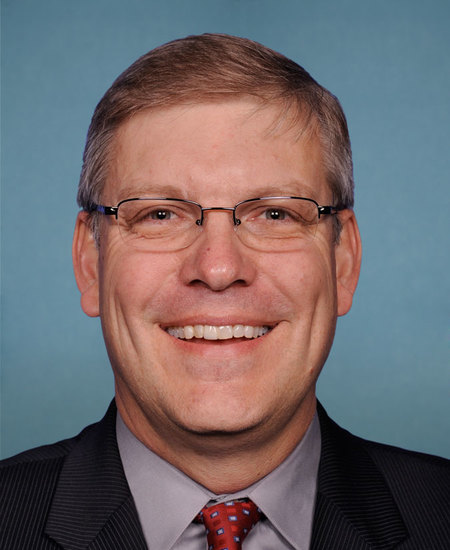
Rep. Barry Loudermilk
Sponsored bills
Maddy summaryHR 3792 extends U.S. security funding for Israel through 2028 (Section 3) and expands energy cooperation to include advanced nuclear technologies and carbon capture (Section 5). It requires annual reports on regional security partnerships involving Israel (Section 6) and ensures countries in the Abraham Accords can access U.S. development programs (Section 8). The bill also mandates reports on diplomatic efforts against ICC investigations targeting the U.S. and Israel (Section 10) and encourages people-to-people programs to strengthen the Abraham Accords (Sections 7, 9). These provisions directly affect Israel’s diplomatic engagement, security partnerships, and economic cooperation in the Middle East.
Maddy summaryThis bill requires that AM radio receivers be included as standard equipment in all new motor vehicles (such as cars and trucks) sold in the United States, with a rule to be issued by the Department of Transportation within one year. The rule must ensure AM radio is easily accessible on the dashboard and allows manufacturers to use digital AM radio technology instead of traditional AM. During the one-year period between the bill's enactment and the rule's effective date, manufacturers must clearly label vehicles without AM radio. The bill also directs a study to evaluate whether an alternative system could deliver emergency alerts as reliably as AM radio across the country, especially during crises.
Maddy summaryThis bill, HR 3458 (Reinstate Our Troops Act), provides relief to military service members who were involuntarily separated solely for refusing COVID-19 vaccinations. It requires military leaders to reinstate eligible service members to their previous rank within 30 days of their request (made within one year of the law's passage), return any bonuses they repaid due to separation, and change their discharge status to "honorable" if they don't seek reinstatement. It also mandates expunging records of the vaccination refusal from their service files. The bill requires the Secretary of Defense to report on implementation to Congress within 60 days.
Maddy summaryHR 3467 enhances transparency by requiring the Federal Reserve to provide specific information to congressional committees. It mandates that the Fed share details about credit facilities and nonpublic personal data with the House Financial Services and Senate Banking committees, with confidentiality safeguards allowing the Chair to redact sensitive portions. The bill shortens reporting timelines from 24 to 12 months for certain disclosures and adds requirements for the Fed to include taxpayer cost estimates in reports. These changes directly affect the Federal Reserve Board’s reporting obligations to Congress under the Federal Reserve Act and the Dodd-Frank Act. The provisions aim to improve congressional oversight while maintaining appropriate confidentiality for sensitive information.
Maddy summaryThis bill requires the Federal Deposit Insurance Corporation (FDIC) to provide Congress with more detailed explanations of its emergency decisions. Specifically, it mandates that the FDIC submit all relevant documentation - including staff analyses and memoranda - within 3 days and detailed justifications (including data and metrics) within 30 days of making an emergency determination. These requirements apply to the FDIC's Board of Directors, the Federal Reserve Board, and the Treasury Secretary, directly affecting how these agencies communicate with the House Financial Services Committee and Senate Banking Committee.
Maddy summaryHR 3466 would increase transparency around the Financial Stability Oversight Council (FSOC) by requiring it to notify Congress before taking certain actions. The bill mandates that the FSOC provide advance notice to congressional leaders before making determinations, implementing recommendations, or requiring reports from financial regulatory agencies. It establishes waiting periods (30-90 days) before certain actions can take effect after notification, and requires the FSOC to report detailed employee information to Congress monthly. This bill directly affects the FSOC's operations and its relationship with congressional committees overseeing financial regulation.
National Law Enforcement Officers Remembrance, Support and Community Outreach Act This bill directs the Department of Justice (DOJ) to establish a National Law Enforcement Officers Remembrance, Support, and Community Outreach Program. The bill further directs DOJ to award a grant under the program to the National Law Enforcement Officers Memorial Fund for the expenses associated with community outreach, public education, and officer safety and wellness programs operated by the of the National Law Enforcement Officers Memorial Fund and National Law Enforcement Museum.
Maddy summaryHR 3328 (Protecting Children From Experimentation Act of 2023) prohibits healthcare professionals from performing or referring for gender transition procedures on minors under 18. The bill defines "gender transition procedures" to include puberty-blocking drugs, cross-sex hormones, and surgeries (like genital or non-genital procedures) aimed at altering physical characteristics to match a gender different from a minor’s biological sex. It excludes care for minors with medically verified disorders of sex development or conditions requiring urgent medical treatment. Violations could result in fines, up to 5 years in prison, or both for providers, while minors receiving such care cannot be prosecuted.
Maddy summaryHR 3238, the Affordable Housing Credit Improvement Act of 2023, updates the Low-Income Housing Tax Credit (LIHTC) program to increase the availability of affordable housing across the United States. The bill makes several key changes including increasing state funding formulas, modifying tenant eligibility rules to better serve vulnerable populations (such as domestic violence victims and students), and expanding credit eligibility for projects in rural and Native American communities. Specific provisions raise the credit for properties serving extremely low-income households, clarify rules around tenant income increases, and require housing providers to protect victims of domestic violence. The bill also updates terminology from "low-income" to "affordable" throughout the tax code and enhances program transparency through data sharing requirements. These changes aim to make the LIHTC program more effective at creating and preserving affordable housing units for low-income households nationwide.