

Maddy summaryHR 4363, the Defend Girls Athletics Act, requires public K-12 schools and colleges to certify annually that they comply with Executive Order 14201, which mandates keeping men out of women's sports. Schools must submit written compliance certifications by August 15 each year (for K-12) or July 1 (for colleges), with states reporting non-compliant agencies to the federal government. Schools or colleges failing to certify or violating the rule risk losing federal education funding, including returning unobligated funds and becoming ineligible for future federal support. The bill directly affects all public schools and colleges receiving federal education funds by tying their eligibility to adherence to this sports participation requirement.
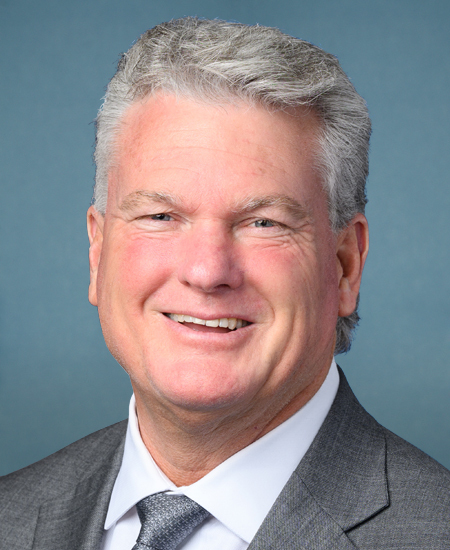
Rep. Mike Collins
Sponsored bills
Maddy summaryHRES 571 is a symbolic resolution passed by the U.S. House of Representatives to commemorate the one-year anniversary of the July 13, 2024, attempted assassination of President Donald J. Trump in Butler, Pennsylvania. It condemns two assassination attempts against the President (in Butler and West Palm Beach), honors victims Corey D. Comperatore (who died shielding his family), David Dutch, and James Copenhaver (who were critically injured), and expresses gratitude to first responders. The resolution also condemns incitement of violence against political officials and calls for unity against political violence. As a non-binding resolution, it does not create new laws or policies but formally states the House’s position on these events.
Maddy summaryThis bill, the PAPA Act of 2025, restricts how aircraft tracking data (ADS-B) can be used and regulates fees on general aviation aircraft. It prohibits using ADS-B data to identify aircraft for revenue purposes without owner consent, allows its use only for air traffic safety by controllers, and extends this restriction to all government officials. For airport fees, it requires public disclosure of cost-saving efforts, alternative revenue sources, fee impact assessments, and specific safety project costs before imposing landing/takeoff fees on general aviation aircraft. All fees collected must be used exclusively for airside safety projects, not other airport expenses. The bill defines general aviation aircraft as those used for personal, recreational, training, or non-commercial purposes (excluding scheduled airlines and military flights).
Maddy summaryThe LEDGER Act (HR 4091) requires the Treasury Department to create a system tracking every government payment within 180 days of enactment. It mandates that all federal departments, agencies, and branches (executive, legislative, judicial) must report disbursements from every funding source, including how long funds remain available for spending. This system will detail each payment's origin, recipient, and timing across all government accounts. The bill directly affects all federal spending entities by standardizing expenditure tracking previously handled inconsistently.
Maddy summaryThe Protecting Gun Owners in Bankruptcy Act would amend federal bankruptcy law to allow individuals filing for bankruptcy to keep firearms they own, up to a total value of $3,000. It adds a specific exemption for firearms in bankruptcy property protections, covering either a single firearm or multiple firearms collectively valued at $3,000 or less. This means creditors cannot force the sale of qualifying firearms during bankruptcy proceedings. The change would only apply to bankruptcy cases filed after the law takes effect.
Maddy summaryHR 4021, the Patriotism Not Pride Act, prohibits federal agencies from using government funds to promote or recognize Lesbian, Gay, Bisexual, Transgender, Queer, and Intersex Pride Month through events, communications, or educational programs. It also bans the display of flags representing sexual orientation or gender identity on all federal property and grounds. The bill directly affects all federal agencies, requiring them to cease any activities related to Pride Month recognition or the display of such flags. This legislation enacts concrete policy changes by restricting federal funding and property use for specific LGBTQ+ observances.
Maddy summaryThis bill proposes a constitutional amendment that would grant Congress the power to pass laws banning the physical desecration of the U.S. flag (such as burning, trampling, or defacing it). If ratified, it would directly affect individuals who engage in such acts by making them subject to federal criminal penalties under new laws Congress could create. The amendment would add a specific clause to the Constitution stating: "Congress shall have power to prohibit the physical desecration of the flag of the United States." Ratification would require approval by 3/4 of state legislatures within seven years of submission.
Maddy summaryHR 3900, the Water Quality Technology Availability Act, amends a key provision of the Federal Water Pollution Control Act to require that pollution limits for industrial discharges be based only on technologies already commercially available in the U.S. This change directly affects industries subject to water quality regulations (like manufacturing and utilities) and the Environmental Protection Agency (EPA) when developing effluent guidelines. The bill modifies Section 304(b)(1)(B) to replace "technology in relation to" with "technology that is commercially available in the United States in relation to," ensuring standards reflect existing, practical solutions. It does not create new requirements but clarifies that regulatory standards must consider only currently available technologies, not hypothetical or undeveloped ones.
Maddy summaryHR 3899, the Clarifying Federal General Permits Act, amends the Clean Water Act to clarify how the EPA issues and renews general permits for water pollution discharges. It requires the EPA to publish a Federal Register notice at least two years before a general permit expires if it won't be renewed. If the EPA fails to provide this notice, the expired permit's terms automatically continue applying to covered discharges until a new permit is issued or two years after the decision not to renew. This directly affects industries and entities needing permits for routine water discharges by ensuring regulatory continuity during permit transitions.
Maddy summaryHR 3920, the Lawless Cities Accountability Act of 2025, prohibits federal funding to any state or local jurisdiction designated as a "lawless jurisdiction" by the Attorney General. A jurisdiction is defined as lawless if it blocks law enforcement during widespread violence, withdraws protection from areas officers should access, defunds police, or refuses federal assistance during crises. The Attorney General must make quarterly public determinations of lawless jurisdictions and publish explanations, with federal funds resuming only after 180 days or when the designation ends. This bill directly affects state and local governments meeting these criteria by cutting off federal financial support until they address the issues. It establishes a clear, time-bound mechanism for withholding and restoring funding based on the Attorney General's determinations.