Competition in Professional Baseball Act This bill removes the limited exemption from the antitrust laws for professional baseball clubs. For purposes of this bill, the term antitrust laws means laws to protect against unlawful restraints and monopolies (Clayton Act) and to protect against unfair methods of competition (Federal Trade Commission Act).
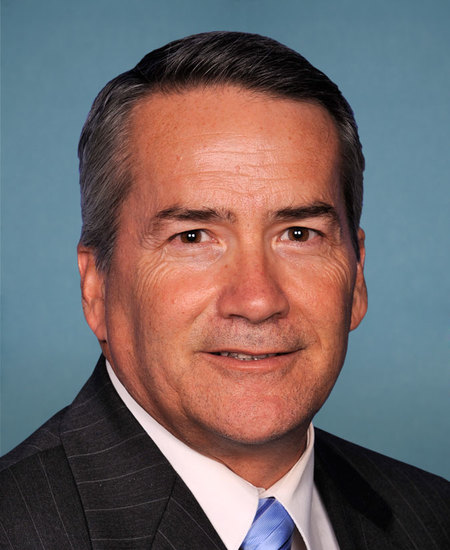
Rep. Jody B. Hice
Sponsored bills
Silencers Help Us Save Hearing Act or the SHUSH Act This bill modifies the treatment of silencers under federal statutes governing the sale, transfer, and possession of firearms. Specifically, it removes silencers from the list of firearms subject to regulation (i.e., registration and licensing requirements) under the National Firearms Act (NFA). Additionally, it excludes a muffler or silencer from the list of firearms subject to regulation (e.g., background check requirements) under the Gun Control Act of 1968 (GCA). Finally, the bill does the following: preempts state or local laws that tax or regulate firearm silencers, specifies that a person who lawfully acquires or possesses a silencer under provisions of the GCA meets the registration and licensing requirements of the NFA, eliminates mandatory minimum prison terms for a crime of violence or drug trafficking offense in which a defendant uses or carries a firearm equipped with a silencer or muffler, and permits active and retired law enforcement officers to carry a concealed silencer.

We Will Not Comply Act This bill prohibits discrimination based on an individual's COVID-19 vaccination status. Specifically, the bill bars certain commercial businesses from discriminating on the basis of an individual's COVID-19 vaccination status. In addition, the bill generally prohibits using federal funds to establish or enforce COVID-19 vaccination requirements. Further, federal funds may not be used to compel an individual with a religious objection to vaccinations to receive a vaccine. The bill also prohibits federal funding of educational institutions that require an individual to receive a COVID-19 vaccine to participate in academic or extracurricular activities. Additionally, a public school or public college may not deny access to the school or college based on whether an individual has received a vaccine, including the COVID-19 vaccine. Furthermore, air carriers may not deny an individual access to air transportation solely on the basis of COVID-19 vaccination status. The bill also prohibits proof of a COVID-19 vaccine as a condition of receiving a U.S. passport. The bill establishes a private right of action for individuals who have been discriminated against based on COVID-19 vaccine status or failure to comply with a requirement to wear a face covering.
Protect Our Police Act This bill provides statutory authority for Executive Order 13809, which was issued on August 28, 2017. The order revoked a 2015 executive order establishing an interagency working group to recommend improvements to the process through which state, local, and tribal law enforcement agencies acquire controlled equipment (e.g., firearms or military-style equipment) from the federal government.
Accountability Through Electronic Verification Act This bill expands the E-Verify program by requiring all employers to use it and permanently reauthorizes the program. Currently, E-Verify use is voluntary for most employers, although some states mandate its use. All employers shall use E-Verify to confirm the identity and employment eligibility of all recruited, referred, or hired individuals, including current employees who were never verified under the program. Failure to use E-Verify shall create a rebuttable presumption that the employer is violating immigration law. U.S. Citizenship and Immigration Services shall generate weekly reports about individuals who have received a final nonconfirmation of employment eligibility. The Department of Homeland Security (DHS) shall use the report to enforce immigration laws. DHS shall establish a program to help certain small businesses verify employee eligibility. DHS shall also update E-Verify's design to help prevent and detect fraud and identity theft. The bill increases civil and criminal penalties for hiring unauthorized aliens. DHS shall debar repeat offenders and those criminally convicted from holding federal contracts, grants, or cooperative agreements. The Social Security Administration, Internal Revenue Service, Department of the Treasury, and DHS shall jointly establish a program to share information to help identify unauthorized aliens. The bill establishes the Employer Compliance Inspection Center within Homeland Security Investigations of U.S. Immigration and Customs Enforcement. The center's duties include processing I-9 employment eligibility verification forms and ensuring compliance with employment eligibility laws. DHS shall report to Congress on ways to simplify procedures relating to I-9 forms and on whether the I-9 process should be eliminated.
Child Interstate Abortion Notification Act This bill creates new federal crimes related to transporting a minor across state lines for an abortion. Specifically, the bill makes it a crime to knowingly transport a minor across a state line to obtain an abortion without satisfying the requirements of a parental involvement law in the minor's resident state. A parental involvement law requires parental consent or notification, or judicial authorization, for a minor to obtain an abortion. The bill prohibits an individual who has committed incest with a minor from knowingly transporting the minor across a state line to receive an abortion. Finally, the bill makes it a crime for a physician to knowingly perform or induce an abortion on an out-of-state minor without first notifying the minor's parent.
Coronavirus Regulatory Repeal Act of 202 1 This bill repeals or modifies any agency rule that is temporarily waived or modified during the COVID-19 (i.e., coronavirus disease 2019) public health emergency, subject to a review process. The bill specifies procedures for Congress and the heads of agencies to analyze, review, and recommend whether the waiver or modification of a rule should continue and such waiver or modification expires only if a law is enacted in accordance with a recommendation that the rule be reinstated when the emergency period ends.
Exit Tax Prevention Act of 2021 This bill prohibits a state, or taxing jurisdiction in the state, from imposing an income tax, wealth tax, or any similar tax on a resident who has relocated permanent residence to another state or taxing jurisdiction.
Criminalize Fleeing from Immigration Enforcement Act of 2021 This bill revises the federal criminal offense involving flight from an immigration checkpoint or other law enforcement checkpoint at high speed in a motor vehicle. Specifically, the bill retains the existing prohibition on flight from an immigration or other law enforcement checkpoint, but it removes the qualifier that such flight must be at high speed in a motor vehicle. The bill also expands the scope of unlawful flight offenses to include flight from a law enforcement officer who is enforcing immigration laws. An unlawful flight offense is generally punishable by a fine, a prison term of up to five years, or both. However, an unlawful flight offense that involves high-speed flight in a motor vehicle is punishable by a fine, prison term of up to eight years, or both.
COVID-19 Border Protection (CBP) Act This bill requires the Department of Homeland Security (DHS) to devise and implement a strategy to ensure that no alien with COVID-19 (i.e., coronavirus disease 2019) in DHS or Department of Health and Human Services custody may be released into the community during a public health emergency related to COVID-19. Funds previously provided to the Department of State for supporting international efforts to help migrants and refugees respond to COVID-19 shall be transferred to DHS to implement this strategy.