This resolution condemns recent attacks on pro-life facilities, groups, and churches and calls on the current presidential administration to use appropriate law enforcement authorities to support their safety.
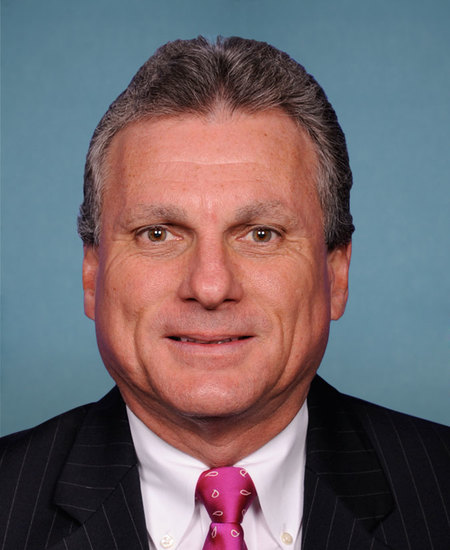
Rep. Earl L. "Buddy" Carter
Sponsored bills
This resolution expresses support for the Supreme Court's holding in Dobbs v. Jackson Women's Health Organization (that there is no constitutional right to abortion). The resolution also applauds the courage of the Justices for standing by their allegiance to the Constitution and the legitimacy of the Supreme Court, and it expresses a commitment to supporting policies that continue to protect all life.
Maddy summaryHRES 1214 is a non-binding congressional resolution condemning specific incidents of intimidation and vandalism targeting Supreme Court Justices and crisis pregnancy centers. It calls for the Department of Justice to enforce existing law (18 U.S.C. §1507) prohibiting protests near judges' homes and demands investigations into attacks linked to the group "Jane’s Revenge," which vandalized facilities with threatening messages like "If abortions aren’t safe, then you aren’t either." The resolution does not create new laws but formally expresses Congress’s stance against these acts. It directly addresses the actions taken against judicial officials and reproductive health centers, citing documented incidents from May-June 2022. The resolution is purely symbolic, with no legal effect beyond expressing congressional disapproval.
Maddy summaryHRES 1114 is a non-binding House resolution expressing support for recognizing "National Police Week" as a way to honor law enforcement officers across the United States. The resolution acknowledges the service and sacrifices of law enforcement officers, particularly those who have died in the line of duty, and specifically references 619 officers who died in 2021 as listed in the resolution. This resolution does not create new laws or allocate funds but serves as a symbolic gesture to encourage public recognition of law enforcement personnel. It calls for Americans to observe National Police Week by honoring officers and raising awareness about their essential role in community safety. The resolution was introduced by multiple members of Congress and referred to the Committee on the Judiciary.
This resolution urges the Biden Administration to expeditiously restore the Migrant Protection Protocols, a policy requiring many asylum seekers arriving at the southern border to wait in Mexico while their cases are being adjudicated. It also urges the Administration to use certain public health powers, commonly referred to as Title 42 authority, to promptly expel migrants.
This resolution requests that the President provide to the House of Representatives documents concerning certain aspects of U.S. Customs and Border Protection (CBP) operations. For example, the resolution requests information, starting from January 20, 2021, about (1) the number of individuals apprehended by CBP along the southern border and demographic information about such individuals, (2) CBP officers stationed along the southern border, (3) individuals who had unlawfully entered the United States and have been released from CBP custody, and (4) the amount of federal funds expended relating to the care of individuals who had unlawfully entered the United States.
Improving Access to Safe Medicines Act of 2022 This bill requires the Drug Enforcement Administration to issue a proposed rule to remove a drug from scheduling under the Controlled Substances Act within 180 days of a recommendation from the Food and Drug Administration to do so.
Protect Pregnancy Care Centers Act of 2022 This bill directs the Inspectors General of the Department of Justice and the Department of Homeland Security to report to Congress on domestic violent extremism against pregnancy centers. Such report shall include criteria for opening, managing, and closing investigations related to domestic violent extremism; information sharing relating to domestic violent extremism within and between the federal government, state, local, tribal, territorial, and foreign governments, specified congressional committees, nongovernmental organizations, and the private sector; all incidents of domestic violent extremism against pregnancy centers from May 1, 2022, through the date of this bill's enactment; and a recommendation as to criteria to be utilized in establishing a potential program to make grants to pregnancy centers for purposes of enabling grantees to prevent, prepare for, protect against, and respond to domestic violent extremism, and a report on current federal programs and federal funding streams available to pregnancy centers for such purposes.

Protecting Pain-Capable Unborn Children from Late-Term Abortions Act This bill establishes a new criminal offense for performing or attempting to perform an abortion if the probable gestational age of the fetus is 15 weeks or more. A violator is subject to criminal penalties—a fine, a prison term of up to five years, or both. The bill provides exceptions for an abortion (1) that is necessary to save the life of the pregnant woman, or (2) when the pregnancy is the result of rape or incest. A physician who performs or attempts to perform an abortion under an exception must comply with specified requirements. A woman who undergoes a prohibited abortion may not be prosecuted for violating or conspiring to violate the provisions of this bill.
Require Evaluation before Implementing Executive Wishlists Act of 2022 or the REVIEW Act of 202 2 This bill prohibits a final agency rule from taking effect until (1) the agency submits the rule to the Office of Information and Regulatory Affairs (OIRA), and (2) OIRA makes a determination as to whether the rule is a high-impact rule that may impose an annual cost on the economy of at least $1 billion. In addition, an agency must postpone the effective date of a high-impact rule until the final disposition of all actions seeking judicial review of the rule.