

Maddy summaryHR 6841 creates a new Coastal and Estuarine Resilience and Restoration Program under the Coastal Zone Management Act, authorizing the Secretary of Commerce to protect and restore coastal and estuarine areas. The program prioritizes lands with ecological, recreational, or community value that face development threats or climate impacts, with special focus on low-income communities and climate mitigation. It requires non-governmental organizations applying for grants to demonstrate public access or ecological protection, and includes $47 million annually (2024-2028) for these efforts. This directly affects coastal states, local communities, and conservation groups managing vulnerable coastal lands.
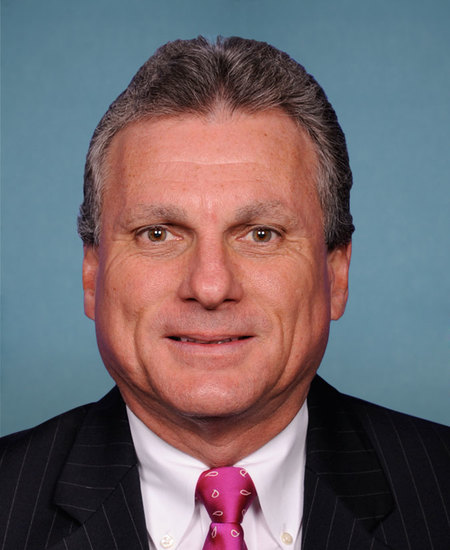
Rep. Earl L. "Buddy" Carter
Sponsored bills
Maddy summaryHRES 1317 designates the week of June 24-July 3, 2024, as "National Tire Safety Week" to promote public education on proper tire maintenance, such as checking tire pressure and tread depth. It encourages American motorists to learn about these practices, which can prevent accidents by reducing tire-related failures like underinflation or worn treads. The resolution expresses congressional support for this observance but does not create new laws or regulations. It aligns with existing tire safety recommendations from the U.S. Tire Manufacturers Association.
Maddy summaryHRES 1304 is a symbolic resolution designating June 19, 2024, as "World Sickle Cell Awareness Day" to raise public awareness about sickle cell disease (SCD) globally. It does not create new laws but urges increased focus on SCD research, early detection screenings, equitable access to treatments, and preventative care programs for those affected. The resolution specifically calls on the Department of Health and Human Services to develop global policies supporting newborn screening and treatment access, and recommends forming an interagency group to address barriers in Medicare/Medicaid for SCD therapies. It directly affects public awareness efforts and healthcare policy discussions for the estimated 100,000 SCD patients in the U.S. and millions worldwide, particularly in communities disproportionately impacted by the disease.
Maddy summaryThis bill rescinds unspent funds from specific federal programs. It targets leftover money from pandemic relief (like the CARES Act and American Rescue Plan) and certain infrastructure initiatives (including education stabilization funds and transportation programs like the Congestion Mitigation Program). The rescission is limited to amounts already allocated for Israel, Ukraine, and Indo-Pacific security supplements under recent appropriations. Unspent funds must be returned to the Treasury, with no new spending created.
Maddy summaryHR 8673 establishes the Foundation for Standards and Metrology, a nonprofit entity to support the National Institute of Standards and Technology (NIST) in advancing measurement science, technical standards, and technology development. The Foundation will foster collaboration between NIST, researchers, industry, educational institutions, and nonprofits to accelerate the commercialization of federally funded research and provide direct support like fellowships and grants to NIST associates. Governed by a Board of Directors and required to become financially self-sustaining within five years, the Foundation must submit annual reports to Congress detailing its activities, finances, and progress toward strategic goals. The bill authorizes $1.5 million annually for NIST to fund the Foundation’s operations from 2025 through 2029.
Maddy summaryHR 8703, the Foreign Research Transparency Act of 2024, requires U.S. institutions receiving certain biomedical or behavioral research grants from the Department of Health and Human Services (HHS) to ensure foreign partners provide full access to research data. It directly affects primary recipients (like U.S. universities) and foreign secondary recipients (foreign entities collaborating on HHS-funded research). The bill mandates that primary recipients obtain access to raw data, databases, notes, and progress reports from foreign partners through contractual agreements. Failure to comply risks withholding grant funds, restricting the institution in federal databases, or requiring repayment of funds after 180 days.
Maddy summaryHR 5012 (SHINE for Autumn Act of 2023) authorizes federal funding to improve stillbirth research and data collection. It provides $5 million annually for states to collect standardized stillbirth data (including risk factors) while protecting privacy, $1 million annually for developing public educational materials and data collection guidelines, and $3 million annually for medical fellowships training pathologists in perinatal autopsy and stillbirth research. The bill directly affects state health departments, medical professionals (like obstetricians and pathologists), and families who experience stillbirth by improving data quality for future research. It requires federal reports on guidelines and program effectiveness within five years but does not provide direct medical care or financial assistance to families.
Maddy summaryHR 537 authorizes a Congressional Gold Medal to honor 60 diplomats who saved Jewish lives during the Holocaust by issuing visas and passports against their governments' orders, risking expulsion and personal danger. The medal will be presented to the next of kin of these diplomats, alongside representatives from their home countries, and permanently displayed at the United States Holocaust Memorial Museum. The bill also permits the sale of bronze duplicates to cover production costs, with proceeds going to the U.S. Mint. This legislation recognizes the diplomats' humanitarian actions without creating new government programs or altering existing laws.
Maddy summaryHR 8693, the "No American Land for Communist China Act," prohibits U.S. citizens or entities from purchasing real estate adjacent to specific federal lands if owned by the Chinese government or businesses with 25%+ Chinese government ownership. It directly affects Chinese government entities and Chinese-owned businesses operating in the U.S., restricting their ability to buy land near protected federal areas. The bill requires the President to take necessary actions to block such purchases, covering lands managed by Interior, Defense, Agriculture (Forest Service), or designated Indian country. This is a policy restriction, not a funding measure, targeting land transactions near sensitive federal properties.
Maddy summaryThis bill delays a Medicare policy that would have restricted coverage to only intravenous drugs for managing phosphate levels in kidney failure patients. It specifically postpones the implementation of the "oral-only" policy under Medicare's ESRD payment system until January 1, 2033, or until an intravenous drug for phosphate control receives FDA approval - whichever comes first. The bill directly affects Medicare beneficiaries with end-stage renal disease (ESRD) who rely on oral medications for phosphate management. It ensures continued Medicare coverage for these oral drugs during the extended timeline, without changing the underlying payment structure.