

Maddy summaryHR 1575, the "No American Land for Communist China Act," prohibits the People's Republic of China government and businesses with 25% or more Chinese government ownership from purchasing real estate adjacent to specific federal lands. The bill directly affects Chinese government agents and Chinese-affiliated businesses seeking to buy property near lands managed by the Departments of Interior, Defense, Agriculture (Forest Service), and Energy, as well as Indian country. Key provisions require the President to take necessary actions to block such purchases, defining "covered Federal lands" broadly to include national parks, military bases, and tribal lands. The law aims to prevent foreign government influence over land near sensitive U.S. properties through a clear purchase restriction.
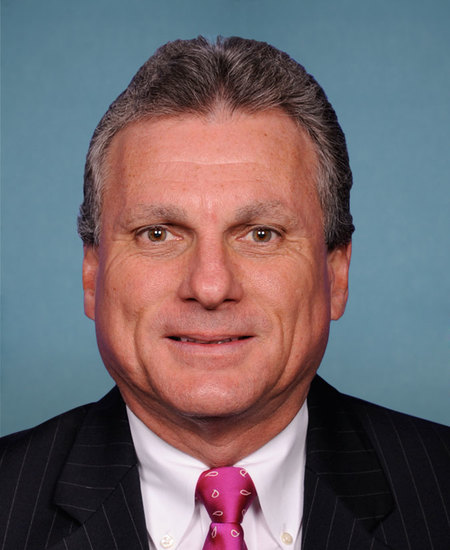
Rep. Earl L. "Buddy" Carter
Sponsored bills
Maddy summaryThe PAR Act removes restrictions that previously prevented private golf courses and country clubs from using certain tax-advantaged funds for recreational purposes. It amends a specific tax code section by deleting the phrases "private or commercial golf course, country club" wherever they appear. This change directly allows those facilities to access funds they were previously barred from using under existing tax rules. The law applies to new tax obligations after enactment, with limited transitional rules for existing programs.
Maddy summaryHR 1579, the Broadband Buildout Accountability Act, would exempt the Broadband Equity, Access, and Deployment Program from Freedom of Information Act (FOIA) requests. This means federal agencies administering the program - funded under the Infrastructure Investment and Jobs Act - would not have to disclose documents like grant applications or project details to the public through FOIA. The bill amends Section 60102(o)(2) of the Infrastructure Investment and Jobs Act to add this exemption. It directly affects transparency around federal broadband funding by limiting public access to program-related information.
Maddy summaryHouse Resolution 152 is a symbolic congressional resolution reaffirming the U.S.-Canada partnership. It highlights their $1 trillion annual trade relationship (supporting 8 million U.S. jobs), joint border security efforts against fentanyl trafficking, and energy cooperation - including Canada as the U.S.'s top oil supplier and critical minerals partner. The resolution emphasizes shared security interests, integrated supply chains, and collaboration on defense, Arctic security, and democratic values. It does not create new laws but formally expresses congressional support for strengthening this alliance.
Maddy summaryThis bill allows physical therapists to use temporary replacement staff (locum tenens) under Medicare, similar to how physicians currently can. It directly affects physical therapists providing outpatient services and Medicare beneficiaries relying on those services. The key change modifies Medicare rules to apply the same provisions for physical therapy services as are already used for physician services. This means physical therapists can more easily fill temporary staffing gaps without disrupting patient care. The amendment applies to services provided after the bill's enactment date.
Maddy summaryThe Access Technology Affordability Act of 2025 creates a new tax credit for individuals who purchase technology designed to assist blind people, such as screen readers or braille displays. This credit covers up to $2,000 in expenses per three-year period for qualified access technology used by the taxpayer, their spouse, or a blind dependent. The credit adjusts for inflation after 2026 but does not apply to costs already covered by other tax benefits. The credit expires after 2030, with adjustments for cost-of-living changes starting in 2027.
Dentist and Optometric Care Access Act of 2025 or the DOC Access Act of 20 25 This bill prohibits private health insurance plans from setting rates for items and services, except for dental cleanings, provided by a doctor of optometry, of dental surgery, or of dental medicine (or an employer of such a doctor) for which the plan does not pay a substantial amount. Additionally, an agreement between a plan and such a doctor for limited scope dental or vision benefits may last longer than two years only with the prior acceptance of the doctor for each term extension. Plans also may not restrict such a doctor's choice of laboratories or suppliers. Such doctors may elect to waive the application of the payment amount and choice of laboratories provisions of this bill. The bill does not supersede state laws regarding health insurers and dental or vision benefit plans.
Maddy summaryHR 1494, the Sporting Goods Excise Tax Modernization Act, requires online marketplaces (like Amazon or eBay) to collect the federal excise tax on sporting goods sold through their platforms, rather than leaving this responsibility to individual sellers. It specifically targets platforms that host third-party seller listings and facilitate transactions for goods imported from outside the U.S. The bill treats these marketplaces as the "importer" for tax purposes, making them liable for the tax on qualifying sporting goods sales. This change applies to sales after a 60-day grace period following the bill's enactment, with no impact on taxes already owed by other parties.
Maddy summaryHR 1502 authorizes the creation of a Congressional Gold Medal to honor the volunteers and communities (primarily from Nebraska, Colorado, and Kansas) who supported the North Platte Canteen during World War II. The bill directs the Treasury Secretary to design and strike the medal, which will be presented to the individuals who contributed to the canteen’s operations and then permanently displayed at the Lincoln County Historical Museum in North Platte, Nebraska. It also permits the sale of bronze duplicates to cover production costs, with proceeds going to the U.S. Mint. This is a commemorative measure recognizing historical service, not a policy change affecting current laws or programs.
Maddy summaryHR 1477 creates a new Animal Cruelty Crimes Section within the Justice Department's Environment and Natural Resources Division to enforce federal animal cruelty laws. This unit will coordinate with agencies like the FBI, USDA, and U.S. Marshals to investigate and prosecute cases, addressing current gaps in enforcement. The bill requires the unit to submit annual reports to Congress detailing prosecutions, convictions, and investigations where charges weren't filed. It does not change existing animal cruelty laws but establishes a dedicated federal unit to improve enforcement of current statutes.