

Federal Firearms Licensee Protection Act of 2025 This bill modifies criminal penalties for an offense involving the theft of a firearm from a licensed importer, manufacturer, or dealer, or from their business premises. Specifically, the bill does the following: increases from 10 to 20 years the maximum prison term, and creates a 3- or 5-year mandatory minimum prison term for an offense that occurs during the commission of a burglary or robbery. An attempt to commit an offense is subject to the same penalties as a substantive offense.
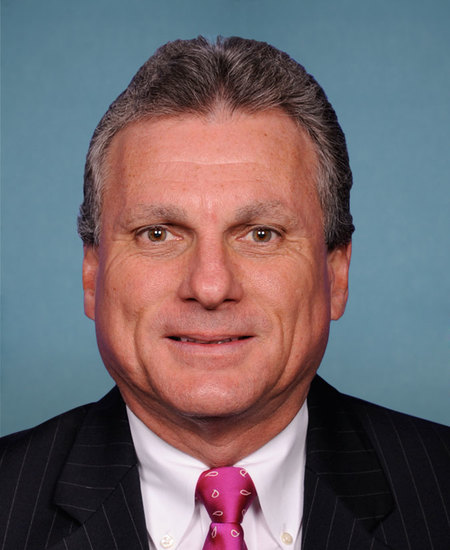
Rep. Earl L. "Buddy" Carter
Sponsored bills
Maddy summaryThis bill extends the exclusivity period for certain advanced drugs from 7 to 11 years. It defines "advanced drug product" as a drug using genetically targeted technology to modulate gene function (e.g., suppress or activate genes). This change directly affects pharmaceutical companies developing these specific advanced therapies by granting them longer market exclusivity. The policy change modifies the Social Security Act to provide extended protection for these innovative drugs, allowing companies more time to recoup research and development costs.
Rebuild America’s Health Care Schools Act of 2025 This bill allows hospitals to receive reimbursement under Medicare for certain costs associated with training nursing and allied health students in settings other than the hospital itself. Currently, hospitals may receive reimbursement under Medicare for the reasonable costs associated with training nursing and allied health students if certain conditions are met; the criteria vary depending on whether the students are enrolled in an educational program that is operated by the hospital or another entity. If the students are part of a program that is operated by another entity, the training must occur at the hospital itself or in areas immediately surrounding the hospital in order to qualify for reimbursement (among other requirements). The bill allows hospitals to receive reimbursement for these costs if the training is conducted at an entity that is related to the hospital (i.e., common ownership or control). The bill requires the Centers for Medicare & Medicaid Services (CMS) to update regulations to reflect these changes. Additionally, the CMS may not recoup or reduce payments to hospitals with respect to costs that are allowed under the bill and must refund any such recoupments or reductions that occurred during the six-year period prior to the bill's enactment.
Maddy summaryHR 1753 creates two new tax credits to support local journalism and small businesses. It offers a 80% credit (up to $5,000) for eligible small businesses (with <50 full-time employees) that advertise in qualifying local media like community newspapers or FCC-licensed radio/TV stations, reducing to 50% ($2,500 max) after the first year. A separate credit provides 50% (then 30%) of wages paid to local news journalists (at least 200 hours quarterly) for employers whose primary income comes from local newspaper publishing, capped at $12,500 per journalist per quarter. Both credits expire after 5 years and require strict definitions of "local" media to qualify, including having in-community journalists and limiting corporate ownership. The bill directly affects small local news publishers and qualifying small businesses seeking tax relief for local advertising and journalism staffing.
Maddy summaryHR 1705 creates a new 30% federal tax credit for agricultural businesses investing in qualifying technology projects focused on specialty crop production. The credit applies to eligible equipment, software, and systems used in precision agriculture (like GPS-guided tools for efficient input use) or controlled environment agriculture (indoor farming systems with climate control and automation). Businesses can claim this credit for property placed in service after January 1, 2025, with projects needing completion by December 31, 2035. The bill specifically targets innovations that improve efficiency in growing, processing, or packaging specialty crops as defined in existing law.
Maddy summaryThis bill, HR 1761, would require the U.S. Treasury to print $250 Federal Reserve notes featuring a portrait of Donald J. Trump within one year of enactment, primarily to commemorate the 250th anniversary of the United States. It amends the Federal Reserve Act (Section 3) to mandate this specific currency denomination and attempts to modify existing law (Section 4) to allow living presidents on currency. The bill directly affects the U.S. Treasury's currency printing authority and would override current practices, as $250 bills do not exist in circulation and the Constitution prohibits denominations above $100. This is a symbolic procedural measure with no practical implementation under current U.S. currency law.
Maddy summaryThis bill amends federal mental health law to allow states to use up to 5% of their existing mental health funding for early intervention programs targeting children and adolescents. It requires states to include evidence-based prevention strategies in their plans - such as school-based support or community programs - to delay or reduce the severity of mental health issues before they become serious. States must report biennially to Congress on program details, demographics served (including age), and outcomes like reduced wait times for care. The law directly affects states receiving federal mental health funds and focuses on preventing escalation of mental health challenges in young people.
Maddy summaryHR 1651 would nullify a specific Environmental Protection Agency (EPA) rule finalized on May 9, 2024. This rule established emissions standards for greenhouse gases from new, modified, and reconstructed fossil fuel power plants, set guidelines for existing plants, and repealed the previous "Affordable Clean Energy Rule." The bill would make this EPA rule unenforceable, directly affecting fossil fuel power plants by removing these federal emissions requirements. It does not create new regulations but cancels an existing EPA rule.
Maddy summaryHRES 166 is a non-binding House resolution expressing U.S. support for the Iranian people's desire for a democratic, secular, and nonnuclear republic. It condemns the Iranian regime's terrorism, regional proxy wars, internal suppression of ethnic and religious minorities, and human rights abuses - including executions and repression of women-led protests. The resolution calls for holding the regime accountable through sanctions, supports the Ten-Point Plan for Iran’s democratic transition, and urges protection for Iranian political refugees in Albania. It does not create new laws but affirms U.S. policy alignment with Iranian protesters' demands.
Maddy summaryThis bill requires the U.S. Department of Agriculture (USDA) to join the Committee on Foreign Investment in the United States (CFIUS) for reviews of certain transactions involving foreign adversaries. It specifically targets acquisitions of U.S. agricultural land, biotechnology, or agriculture-related infrastructure (like transportation, storage, or processing) by entities from China, North Korea, Russia, or Iran. The USDA must notify CFIUS about reportable transactions, prompting the committee to determine if a full review is needed. The provisions expire for any country removed from the official list of foreign adversaries in federal regulations.